
Food as Medicine: How 'Psychobiotics' and the Gut-Brain Axis are Reshaping Mental Health
A quiet revolution in nutritional psychiatry has proven that the digestive tract and the brain are deeply connected. Clinical trials now show that fermented foods and targeted diets can actively treat depression by altering the gut microbiome.
By Factlen Editorial Team
- Nutritional Psychiatrists & Researchers
- Focus on clinical trials proving diet can actively treat mood disorders.
- Microbiome Scientists
- Focus on the cellular mechanisms of gut-brain communication and inflammation.
- Conventional Psychiatric Medicine
- Views diet as a powerful adjunct, but not a replacement for standard psychiatric care.
- Functional Food Advocates
- Prioritizes whole-food matrices and traditional fermentation over isolated probiotic supplements.
What's not represented
- · Patients living in food deserts
- · Agricultural policymakers
Why this matters
For decades, mental health treatment focused almost exclusively on the brain. The discovery that the gut microbiome directly controls neurochemistry means that everyday dietary choices—like eating fermented foods and fiber—are now proven, accessible tools for treating anxiety and depression.
Key points
- The gut and brain communicate constantly via the vagus nerve and microbiome.
- 90% of the body's serotonin is produced in the digestive tract.
- The SMILES trial proved a Mediterranean-style diet can actively treat clinical depression.
- Stanford research shows fermented foods rapidly increase microbiome diversity.
- Fermented diets lower 19 different inflammatory markers linked to chronic stress.
- Clinical dietitians are increasingly being integrated into mental health care teams.
For decades, modern medicine treated the brain and the body as isolated kingdoms. Psychiatry focused on neurotransmitters and therapy, while gastroenterology focused on digestion. But a quiet revolution at the intersection of these two fields has completely rewritten our understanding of mental health, proving that the two systems are intimately intertwined.[3][7]
The emerging discipline of "nutritional psychiatry" has moved past the vague notion that eating well simply makes you feel good. Researchers have mapped a physical and chemical superhighway connecting the digestive tract to the brain, demonstrating that the food on our plates directly alters our neurobiology and emotional resilience.[3][8]
At the center of this paradigm shift is the gut-brain axis. This bidirectional communication network operates largely via the vagus nerve, a sprawling neural cable that runs from the brainstem down to the abdomen. Through this pathway, the gut and the brain are in constant, rapid-fire conversation.[3][7]
The primary messengers in this conversation are the trillions of microorganisms living in the human digestive tract, collectively known as the gut microbiome. These bacteria are not merely passive passengers; they are active chemical factories. In fact, an estimated 90 percent of the body's serotonin—the exact neurotransmitter targeted by many standard antidepressants—is manufactured in the gut.[3][7]

When the microbiome is fed a diet high in ultra-processed foods and refined sugars, it triggers systemic inflammation. This low-grade inflammatory response travels up the gut-brain axis, crossing the blood-brain barrier and altering mood-regulating circuits. Chronic inflammation is now recognized by researchers as a primary biological driver of depression and anxiety.[3][4]
The turning point for nutritional psychiatry arrived with the publication of the SMILES trial by Deakin University's Food & Mood Centre. Before this landmark study, no randomized controlled trial had ever rigorously tested whether dietary improvement could actually treat clinical depression in a therapeutic setting.[1][5]
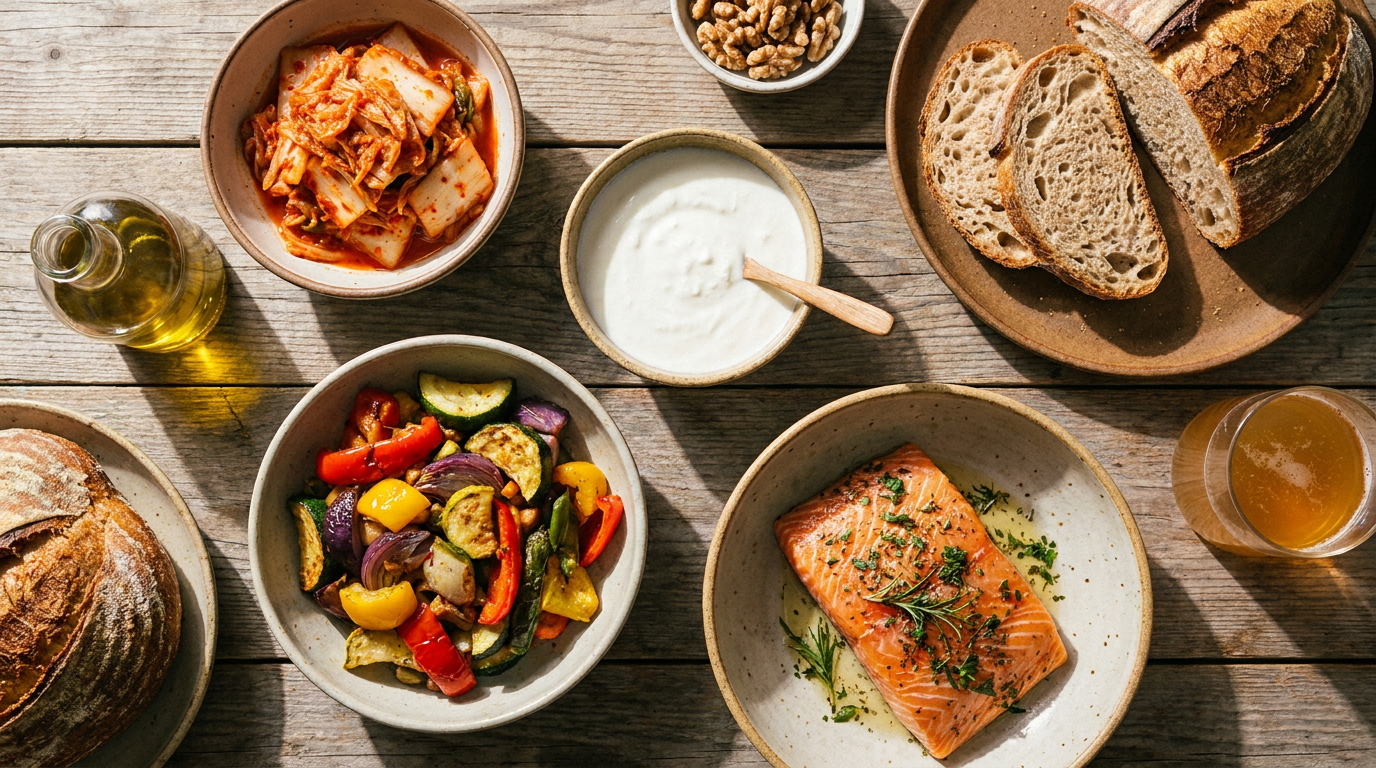
The trial enrolled adults with moderate to severe major depressive disorder. Half the participants received standard social support, while the other half underwent a 12-week dietary intervention led by a clinical dietitian. The intervention group adopted a modified Mediterranean diet rich in whole grains, legumes, fresh produce, nuts, and olive oil.[1][5]
The trial enrolled adults with moderate to severe major depressive disorder.
The results sent shockwaves through the psychiatric community. Participants in the dietary intervention group experienced a massive reduction in their depressive symptoms. Remarkably, 32 percent of the diet group achieved full remission of their depression, compared to just 8 percent in the control group.[1][5]

Crucially, these mental health improvements occurred independently of any weight loss, proving that the diet was acting directly on the brain's neurochemistry rather than simply improving body image. The SMILES trial established that food could be prescribed as a legitimate, evidence-based medical treatment for mood disorders.[1][8]
As the clinical evidence for dietary interventions solidified, scientists began searching for the specific mechanisms that make certain foods so protective. This quest led to the discovery of "psychobiotics"—live microorganisms and fermentable fibers that specifically confer mental health benefits by optimizing the gut ecosystem.[3][4]
A groundbreaking clinical trial at Stanford University recently illuminated the power of these psychobiotic foods. Researchers tracked healthy adults who incorporated multiple daily servings of fermented foods—such as kefir, kombucha, kimchi, and yogurt—into their diets over a 10-week period.[2][6]
The Stanford team discovered that the fermented food diet dramatically increased the overall diversity of the participants' gut microbiomes. Even more stunningly, the diet led to a measurable decrease in 19 different inflammatory proteins circulating in the blood, including interleukin-6, a marker heavily linked to chronic stress and depression.[2][6]

Interestingly, the researchers found that a high-fiber diet alone did not produce the same rapid increase in microbial diversity or the same drop in inflammation. While fiber is essential for feeding existing gut bacteria, the live cultures in fermented foods appear uniquely capable of remodeling the gut environment and recruiting new, beneficial microbial species.[2][6]
This has led functional food researchers to prioritize whole, traditional fermented foods over isolated probiotic pills. A pill might deliver a few billion copies of a single bacterial strain, but a serving of kefir or kimchi delivers a complex, resilient ecosystem of microbes suspended in a protective matrix of organic acids and prebiotics.[4][8]
The implications for public health are profound. While severe psychiatric conditions will always require a multifaceted approach including medication and therapy, nutritional psychiatry offers a scalable, empowering adjunct. It places a powerful, evidence-based tool directly into the hands of patients.[3][7]

Medical schools and psychiatric clinics are slowly beginning to adapt, bringing clinical dietitians onto mental health care teams. By treating the gut and the brain as a single interconnected system, modern medicine is returning to an ancient truth with cutting-edge evidence: the foundation of a resilient mind is built in the kitchen.[5][8]
How we got here
2015
The term 'psychobiotics' is coined to describe live organisms that produce health benefits in patients suffering from psychiatric illness.
2017
Deakin University publishes the SMILES trial, the first randomized controlled trial proving dietary improvement can treat clinical depression.
2021
Stanford University researchers publish a landmark study showing fermented foods rapidly increase microbiome diversity and lower inflammation.
2025-2026
Major medical reviews solidify Nutritional Psychiatry as an evidence-based field, advocating for dietitians in standard psychiatric care.
Viewpoints in depth
Nutritional Psychiatrists
Focus on clinical trials proving diet can treat mood disorders.
This camp points to landmark studies like the SMILES trial as proof that dietary interventions are not just preventative, but actively therapeutic. They advocate for clinical dietitians to become standard members of psychiatric care teams, arguing that treating depression without addressing gut health ignores a primary biological driver of the disease.
Microbiome Scientists
Focus on the cellular mechanisms of gut-brain communication.
Researchers in this field are less focused on broad dietary patterns and more interested in the specific biochemical pathways—like Short-Chain Fatty Acid production and vagus nerve signaling. They emphasize that introducing live cultures through fermented foods is the most efficient way to rapidly increase microbiome diversity and lower the systemic inflammation that triggers neuro-inflammation.
Conventional Psychiatric Medicine
Views diet as a powerful adjunct, but not a replacement for standard care.
Mainstream psychiatric institutions welcome the data on the gut-brain axis but urge caution against viewing food as a standalone cure for severe mental illness. They emphasize that while psychobiotics and Mediterranean diets can significantly improve baseline resilience and boost the efficacy of other treatments, patients with acute major depressive disorder or bipolar disorder still require targeted pharmacotherapy and psychotherapy.
What we don't know
- Exactly which specific strains of bacteria are most responsible for mood improvements.
- How long the mental health benefits of a psychobiotic diet last if the diet is discontinued.
- Whether isolated probiotic supplements can ever fully replicate the benefits of whole fermented foods.
Key terms
- Gut-Brain Axis
- The two-way biochemical communication network connecting the gastrointestinal tract and the central nervous system.
- Psychobiotics
- Live microorganisms or fiber-rich foods that confer mental health benefits by interacting with the gut microbiome.
- Short-Chain Fatty Acids (SCFAs)
- Beneficial compounds produced when gut bacteria ferment dietary fiber, known to reduce inflammation and protect the brain.
- Vagus Nerve
- The primary nerve connecting the brain to the abdomen, acting as the main physical highway for gut-brain communication.
- Microbiome Diversity
- A measure of the variety of different bacterial species living in the digestive tract; higher diversity is strongly linked to better overall health.
Frequently asked
Can changing my diet cure depression?
Diet is not a standalone cure, but clinical trials show it is a highly effective treatment. In the SMILES trial, nearly a third of participants achieved full remission of their depression through dietary changes alongside standard care.
What exactly are psychobiotics?
Psychobiotics are foods or supplements that positively impact mental health by interacting with the gut microbiome. This includes fermented foods containing live bacteria and high-fiber foods that feed beneficial microbes.
How quickly can diet affect the gut microbiome?
Research from Stanford University demonstrates that adding fermented foods to your diet can measurably increase microbiome diversity and lower systemic inflammation within just 10 weeks.
Do I need to take expensive probiotic supplements?
Not necessarily. Recent scientific reviews suggest that traditional fermented foods, like kefir and kimchi, provide a more diverse and resilient community of beneficial microbes than isolated probiotic pills.
Sources
Source coverage
8 outlets
4 viewpoints surfaced







[1]BMC MedicineNutritional Psychiatrists & Researchers
A randomised controlled trial of dietary improvement for adults with major depression (the 'SMILES' trial)
Read on BMC Medicine →[2]Stanford MedicineMicrobiome Scientists
Fermented-food diet increases microbiome diversity, decreases inflammatory proteins, study finds
Read on Stanford Medicine →[3]National Institutes of HealthConventional Psychiatric Medicine
Nutritional Psychiatry: The Present State of the Evidence
Read on National Institutes of Health →[4]Functional Foods in Health and DiseaseFunctional Food Advocates
Dietary Psychobiotics and Fermented Foods in Depression Management
Read on Functional Foods in Health and Disease →[5]Deakin University Food & Mood CentreNutritional Psychiatrists & Researchers
The SMILES Trial: Diet as a Treatment for Depression
Read on Deakin University Food & Mood Centre →[6]CellMicrobiome Scientists
Gut-microbiota-targeted diets modulate human immune status
Read on Cell →[7]Harvard Medical SchoolConventional Psychiatric Medicine
Nutritional psychiatry: Your brain on food
Read on Harvard Medical School →[8]Factlen Editorial TeamFunctional Food Advocates
Synthesis by Factlen editorial team
Read on Factlen Editorial Team →


Every angle. Every day.
Get health stories with full source coverage and perspective breakdowns delivered to your inbox.