
Buying an E-Bike in 2026: The Ultimate Explainer Guide
From demystifying battery watt-hours to choosing between hub and mid-drive motors, here is everything you need to know to find the perfect electric bike.
By Factlen Editorial Team
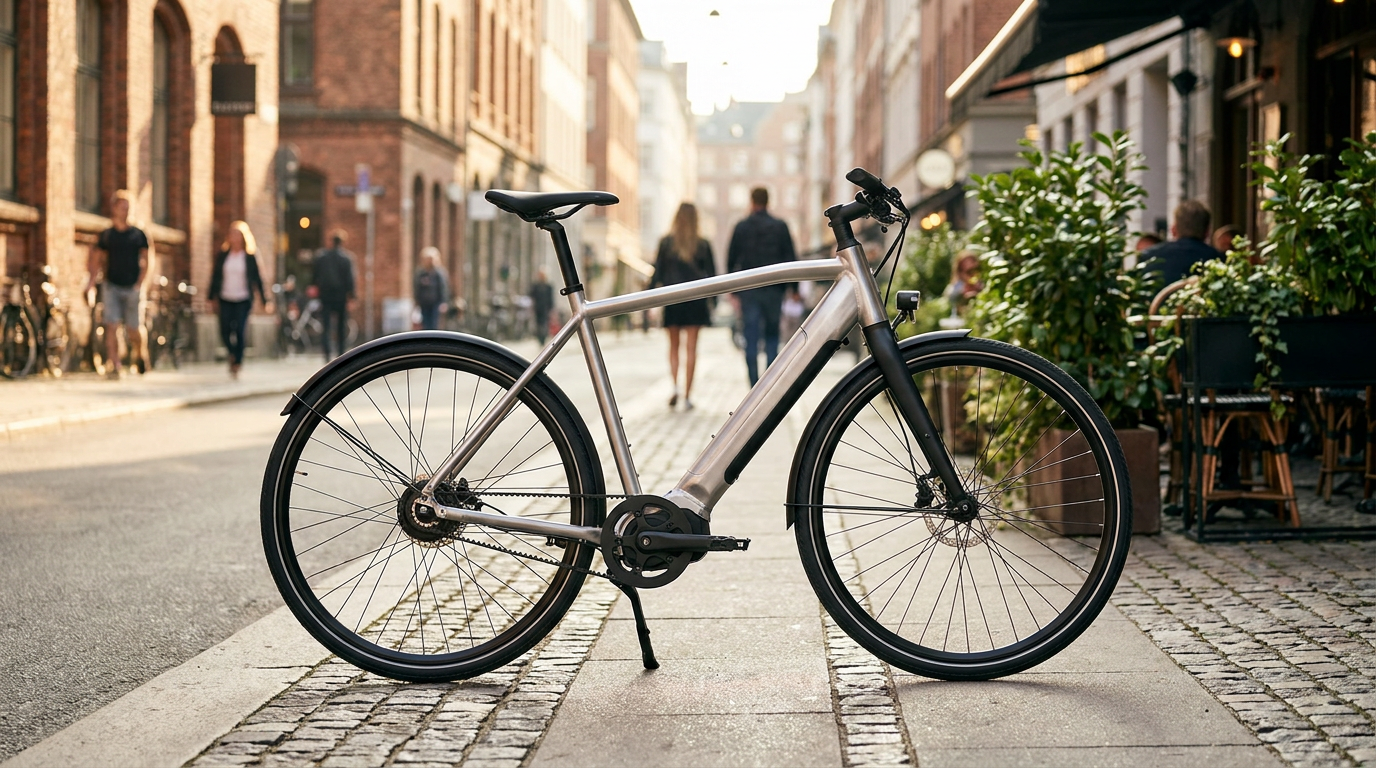
- Local Shop Loyalists
- Advocates for buying e-bikes exclusively through brick-and-mortar dealers to ensure safety and serviceability.
- Direct-to-Consumer Value Seekers
- Proponents of online-only brands that offer high specifications at significantly lower price points.
- Performance Enthusiasts
- Riders who prioritize natural ride feel, torque, and weight distribution over raw throttle power.
What's not represented
- · City Planners
- · Public Transit Advocates
Why this matters
Choosing the right e-bike can transform a grueling commute into the best part of your day, replacing car trips and boosting your cardiovascular health. However, navigating the complex landscape of motor types, battery math, and safety certifications is essential to avoid buying a heavy, unrepairable liability.
Key points
- Electric bike motors come in two main types: affordable hub motors for flat cruising, and premium mid-drive motors for natural pedaling and hill climbing.
- Battery capacity is measured in Watt-hours (Wh); experts recommend buying 40% more capacity than your daily commute requires to account for real-world drain.
- North America uses a three-class system to regulate e-bikes, determining top speeds and whether throttles are legally permitted on local trails.
- Purchasing from a local bike shop ensures access to certified mechanics, warranty support, and verified battery safety standards like UL 2849.
The e-bike market in 2026 has matured from a niche novelty into a primary mode of transportation for millions. But walking into a bike shop or browsing online can feel like stepping into an electrical engineering seminar. Shoppers are immediately bombarded with technical jargon about watt-hours, torque sensors, and drive systems, making the buying process unnecessarily intimidating.[1]
The stakes of the purchase are surprisingly high. A quality electric bicycle is a significant investment, typically ranging from $1,500 to over $4,000 for a reliable daily commuter. Making the wrong choice means ending up with a heavy, unrideable garage ornament, while the right choice can genuinely replace a car for daily errands, saving thousands in fuel and parking costs over its lifespan.[1][7][8]
The most fundamental decision a buyer must make is how the bike delivers its power. Electric motors come in two primary configurations: hub motors and mid-drive motors. Hub motors, located in the center of the front or rear wheel, represent the older and more affordable technology. They spin the wheel directly, operating completely independently of the bike's chain and mechanical gears.[4][9]
Because they push or pull the wheel directly, hub motors often feel like a small moped. They are excellent for flat city commutes and riders who want to rely heavily on a throttle to cruise without sweating. However, their rear-heavy weight distribution can make the bike feel unbalanced on technical terrain, and they lack the mechanical advantage needed to efficiently conquer steep, sustained climbs.[4][9]

Mid-drive motors, mounted at the bottom bracket between the pedals, represent the modern standard for premium performance. Instead of spinning the wheel directly, a mid-drive motor powers the chain, allowing the electrical assist to leverage the bicycle's existing gears just like a human rider does.[4][9]
This integration means mid-drives offer vastly superior torque for climbing hills, as the motor shifts gears right alongside the rider. They also provide a much more natural, bicycle-like ride feel. Mid-drive systems typically utilize advanced torque sensors that measure exactly how hard the rider is pushing the pedals, seamlessly scaling the motor's output to match human effort rather than simply jerking forward at a fixed speed.[4]
Once the motor style is chosen, battery capacity dictates the bike's effective range. The industry standard measurement is the Watt-hour (Wh), which calculates the total energy pool by multiplying the battery's voltage by its amp-hours. Think of voltage as the horsepower and amp-hours as the size of the gas tank; the Watt-hour figure combines them into a single, comparable metric.[2][6]
Once the motor style is chosen, battery capacity dictates the bike's effective range.
A common pitfall for new buyers is trusting the maximum advertised range printed on the box. A 500Wh battery might claim to offer 60 miles of riding, but real-world conditions—such as rider weight, headwinds, steep inclines, and relying on high assist levels—can drastically reduce that figure. Experts recommend calculating your daily round-trip commute and buying a battery with at least a 40 percent buffer to eliminate range anxiety.[5][8]

In North America, e-bikes are regulated by a three-tier class system that dictates where they can be legally ridden. Class 1 bikes are pedal-assist only, capping out at 20 mph, and are generally welcomed on any traditional bike path or multi-use trail.[8]
Class 2 e-bikes introduce a throttle, allowing the bike to move at up to 20 mph without the rider pedaling at all. This feature is ideal for riders with mobility limitations or those carrying heavy cargo from a dead stop. Class 3 bikes drop the throttle but increase the pedal-assist speed limit to 28 mph, making them the premier choice for long-distance road commuters trying to safely keep pace with urban traffic.[8]
Beyond the electronics, the physical bicycle frame must match the rider's mission. Step-through frames, once considered strictly for casual beach cruisers, have become the dominant choice for urban utility. They allow riders to easily mount and dismount the bike even when it is loaded down with heavy groceries or a child seat on the rear rack.[8]
Specialized riding requires specialized geometry. For off-road enthusiasts, electric mountain bikes require full suspension and rugged mid-drive motors to handle rock gardens and steep ascents without damaging the frame. Conversely, lightweight fitness e-bikes hide smaller 250Wh batteries inside the downtube, sacrificing overall range to keep the total bike weight under 35 pounds for easy carrying up apartment stairs.[2][9]

As the market has flooded with cheap, direct-to-consumer imports, battery safety has become a critical, non-negotiable concern. Lithium-ion battery fires, while statistically rare, are devastating when they occur. Buyers must look for independent safety certifications, such as UL 2849, which verify that the entire electrical system has been rigorously tested against thermal runaway and overcharging.[3]
Finally, buyers must consider the right-to-repair trap. A deeply discounted internet e-bike is only a bargain until it breaks. Many brick-and-mortar bike shops refuse to service unbranded direct-to-consumer bikes due to liability concerns, fire risks, and a lack of proprietary diagnostic software.[5][7]
Investing in a system from established motor manufacturers ensures that replacement parts, software updates, and certified mechanics will be available years down the line. Ultimately, spec sheets cannot convey how an e-bike actually feels in motion. The golden rule of e-bike shopping remains unchanged: test ride multiple systems at a local shop to find the perfect balance of comfort, power, and handling before making a commitment.[5][7]
How we got here
1990s
Early commercial e-bikes emerge using heavy lead-acid batteries and basic hub motors.
2010s
Lithium-ion technology drastically reduces battery weight, while mid-drive motors introduce natural pedal assistance.
2020
The pandemic triggers a massive global boom in e-bike adoption for recreation and socially distanced commuting.
2024
Safety standards like UL 2849 become widely adopted by major retailers to prevent battery fires from low-quality imports.
2026
E-bikes cement their status as primary urban transport, with advanced torque sensors and integrated anti-theft tech becoming standard.
Viewpoints in depth
Local Shop Loyalists
Advocates for buying e-bikes exclusively through brick-and-mortar dealers.
This camp argues that an e-bike is a complex fusion of a vehicle and a high-voltage electrical system, making local support non-negotiable. They emphasize that buying from a local dealer guarantees professional assembly, access to warranty repairs, and the assurance that the bike meets strict UL safety standards. For these riders, paying a premium upfront is an insurance policy against ending up with a broken, unrepairable bike that local mechanics refuse to touch due to liability concerns.
Direct-to-Consumer Value Seekers
Proponents of online-only brands that offer high specifications at lower price points.
Value seekers point out that legacy bicycle brands often charge massive markups for mid-tier components. By purchasing directly from online manufacturers, riders can secure larger batteries, powerful hub motors, and included accessories like racks and fenders for half the price of a shop-bought bike. They argue that the e-bike revolution should be financially accessible to everyone, and that basic mechanical maintenance can be easily learned at home or handled by mobile bike repair services.
Performance Enthusiasts
Riders who prioritize natural ride feel, torque, and weight distribution over raw power.
For this group, the integration of the motor is everything. They strongly favor mid-drive systems with advanced torque sensors, arguing that an e-bike should feel like a traditional bicycle with bionic legs, rather than a heavy moped with a throttle. Performance enthusiasts are willing to sacrifice top speed and pay significantly more for lightweight frames, seamless gear integration, and the ability to tackle steep, technical off-road climbs with perfect balance.
What we don't know
- How upcoming federal and state legislation might alter the three-class system or restrict where heavy e-bikes can be ridden.
- Whether the cost of replacement lithium-ion batteries will decrease significantly as solid-state battery technology enters the consumer market.
Key terms
- Watt-hour (Wh)
- A measurement of total battery energy capacity, calculated by multiplying voltage by amp-hours.
- Mid-drive motor
- An electric motor positioned at the bike's pedals that powers the chain and utilizes the mechanical gears.
- Hub motor
- An electric motor housed directly inside the center of the front or rear wheel.
- Torque sensor
- A component that measures how hard the rider is pedaling and smoothly scales the motor's assistance to match.
- Cadence sensor
- A basic sensor that detects if the pedals are turning, delivering a fixed amount of power regardless of rider effort.
Frequently asked
How long does an e-bike battery last before it needs replacing?
Most quality lithium-ion e-bike batteries are rated for 500 to 1,000 full charge cycles, which typically translates to 3 to 5 years of regular riding before the maximum capacity noticeably degrades.
Can I ride an e-bike in the rain?
Yes. E-bikes from reputable brands are highly water-resistant and designed to handle rain and puddles, though they should never be fully submerged or cleaned with a high-pressure power washer.
Do I still get a workout on an electric bike?
Absolutely. Because e-bikes encourage riders to travel further and tackle hills they would normally avoid, studies show e-bike owners often get as much or more cardiovascular exercise as traditional cyclists.
What happens if the battery dies while I'm riding?
The motor will stop providing assistance, but the e-bike functions exactly like a traditional bicycle. You can still pedal and shift gears to get home, though the bike will feel heavier.
Sources
Source coverage
9 outlets
3 viewpoints surfaced





[1]Factlen Editorial TeamLocal Shop Loyalists
Synthesis by Factlen editorial team
Read on Factlen Editorial Team →[2]BikeRadarPerformance Enthusiasts
Ebike batteries: capacity, charging and recycling explained
Read on BikeRadar →[3]AventonDirect-to-Consumer Value Seekers
Ebike Battery Safety: How to Prevent Ebike Battery Fires
Read on Aventon →[4]UpwayPerformance Enthusiasts
E-Bike Motor Types: Hub vs. Mid-Drive Comparison
Read on Upway →[5]Mole Hill BikesLocal Shop Loyalists
Choose the E-Bike That Actually Fits Your Life
Read on Mole Hill Bikes →[6]GYROORDirect-to-Consumer Value Seekers
Ebike Battery Capacity: The Ultimate Guide to Range, Power & Longevity
Read on GYROOR →[7]Bikeline ToowoombaLocal Shop Loyalists
The Ultimate E-Bike Buying Guide for Beginners: 2026 Edition
Read on Bikeline Toowoomba →[8]Riding 5Direct-to-Consumer Value Seekers
How to Choose an E-Bike: Beginner's Buyer's Guide 2025
Read on Riding 5 →[9]YozmaPerformance Enthusiasts
Mid-Drive vs. Hub Motor: Why Mid-Drive is the Ultimate Choice for Electric Bikes in 2025
Read on Yozma →


Every angle. Every day.
Get shopping stories with full source coverage and perspective breakdowns delivered to your inbox.