
Young Gut Bacteria Can Restore Childhood-Level Brain Plasticity in Adults, New Evidence Shows
A groundbreaking 2026 discovery reveals that transplanting the microbiome of young mice into older subjects reopens the brain's 'critical period' of plasticity. The finding suggests that cognitive aging and hardwired neurological conditions could eventually be reversed through targeted gut therapies.
By Factlen Editorial Team
- Microbiome Researchers
- Emphasize the systemic role of gut bacteria, SCFAs, and the development of targeted postbiotics to modulate the gut-brain axis.
- Neurobiologists
- Focus on the neural mechanisms, BDNF expression, and the potential to reopen critical periods of brain plasticity for treating neurological conditions.
- Clinical Skeptics
- Highlight the massive leap from controlled mouse models to complex human trials, warning against the risks of raw fecal transplants.
What's not represented
- · Patient advocacy groups for neurodevelopmental disorders
- · Regulatory agencies overseeing biological therapeutics
Why this matters
This discovery fundamentally changes how we view cognitive aging and brain damage. If the brain's ability to heal and learn can be 'reopened' via the gut, treatments for stroke recovery, Alzheimer's, and traumatic brain injury could shift from managing decline to actively rewiring the brain.
Key points
- Older mice receiving gut bacteria from younger mice regained childhood-level brain plasticity.
- The treatment allowed adult mice to overcome neurological conditions normally untreatable after childhood.
- Youthful gut bacteria produce short-chain fatty acids that trigger brain-fertilizing proteins like BDNF.
- Researchers hope to isolate these specific bacterial byproducts into targeted 'postbiotic' drugs.
- If successful in humans, the therapy could revolutionize stroke recovery and Alzheimer's treatment.
The holy grail of neuroscience is the "critical period"—the brief, magical window during childhood where the brain effortlessly rewires itself to learn languages, recover from injury, and adapt to new sensory input. During this phase, neural networks are highly malleable, allowing the brain to mold itself to its environment with astonishing speed. Neurobiologists have long marveled at how a child can effortlessly absorb a second language or recover from a traumatic brain injury that would permanently debilitate an adult, all thanks to this hyper-plastic state.[1]
Once this window closes, however, the adult brain becomes rigid and set in its ways. Neurological conditions that are easily corrected in youth, such as amblyopia (lazy eye) or certain developmental sensory deficits, become permanently hardwired into the adult neural architecture. For decades, researchers have searched for a biological "rewind button" to reopen this plasticity in adults, largely focusing their efforts on the brain itself through electrical stimulation, psychedelic compounds, or targeted neuro-pharmaceuticals. Yet, these brain-centric approaches have yielded only limited, temporary success.[1]
Now, a groundbreaking 2026 discovery suggests the key to unlocking youthful brain plasticity isn't located in the brain at all—it resides in the gut. According to new research, older mice that received a fecal microbiota transplant (FMT) from younger animals experienced a profound neurological reset. The influx of youthful gut bacteria fundamentally altered the older mice's brain chemistry, restoring their neural plasticity to childhood levels. Most remarkably, this rejuvenated plasticity allowed the older mice's brains to successfully overcome a neurological condition that is typically only treatable during the early stages of life.[2]
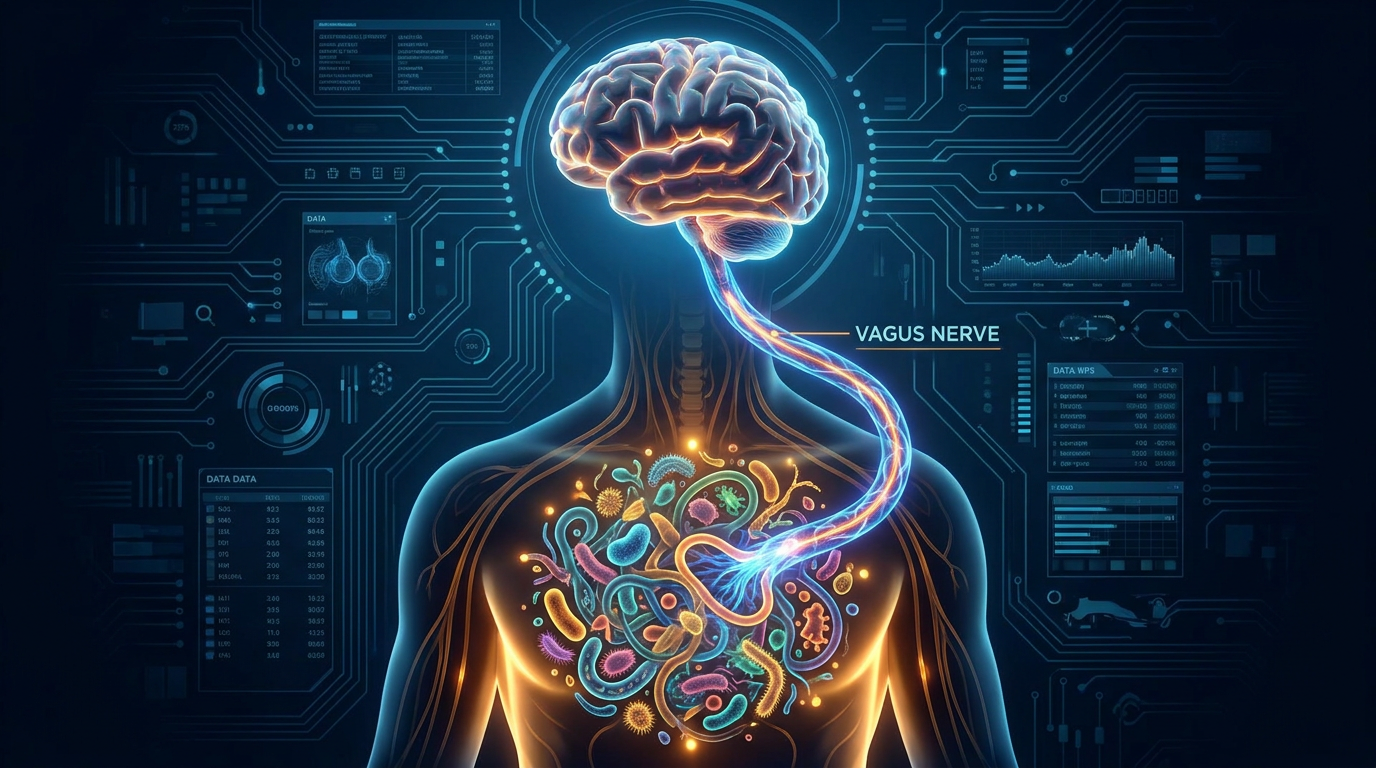
This finding represents a massive paradigm shift in how the medical community understands the gut-brain axis—the bidirectional communication superhighway linking our intestinal tract to our central nervous system. Historically, the brain was viewed as an isolated fortress, protected by the blood-brain barrier and largely independent of the body's digestive processes. Today, evidence overwhelmingly points to the microbiome as a master regulator of neurological health, dictating everything from daily mood fluctuations to the long-term structural integrity of our cognitive networks.[1][7]

The trillions of bacteria residing in the human gut act as microscopic chemical factories. They constantly synthesize neurotransmitters, immune modulators, and metabolic byproducts that travel up the vagus nerve directly into the brain's cognitive centers. As mammals age, the diversity of these microbial populations naturally plummets. This age-related dysbiosis leads to a sharp decrease in beneficial metabolites, a corresponding rise in systemic inflammation, and the subsequent cognitive decline that we have long accepted as a normal part of getting older.[5][7]
The mechanism behind the 2026 age-reversing phenomenon relies heavily on the production of short-chain fatty acids (SCFAs), particularly butyrate. When youthful bacteria are introduced into an aged system, they rapidly recolonize the gut and resume high-volume SCFA production. These molecules cross the blood-brain barrier and trigger the expression of brain-derived neurotrophic factor (BDNF)—often described as molecular fertilizer for the brain. Elevated BDNF levels help neurons grow, form new synaptic connections, and adapt to new information, effectively mimicking the chemical environment of a developing child's brain.[4][7]
The mechanism behind the 2026 age-reversing phenomenon relies heavily on the production of short-chain fatty acids (SCFAs), particularly butyrate.
The recent breakthrough builds upon a growing mountain of evidence that has steadily shifted the focus of anti-aging research downward to the digestive tract. In 2021, a landmark study published in Nature Aging first demonstrated that young FMTs could reverse age-related cognitive decline. In that experiment, geriatric mice that received gut bacteria from young adults were able to navigate complex mazes with the speed, spatial awareness, and memory retention of mice a fraction of their age, stunning the gerontology community.[3]
The physical structure of the older mice's hippocampus—the brain's primary memory center—actually began to resemble that of younger animals after the bacterial transplant. Furthermore, researchers discovered that the lifestyle of the microbiome donor plays a crucial role in the efficacy of the transplant. A 2024 study found that transplanting the microbiome of young, physically active mice into older, sedentary mice not only reduced neuroinflammation but directly enhanced synaptic plasticity, proving that the benefits of exercise are deeply intertwined with gut flora.[3][4]

The aged mice in the 2024 study exhibited elevated levels of synaptic plasticity modulators, proving that the cognitive benefits of exercise are at least partially mediated by the gut bacteria. More importantly, it demonstrated that these exercise-induced cognitive benefits can be literally transplanted from one individual to another. This opens entirely new avenues for treating age-related cognitive decline in patients who are physically unable to exercise, suggesting that a "workout in a pill" might actually be a microbiome intervention.[4]
Despite these miraculous results in animal models, translating microbiome-mediated brain rejuvenation to human medicine remains a monumental challenge. The human microbiome is vastly more complex than that of a laboratory mouse, shaped by decades of individualized diet, environmental exposures, antibiotic use, and genetics. Furthermore, the human brain's critical periods of plasticity are deeply intertwined with complex psychological and social development, making it unclear whether a simple bacterial swap could safely reopen these windows without unintended cognitive or emotional consequences.[6][8]
Clinical experts also caution against the premature hype of using raw fecal transplants as a fountain of youth. While FMT is highly effective and FDA-approved for treating severe Clostridioides difficile infections, using it for anti-aging or cognitive enhancement carries significant risks. The transfer of undetected pathogens, the potential for triggering autoimmune responses, and the sheer logistical complexity of matching ideal donors make widespread FMT for brain plasticity highly impractical. The regulatory hurdles for conducting human anti-aging trials using complex biological matter are exceptionally high.[8]
Instead of raw transplants, the future of this therapy likely lies in precision "biotics." Scientists are currently racing to identify the specific bacterial strains and the exact chemical metabolites—known as postbiotics—that are responsible for the brain-rejuvenating effects seen in the mouse models. If researchers can isolate the exact combination of SCFAs and neural modulators produced by the young microbiome, they could bypass the bacteria entirely and deliver the benefits directly via a targeted pharmaceutical or specialized nutritional supplement.[6][7]

The implications of successfully bottling this "young microbiome" effect are staggering. Beyond simply sharpening the memory of aging adults, reopening the brain's critical period of plasticity could revolutionize the treatment of severe adult neurological conditions. Stroke survivors could potentially rewire their brains to regain lost motor functions with the ease of a child learning to walk. Patients with traumatic brain injuries could form new neural pathways to bypass damaged tissue, and those suffering from neurodegenerative diseases could fortify their cognitive reserves against decay.[1][8]
As we progress through 2026, the microbiome research landscape is transitioning from observational correlations to targeted, mechanistic interventions. We are moving past the era of generic probiotics and entering an age of precision neurogastroenterology. The realization that cognitive aging is not an inevitable, one-way street of neural decay, but rather a reversible state mediated by our bacterial passengers, fundamentally changes the trajectory of human longevity research. By tending to the microscopic ecosystems in our digestive tracts, we may soon hold the power to keep our minds perpetually young and adaptable.[1][5][7]
How we got here
2012
Researchers first establish a clear link between the diversity of the gut microbiome and health outcomes in later life.
2021
A landmark study in Nature Aging demonstrates that FMT from young mice can reverse age-related cognitive decline in older mice.
2024
Scientists prove that transplanting the microbiome of physically active mice enhances synaptic plasticity in sedentary older mice.
June 2026
New research reveals that young gut bacteria can restore childhood-level brain plasticity, allowing older mice to overcome previously untreatable neurological conditions.
Viewpoints in depth
Neurobiologists' view
The brain's plasticity is chemically gated, and the gut holds the key.
For neurobiologists, the excitement isn't just about anti-aging—it's about fundamentally altering how the adult brain learns and heals. By proving that the 'critical period' of childhood plasticity can be chemically reopened via gut metabolites, researchers envision a future where stroke victims or patients with traumatic brain injuries are given a course of postbiotics to make their brains malleable again, allowing them to relearn motor skills and speech with the effortless speed of a toddler.
Microbiome Researchers' view
Aging is a systemic, microbe-driven process that can be engineered.
Microbiome experts view the body as a superorganism where human cells are outnumbered by bacterial ones. They argue that age-related cognitive decline is largely a symptom of microbial starvation and dysbiosis. Their goal is to map the exact strains and short-chain fatty acids responsible for youthful cognition, moving away from crude fecal transplants toward precision-engineered 'synthetic consortia'—cocktails of lab-grown bacteria designed to permanently colonize the gut and continuously pump out brain-fertilizing compounds.
Clinical Skeptics' view
Mice are not men, and the human microbiome is dangerously complex.
Translational medicine experts warn that curing mice is notoriously easy compared to humans. A laboratory mouse eats a standardized diet and lives in a sterile environment, making its microbiome easy to manipulate. In contrast, the human gut is a chaotic ecosystem shaped by decades of diverse diets, antibiotics, and environmental toxins. Skeptics caution that introducing foreign bacteria—even 'young' ones—could trigger unforeseen autoimmune reactions or fail to colonize entirely, urging strict regulatory oversight before these therapies reach the clinic.
What we don't know
- Whether reopening the brain's critical period of plasticity in humans could have unintended psychological or emotional consequences.
- Which specific bacterial strains and metabolites are the exact drivers of the brain-rejuvenating effect.
- How long the cognitive benefits of a youthful microbiome transplant actually last before requiring a booster.
Key terms
- Gut-Brain Axis
- The bidirectional communication network that links the enteric nervous system of the gut with the central nervous system of the brain.
- Brain Plasticity
- The brain's ability to change and adapt its physical structure and functional organization in response to new experiences or injuries.
- Short-Chain Fatty Acids (SCFAs)
- Metabolites produced by beneficial gut bacteria during the fermentation of dietary fiber, which play a key role in reducing inflammation and supporting brain health.
- Postbiotics
- The beneficial chemical compounds and metabolic byproducts produced by gut bacteria, which researchers hope to synthesize directly into drugs.
- Brain-Derived Neurotrophic Factor (BDNF)
- A crucial protein that acts like fertilizer for the brain, promoting the survival of existing neurons and encouraging the growth of new connections.
Frequently asked
What is a fecal microbiota transplant (FMT)?
FMT is a medical procedure where stool from a healthy donor is processed and transferred into the gastrointestinal tract of a patient to restore a balanced microbiome.
Can I just take over-the-counter probiotics to get this effect?
Current over-the-counter probiotics do not contain the specific, complex communities of bacteria required to reopen brain plasticity. Researchers are working on targeted 'postbiotics' for this purpose.
What does 'brain plasticity' mean?
Brain plasticity, or neuroplasticity, is the brain's ability to reorganize itself by forming new neural connections, which is crucial for learning, memory, and recovering from injuries.
When will this treatment be available for humans?
While FMT is currently approved for specific severe gut infections, using it or targeted postbiotics for cognitive anti-aging is still in the preclinical phase and will require years of human trials.
Sources
Source coverage
8 outlets
3 viewpoints surfaced








[1]Factlen Editorial TeamClinical Skeptics
Synthesis by Factlen editorial team
Read on Factlen Editorial Team →[2]New ScientistMicrobiome Researchers
Faecal transplant makes the brains of old mice act young again
Read on New Scientist →[3]Nature AgingNeurobiologists
Microbiota from young mice reverses aging-associated differences in the brain
Read on Nature Aging →[4]Aging and DiseaseNeurobiologists
Fecal Microbiota Transplantation from Young-Trained Donors Improves Cognitive Function in Old Mice
Read on Aging and Disease →[5]iScienceMicrobiome Researchers
Human gut microbiome aging clock based on taxonomic profiling
Read on iScience →[6]Gut Microbiota for HealthMicrobiome Researchers
Year in Review: The microbiome research landscape in 2026
Read on Gut Microbiota for Health →[7]National Institutes of HealthClinical Skeptics
The Gut Microbiota and Healthy Aging
Read on National Institutes of Health →[8]The Lancet Healthy LongevityClinical Skeptics
Translating microbiome science to human longevity
Read on The Lancet Healthy Longevity →

Every angle. Every day.
Get science stories with full source coverage and perspective breakdowns delivered to your inbox.