
Why the Analog Film Photography Revival is Booming in 2026
Driven by Gen Z's desire for tactile experiences and intentionality, the film photography market is experiencing a massive resurgence. We break down the cultural shift and the fascinating chemistry that makes analog images possible.
By Factlen Editorial Team
- Gen Z Creators
- View film as a rebellion against digital perfection, valuing authenticity, limitation, and the physical aesthetic.
- Analog Purists & Educators
- Focus on the chemical craft, the tactile process, and the preservation of the medium's history.
- Industry Analysts & Retailers
- Focus on the market growth, camera valuations, supply chain constraints, and consumer behavior.
What's not represented
- · Environmental advocates concerned about the chemical waste from film development
- · Professional commercial photographers who rely strictly on digital workflows
Why this matters
The resurgence of film photography highlights a broader cultural shift away from hyper-polished digital consumption toward tactile, intentional experiences. Understanding this trend offers insight into how younger generations are redefining authenticity and finding value in physical limitations.
Key points
- The global photographic film market is projected to reach $613 million in 2026, driven largely by Gen Z photographers.
- Younger generations are embracing film as a deliberate rebellion against the instant perfection and infinite volume of digital photography.
- Film photography relies on a chemical process where light-sensitive silver halide crystals are converted into metallic silver.
- The inherent limitation of 36 frames per roll forces photographers to slow down and shoot with greater intentionality.
- Vintage mechanical cameras have transformed into highly coveted cultural accessories, with prices surging up to 180% since 2020.
- Rising costs for raw materials, particularly silver, threaten to make the hobby prohibitively expensive for new entrants.
In an era where smartphones can capture thousands of hyper-polished, computationally enhanced images in a matter of seconds, a quiet but powerful counter-movement has taken hold. Film photography, a medium once thought to be entirely obsolete, is not just surviving the digital age—it is experiencing a booming, multi-year renaissance. Across the globe, thrift stores are being cleared of vintage cameras, specialized development labs are opening their doors, and social media feeds are increasingly populated by grainy, imperfect photographs. What began as a niche hobby for analog purists has evolved into a mainstream cultural phenomenon, fundamentally shifting how a new generation approaches the act of capturing a memory.[8]
The scale of this analog revival is staggering, backed by institutional investment and sustained commercial momentum. Industry projections estimate the global photographic film market will reach $613 million in 2026, charting a trajectory of consistent growth. Over 25 million rolls of film are now consumed annually, representing a 35% increase in film usage since 2021. This is not merely a temporary blip driven by a fleeting aesthetic trend; it is a permanent, growing niche that has carved out its own space alongside digital photography, supported by a robust ecosystem of manufacturers, labs, and dedicated consumers.[4]
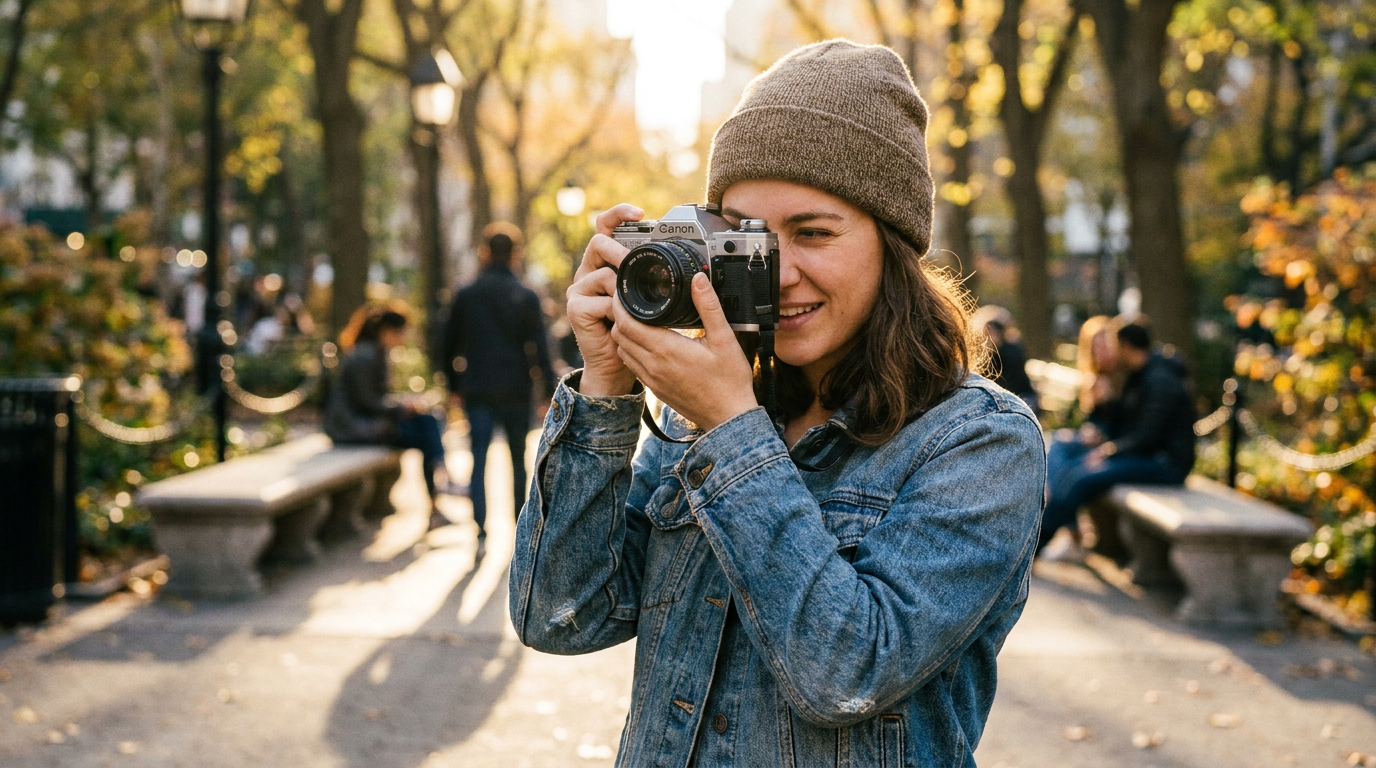
Perhaps the most surprising aspect of this resurgence is the demographic driving it. The strongest argument that this movement is distinct from previous analog revivals is that it is being championed by Generation Z—a cohort that grew up entirely in the digital realm. For these young photographers, shooting on 35mm film is not an act of nostalgia for their childhoods, because they never experienced the film era firsthand. Instead, it is a deliberate creative choice. They are discovering a tactile, physical medium that offers a stark contrast to the virtual, screen-dominated world they inhabit, finding profound satisfaction in the weight and presence of analog creation.[3][5]
At the heart of this appeal is the concept of limitation as liberation. A standard roll of 35mm film contains only 36 exposures, and every single press of the shutter carries a real financial cost. This inherent constraint forces a level of intentionality that digital photography simply does not require. Photographers cannot machine-gun their way through a scene, taking dozens of identical shots to review and delete later. Instead, the medium demands that they slow down, observe their surroundings, and carefully consider their composition before committing to a frame. This slower, more mindful process transforms image-making from mindless content production into a deliberate experience.[3][7]

Furthermore, the analog process inherently rejects the clinical perfection of modern digital sensors. Today's digital cameras and smartphones utilize advanced algorithms to automatically correct lighting, sharpen edges, and erase blemishes. Film, by contrast, is unpredictable and organic. Uneven exposures, color shifts, light leaks, and the characteristic texture of film grain are not viewed as flaws to be corrected, but as unique signatures to be celebrated. Retailers note that younger photographers actively seek out these imperfections, viewing them as proof of authenticity—a tangible sign that a real human being was present in that specific moment.[6]
To truly understand why film produces such a distinct, soulful aesthetic, one must look beyond the camera and examine the physical structure of the medium itself. Unlike a digital sensor, which relies on a rigid, uniform grid of electronic pixels to record light data, photographic film is a marvel of organic chemistry. The image is not captured as a string of binary code, but rather as a physical alteration of chemical compounds spread across a delicate surface. This chemical foundation is what gives film its unique resolution, dynamic range, and characteristic grain structure.[8]
A strip of photographic film is constructed from a transparent plastic base, which is coated with a highly specialized substance known as a photographic emulsion. Despite the name, this is technically a suspension: a warm, semi-liquid gelatin matrix that holds millions of microscopic, light-sensitive crystals. These crystals are primarily composed of silver halides, most commonly silver bromide. The gelatin serves a crucial dual purpose: it prevents the silver bromide crystals from coagulating together, and it provides a stable, buffered environment that allows the necessary chemical reactions to occur when the film is eventually exposed to light.[2]
The magic of analog photography begins the fraction of a second the camera's shutter clicks open. When electromagnetic radiation—in the form of visible light photons—strikes the film's emulsion, it interacts directly with the silver halide crystals. The energy from a photon is absorbed by a halide ion, which causes it to release an electron. This freed electron then travels through the crystal lattice until it encounters a positive silver ion. The electron and the silver ion combine, neutralizing the electrical charge and reverting the ion back into a microscopic speck of metallic silver.[1][2]

The magic of analog photography begins the fraction of a second the camera's shutter clicks open.
This subatomic reaction occurs millions of times across the surface of the film during a single exposure. The areas of the scene that are brightest reflect more photons onto the film, resulting in a higher density of metallic silver specks in those specific regions. However, this initial reaction is incredibly subtle. The clusters of metallic silver are far too small to be seen by the human eye. Together, they form what is known as a "latent image"—an invisible, chemical blueprint of the photograph that is temporarily etched into the emulsion, waiting to be brought to life.[1][2]
To transform this invisible blueprint into a visible photograph, the film must undergo a meticulous sequence of chemical treatments in a darkroom environment, a process collectively known as development. The first and most critical stage involves submerging the exposed film in a chemical bath called the developer. The developer acts as a powerful chemical amplifier, seeking out the microscopic specks of metallic silver that were created during the initial exposure and using them as a catalyst for a much larger reaction.[1]
From a chemical standpoint, the developer solution acts as a reducing agent. It donates electrons to the exposed silver halide crystals, rapidly accelerating the conversion of the entire crystal into opaque, black metallic silver. Crucially, the developer reduces the exposed crystals at a much faster rate than the unexposed ones. As the reaction progresses, the areas of the film that received the most light become dense with dark metallic silver, while the areas that received little to no light remain relatively clear. This creates a negative image, where the light and dark values of the original scene are perfectly inverted.[1][2]
If the development process were to stop here and the film was brought out into the light, the remaining, unexposed silver halide crystals would immediately react to the ambient light, turning the entire strip of film completely black and destroying the image. To prevent this, the film must be transferred to a second chemical bath known as the fixer. The fixing agent works by converting all of the remaining, unexposed silver halides into a soluble silver complex. This complex is then washed away with water, leaving behind only the permanent metallic silver image, rendering the negative completely insensitive to light.[1]

This intricate chemical dance requires precise mechanical vessels to control the initial exposure, which has led to a massive secondary boom in the vintage camera market. Classic 35mm single-lens reflex (SLR) cameras, such as the Canon AE-1, the Nikon FM, and the Pentax K1000, have evolved far beyond their functional purpose. With their heavy metal bodies, tactile winding levers, and mechanical precision, these decades-old devices have become coveted cultural accessories. They offer a sensory pleasure and a build quality that modern, plastic-bodied digital cameras rarely match.[5]
The intense demand for these mechanical tools has dramatically altered the economics of the vintage camera market. Market analysis indicates that prices for popular 35mm SLRs increased by an average of 180% between 2020 and 2024, while certain highly sought-after point-and-shoot models saw appreciation of up to 400%. Unlike digital cameras, which depreciate rapidly as sensor technology advances, quality film cameras are increasingly viewed as investments. Scouring thrift stores, estate sales, and online marketplaces for functional vintage gear has become an integral part of the analog hobby.[3]
Recognizing that this revival is a sustained movement rather than a passing fad, the photography industry is finally beginning to respond with new infrastructure. After years of discontinuing products, manufacturers are investing in analog technology once again. Recent years have seen the introduction of entirely new color film stocks, such as the Harman Phoenix, and major brands have expanded their production capacities to meet the surging demand. Even more remarkably, companies are designing and manufacturing new analog cameras for the first time in decades, providing a reliable entry point for newcomers wary of aging vintage gear.[8]

Despite this positive momentum, the analog revival faces a significant structural hurdle: the rising cost of materials. The global shortage of silver—the fundamental element required for photographic emulsion—combined with supply chain constraints and high consumer demand, has pushed the price of film steadily upward. With some popular emulsions seeing price hikes of 20% to 50% in recent years, film photography is increasingly becoming a premium hobby. This creates a real tension at the heart of the movement, as the rising costs risk pricing out the very demographic of young creatives who are driving its growth.[4]
Interestingly, while the capture medium is entirely analog, the modern film workflow remains deeply intertwined with digital culture. The vast majority of young photographers do not spend hours in a darkroom printing physical photographs onto paper. Instead, they rely on commercial labs to develop their negatives and immediately scan them into high-resolution digital files. These digital scans are then sent directly to their smartphones, where they are shared across social media platforms. This hybrid approach allows them to enjoy the tactile, intentional process of shooting film while still participating in the digital sharing economy.[6]
Ultimately, the resurgence of film photography is a testament to the enduring human desire for physical connection and deliberate creation. Analog cameras will never replace the sheer convenience and technical supremacy of smartphones, but they were never meant to. Film has carved out a permanent sanctuary for those seeking an antidote to the relentless pace of the digital age. By forcing us to slow down, to accept imperfection, and to carefully consider what is worth capturing, film photography ensures that our most cherished memories are created with heart, rather than haste.[7][8]
How we got here
Early 2000s
Digital cameras rapidly overtake film, leading to the discontinuation of many classic film stocks and camera models.
2010s
A small niche of analog purists keeps the medium alive, while vintage cameras hit their lowest market valuations.
2020–2021
During global lockdowns, younger demographics discover film photography as a tactile, offline hobby, sparking a massive surge in demand.
2024
Prices for popular vintage 35mm SLRs peak, showing an average 180% increase in value compared to four years prior.
2025–2026
The industry responds to sustained demand with the release of new film stocks and newly manufactured analog cameras, cementing the revival.
Viewpoints in depth
Analog Purists & Educators
Focus on the chemical craft, the tactile process, and the preservation of the medium's history.
For traditionalists and science educators, the value of film lies in its physical reality. They emphasize that film is not merely an aesthetic filter, but a chemical interaction between light and silver halides. This camp values the darkroom process—mixing developers, controlling temperatures, and understanding the physics of exposure. They view the current revival as a vital lifeline that keeps the manufacturing of these complex chemical emulsions alive, ensuring that the historical craft of photography is preserved for future generations to study and master.
Gen Z Creators
View film as a rebellion against digital perfection, valuing authenticity, limitation, and the physical aesthetic.
Younger photographers approach film as an antidote to the anxiety of the digital age. Having grown up with smartphones that can take thousands of flawless, AI-enhanced photos, they find the infinite choices paralyzing. For this demographic, the appeal of film is its strict limitation: 36 frames, no instant review, and no undo button. They celebrate the unpredictable nature of analog—the grain, the light leaks, and the color shifts—as markers of authenticity. To them, a film photograph feels more 'real' because it requires physical effort and embraces human imperfection.
Industry Analysts & Retailers
Focus on the market growth, camera valuations, supply chain constraints, and consumer behavior.
From a commercial perspective, the analog revival is a lucrative but complex market phenomenon. Analysts track the surging valuations of vintage cameras, noting that mechanical SLRs are now appreciating assets rather than obsolete electronics. However, this camp also highlights the fragility of the trend. They point to the global silver shortage and the dwindling number of technicians capable of repairing decades-old cameras as significant bottlenecks. Retailers celebrate the influx of new customers buying film and paying for lab scans, but warn that continuous price hikes for raw materials could eventually price the core demographic out of the hobby.
What we don't know
- Whether the global supply of silver and manufacturing capacity can scale to meet the long-term demand without pricing out casual hobbyists.
- If the current generation of film shooters will eventually transition to home development and darkroom printing, or remain reliant on lab scans.
Key terms
- Silver Halide
- Light-sensitive chemical compounds (often silver bromide) suspended in film emulsion that react to photons to capture an image.
- Latent Image
- The invisible chemical blueprint formed on photographic film immediately after exposure to light, before it is chemically developed.
- Developer
- A chemical solution that amplifies the latent image by converting exposed silver halide crystals into visible, opaque metallic silver.
- Fixer
- A chemical bath used in the final stages of development that removes unexposed silver halide from the film, making the image permanent and safe to view in daylight.
- Emulsion
- The light-sensitive coating on photographic film, consisting of millions of microscopic silver halide crystals suspended in a gelatin matrix.
Frequently asked
Why is film photography becoming popular again?
Many younger photographers are seeking a slower, more intentional creative process as a break from the instant perfection and infinite scrolling of digital photography. They value the tactile nature of film and its unique, imperfect aesthetic.
What happens chemically when you take a film photo?
When the shutter opens, photons of light strike silver halide crystals in the film's emulsion. This knocks electrons loose, which combine with silver ions to form an invisible 'latent image' of microscopic metallic silver specks.
Why do you have to develop film?
The latent image created by exposure is invisible. A chemical 'developer' amplifies this image by turning the exposed crystals into solid, dark metallic silver. A 'fixer' then washes away the unexposed crystals so the film is no longer sensitive to light.
Is shooting film expensive?
Yes, it has become a premium hobby. Due to global silver shortages and high demand, the cost of film rolls and lab development has risen significantly, with some vintage cameras also seeing massive price increases.
Sources
Source coverage
8 outlets
3 viewpoints surfaced








[1]WikipediaAnalog Purists & Educators
Photographic processing and chemical development
Read on Wikipedia →[2]EBSCOAnalog Purists & Educators
The Chemistry of Photography: Silver Halides and Latent Images
Read on EBSCO →[3]Aesthetics of PhotographyGen Z Creators
The Film Photography Revival: Gen Z and the Analog Movement
Read on Aesthetics of Photography →[4]Glyn DewisIndustry Analysts & Retailers
Fad or Here to Stay? The Film Revival in Numbers
Read on Glyn Dewis →[5]FstoppersGen Z Creators
Vintage Cameras as Cultural Accessories
Read on Fstoppers →[6]Digital Camera WorldIndustry Analysts & Retailers
Japanese photography retailer reveals hipsters love the trendiness of film cameras
Read on Digital Camera World →[7]The Market SocietyAnalog Purists & Educators
Capturing with Heart, Not Haste: The Resurgence of Film Photography
Read on The Market Society →[8]Factlen Editorial TeamIndustry Analysts & Retailers
Synthesis by Factlen editorial team
Read on Factlen Editorial Team →


Every angle. Every day.
Get lifestyle stories with full source coverage and perspective breakdowns delivered to your inbox.