
US Community Solar Surpasses 10-Gigawatt Milestone, Expanding Access to Clean Energy
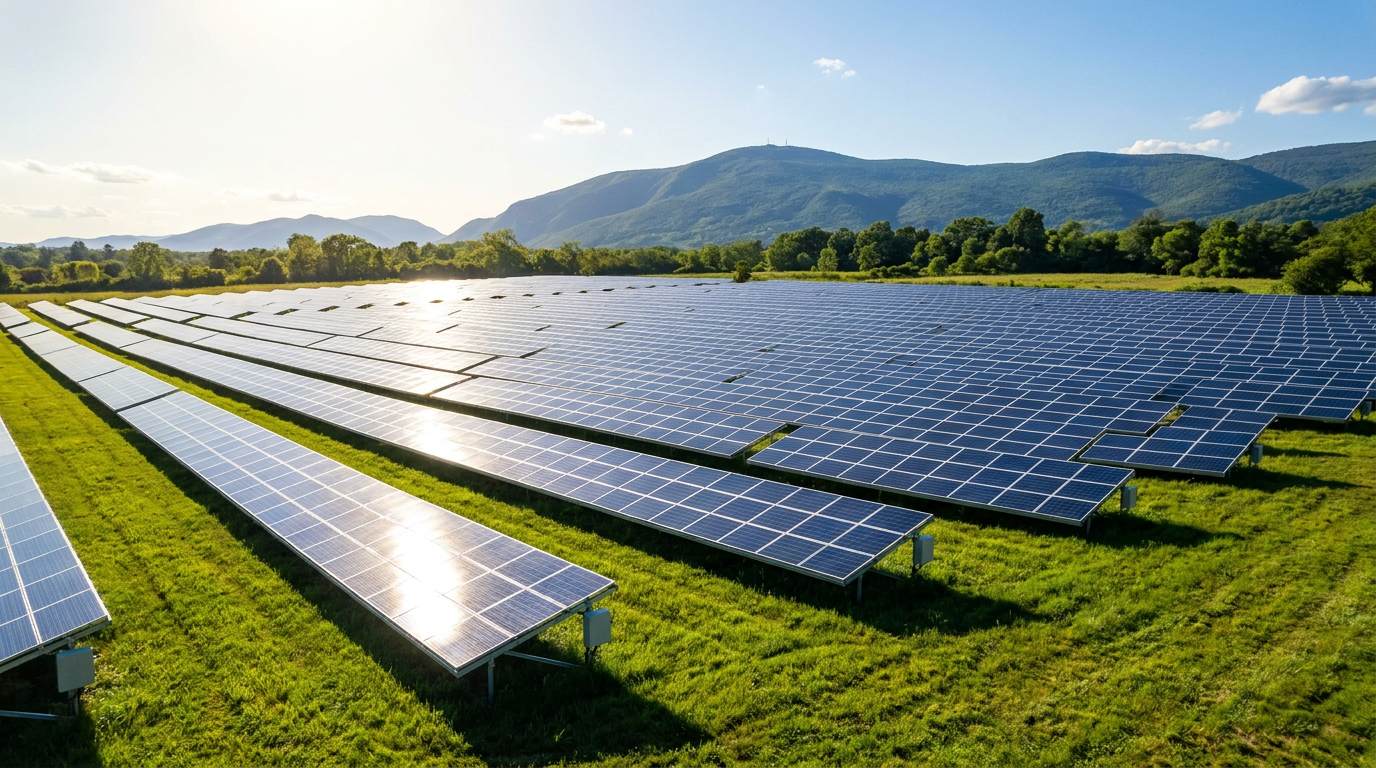
The United States has officially crossed 10 gigawatts of cumulative community solar capacity, a historic milestone driven by a surge in new state programs and projects built on reclaimed land. The model continues to democratize renewable energy by providing direct bill savings to renters and low-income households.
By Factlen Editorial Team
- Clean Energy Developers
- Focuses on the massive 8-gigawatt pipeline, the need to clear interconnection queues, and the push to open new state markets to maintain industry growth.
- Energy Equity Advocates
- Emphasizes the democratization of solar power, arguing that community solar is the essential tool for bringing bill savings to renters and low-income families.
- Public Regulators
- Focuses on the strategic siting of projects to maximize public benefit, such as repurposing coal mines and utilizing state trust lands.
What's not represented
- · Traditional Utility Companies
- · Local Residents living near the arrays
Why this matters
For decades, the financial and environmental benefits of solar power were restricted to homeowners with suitable roofs. The rapid scaling of community solar means renters, apartment dwellers, and low-income families can now secure guaranteed discounts on their electricity bills while supporting local grid resilience.
Key points
- The U.S. community solar sector has officially surpassed 10 gigawatts of cumulative capacity.
- A massive 8-gigawatt development pipeline is expected to drive a 12% national growth rate in 2026.
- New projects are increasingly transforming legacy sites, including a 9.8-megawatt array on a former Illinois coal mine.
- The model democratizes clean energy by allowing renters and low-income households to receive direct utility bill credits.
- Industry growth depends heavily on clearing grid interconnection backlogs and opening new state-level markets.
The United States has officially crossed a historic threshold in its clean energy transition, surpassing 10 gigawatts of cumulative community solar capacity. The achievement marks a turning point for a sector that has rapidly evolved from a niche environmental experiment into a cornerstone of the modern electrical grid.[1][2]
This milestone represents a fundamental shift in how Americans access renewable power. For decades, the benefits of solar energy were largely restricted to homeowners who possessed both a structurally suitable, unshaded roof and the upfront capital required to install expensive hardware.[7][8]
Community solar dismantles that barrier. By allowing renters, apartment dwellers, and low-to-moderate-income households to subscribe to a shared local array, the model democratizes clean energy. Subscribers receive direct credits on their utility bills for the power their portion of the farm generates, guaranteeing monthly savings without any property modifications.[3][7]
A recent joint report by Wood Mackenzie and the Coalition for Community Solar Access confirmed the 10-gigawatt achievement, noting that the sector reached the mark in late 2025 despite tightening macroeconomic conditions and high interest rates.[2]

While mature markets like New York and Maine experienced a slight slowdown last year, resulting in 1.4 gigawatts of new installations, industry analysts project a robust 12 percent growth rate for 2026 as emerging state programs begin to bear fruit.[1][2]
That optimism is anchored by a massive development pipeline. More than 8 gigawatts of community solar projects are currently in the works nationwide, with nearly 30 percent of that capacity already under construction and racing to meet federal tax credit deadlines.[1][2]
The U.S. Department of Energy has heavily championed this model through its National Community Solar Partnership. The agency previously set an ambitious target to enable community solar systems to power the equivalent of 5 million households and generate $1 billion in energy savings, viewing the 10-gigawatt mark as vital proof of concept.[3]
Department of Energy has heavily championed this model through its National Community Solar Partnership.
Beyond the raw numbers, the physical footprint of these projects is actively transforming local landscapes. In Woodford County, Illinois, developers recently commissioned a pair of community solar farms on a reclaimed former coal mine, illustrating the literal transition from legacy fuels to renewables.[5]
The Minonk, Illinois project, built by Nexamp and TurningPoint Energy, utilizes nearly 17,000 domestically manufactured solar panels to generate 9.8 megawatts of power. Local leaders praised the site as a powerful symbol of economic revitalization, turning a dormant industrial hazard into a long-term source of clean energy for the surrounding community.[5]

In urban environments, the model looks different but serves the exact same purpose. The California Public Utilities Commission recently celebrated a new community solar installation built atop a sprawling warehouse rooftop in Oakland.[4]
Operating under California’s Disadvantaged Communities Green Tariff program, the competitively procured Oakland project transforms an underutilized urban space into a cost-competitive asset. It is specifically designed to provide meaningful bill relief to nearby low-income households, advancing the state's environmental justice goals.[4]
Meanwhile, emerging markets in the Southwest are scaling rapidly. In New Mexico, a newly announced 48.4-megawatt portfolio of eight community solar projects is expanding subscriber access across the state, with early demand significantly outpacing available program capacity.[6]
Several of the New Mexico facilities are sited on State Land Trust property. This demonstrates how public-private partnerships can accelerate deployment, utilizing government-owned land to maximize public benefit and streamline the notoriously difficult siting process.[6]

Despite the undeniable momentum, developers still face significant logistical hurdles. Navigating complex federal policy landscapes, strict placed-in-service deadlines, and severe backlogs in regional grid interconnection queues remains a daily challenge that threatens to bottleneck the 8-gigawatt pipeline.[1][2]
How we got here
2018-2020
Early state-level pilot programs launch, proving the viability of the shared-solar subscription model.
October 2021
The U.S. Department of Energy sets a target to power 5 million households with community solar by 2025.
Late 2025
The U.S. officially surpasses 10 gigawatts of cumulative community solar capacity, despite tightening market conditions.
June 2026
Major projects come online in emerging markets, including a 9.8 MW array on a reclaimed Illinois coal mine.
Viewpoints in depth
Clean Energy Developers
Focuses on the massive 8-gigawatt pipeline and the need to clear interconnection queues.
For developers and industry analysts, the 10-gigawatt milestone is a hard-won victory, but their focus remains entirely on the future. The sector is currently sitting on a massive 8-gigawatt development pipeline, representing billions of dollars in investment. However, developers argue that realizing this potential requires urgent reform of the grid's interconnection queues, where projects often languish for years waiting for approval to plug into the regional network. They are also heavily lobbying state legislatures in Ohio, Pennsylvania, and Michigan to pass laws that would open those massive markets to community solar, ensuring the industry has room to run once federal tax incentives eventually phase down.
Energy Equity Advocates
Emphasizes the democratization of solar power and direct bill savings for vulnerable households.
Equity advocates view community solar not just as an environmental tool, but as a critical mechanism for economic justice. For decades, the financial benefits of solar power—namely, drastically reduced electricity bills—were exclusively available to homeowners who could afford the steep upfront costs of rooftop panels. Advocates argue that community solar corrects this imbalance by allowing renters, apartment dwellers, and low-income families to subscribe to a shared array with zero upfront cost. By mandating that a certain percentage of these projects serve low-to-moderate-income households, advocates ensure that the clean energy transition actively reduces the energy burden on the communities that need relief the most.
Public Regulators
Focuses on the strategic siting of projects to maximize public benefit and repurpose legacy land.
For state and federal regulators, community solar solves multiple policy problems simultaneously. Agencies like the Department of Energy and state-level public utility commissions are increasingly steering these projects toward underutilized or environmentally compromised land. By incentivizing developers to build on capped landfills, warehouse rooftops, and reclaimed coal mines, regulators avoid the political friction of taking pristine agricultural land out of production. This strategic siting allows the government to hit aggressive climate targets while simultaneously driving economic revitalization in former fossil-fuel communities.
What we don't know
- How quickly regional grid operators can clear the massive backlog in interconnection queues to bring the 8-gigawatt development pipeline online.
- Whether pending legislation in states like Ohio, Pennsylvania, and Michigan will pass in time to offset the eventual phase-down of federal tax credits.
- How traditional utility companies will adapt their business models as distributed, community-owned generation captures a larger share of the market.
Key terms
- Community Solar
- A local solar facility shared by multiple subscribers who receive credits on their electricity bills for their share of the power produced.
- Gigawatt (GW)
- A unit of power equal to one billion watts, roughly enough to power 750,000 homes.
- Interconnection Queue
- The waiting list of proposed power projects seeking approval to connect to the regional electric grid.
- Disadvantaged Communities Green Tariff
- A California program that subsidizes clean energy projects to provide direct electricity bill discounts to low-income households.
Frequently asked
What exactly is community solar?
Community solar is a local solar facility shared by multiple subscribers. Instead of putting panels on your own roof, you subscribe to a portion of the local farm's output and receive a credit on your utility bill.
Who benefits the most from these programs?
Renters, apartment dwellers, and low-to-moderate-income households benefit most, as the model removes the need for homeownership and the high upfront costs of traditional solar installation.
Why did the market slow down slightly in 2025?
Mature markets like New York and Maine experienced a temporary contraction due to policy transitions and interconnection delays, though the national market is projected to rebound by 12% in 2026.
Where are these solar farms being built?
Developers are increasingly utilizing underused spaces, including warehouse rooftops in urban areas, capped landfills, and reclaimed fossil fuel sites like former coal mines.
Sources
Source coverage
8 outlets
3 viewpoints surfaced







[1]PV Magazine USAClean Energy Developers
US community solar surpasses 10 GW milestone
Read on PV Magazine USA →[2]Wood MackenzieClean Energy Developers
US community solar surpasses 10 GW milestone in 2025 despite tightening market conditions
Read on Wood Mackenzie →[3]U.S. Department of EnergyPublic Regulators
National Community Solar Partnership Targets
Read on U.S. Department of Energy →[4]California Public Utilities CommissionPublic Regulators
CPUC Celebrates Community Solar Milestone in Oakland
Read on California Public Utilities Commission →[5]NexampClean Energy Developers
Nexamp and TurningPoint Energy Commission Community Solar Projects on Former Illinois Coal Mine
Read on Nexamp →[6]ForeFront PowerClean Energy Developers
Pluma Construction, ForeFront Power and Standard Solar Announce 48.4 MW Community Solar Portfolio in New Mexico
Read on ForeFront Power →[7]Coalition for Community Solar AccessEnergy Equity Advocates
Democratizing solar energy
Read on Coalition for Community Solar Access →[8]Factlen Editorial TeamEnergy Equity Advocates
Synthesis by Factlen editorial team
Read on Factlen Editorial Team →
Every angle. Every day.
Get community stories with full source coverage and perspective breakdowns delivered to your inbox.