
U.S. to Phase Out HIV/AIDS Funding for South Africa Over Policy Dispute
The State Department confirmed it will permanently end PEPFAR funding in South Africa by 2027, citing the country's failure to meet U.S. diplomatic and domestic policy demands.
By Factlen Editorial Team
- South African Government & Advocates
- Views the cuts as a catastrophic weaponization of humanitarian aid.
- U.S. Administration
- Argues PEPFAR was not meant to be permanent and South Africa must fund its own care.
- South African Opposition
- Blames the South African government for failing to diplomatically resolve the dispute.
- Global Health Observers
- Focuses on the geopolitical vacuum created by the U.S. withdrawal.
What's not represented
- · South African patients currently relying on PEPFAR-funded clinics for daily antiretroviral therapy.
- · Frontline healthcare workers in South Africa whose salaries are funded by the U.S. program.
Why this matters
This decision abruptly removes the financial backbone of the world's largest HIV response, threatening the health of 7.8 million South Africans and signaling a major shift in how the U.S. uses humanitarian aid as diplomatic leverage.
Key points
- The U.S. is permanently phasing out PEPFAR funding for South Africa, aiming to close the program by early 2027.
- The Trump administration cites South Africa's refusal to alter affirmative action policies and diplomatic ties as the reason for the cuts.
- South Africa has the world's largest HIV epidemic, with 7.8 million people living with the virus.
- U.S. funding dropped from $456 million in 2024 to just $25 million allocated so far in 2026.
- The U.S. has also excluded South Africa from a program supplying the long-acting HIV prevention drug lenacapavir.
- China recently announced a $3.49 million funding partnership to support HIV prevention in South Africa.
The U.S. State Department has confirmed it will permanently phase out funding for the President’s Emergency Plan for AIDS Relief (PEPFAR) in South Africa, marking a historic and controversial shift in American global health policy. The phased drawdown will end decades of U.S. support that has provided billions of dollars for HIV testing, treatment, and prevention in the country. According to congressional aides and administration officials, the U.S. aims to fully close out the program by early 2027, with funding for specific healthcare workers winding down over the next year. U.S. Ambassador Leo Brent Bozell III is expected to formally deliver the news to South Africa's Ministry of Health in the coming days, cementing a decision that has been looming over the bilateral relationship for more than a year.[1][2]
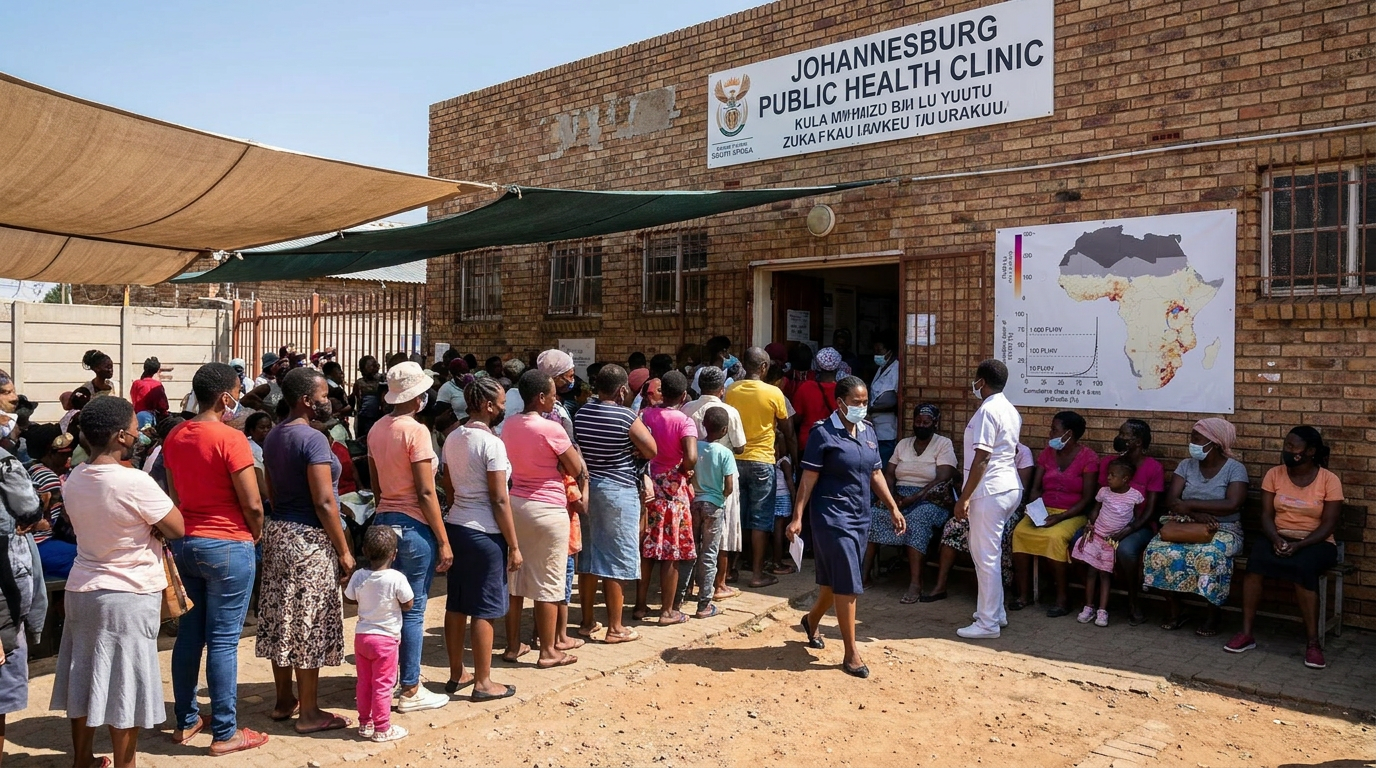
The stakes of the withdrawal are immense. South Africa currently battles the world's largest HIV epidemic, with approximately 7.8 million people living with the virus. Since its launch under President George W. Bush, PEPFAR has channeled over $8 billion into the country, serving as the financial and logistical backbone of its public health response. For years, the program has been widely regarded as one of the most successful U.S. foreign policy initiatives in history, credited with saving millions of lives and stabilizing communities ravaged by the disease. The abrupt removal of this support threatens to upend the country's medical infrastructure, leaving local health departments scrambling to find alternative funding to keep clinics open and antiretroviral therapies flowing to vulnerable populations.[2][3]
The financial impact of the diplomatic rift is already being felt on the ground. While South Africa received $456 million in U.S. HIV/AIDS funding in 2024, that figure plummeted to $213 million in 2025 amid sweeping foreign aid reviews. So far in 2026, only $25 million has been allocated to the country. A temporary $115 million bridging plan, designed to maintain core life-saving services, expired at the end of March. With the bridging funds exhausted and no new comprehensive agreements in place, the phased drawdown effectively forces the South African healthcare system to immediately begin absorbing costs that were previously covered by American taxpayers, accelerating the timeline for a potential public health crisis.[1][3]

The Trump administration attributes the termination directly to South Africa's failure to meet specific policy demands outlined in a February 2025 executive order. State Department officials cited a list of unmet conditions, including demands that Pretoria alter its Black Economic Empowerment policies, address the controversial "Kill the Boer" chant, and significantly reduce its diplomatic partnership with Iran. The executive order accused the South African government of discriminating against its white Afrikaner minority, directing U.S. agencies to halt aid unless sweeping domestic changes were implemented. U.S. officials maintain that they repeatedly warned South Africa that PEPFAR funding would be terminated if these concerns were ignored, arguing that the African nation simply failed to heed the administration's ultimatums.[2][3]
Defending the decision, U.S. officials argue that PEPFAR was never intended to be a permanent entitlement program. They contend that South Africa, classified as a middle-income country, possesses the economic capacity and internal resources to fund its own public health initiatives without indefinite reliance on the United States. From the administration's perspective, foreign assistance must be explicitly tied to broader diplomatic alignment and shared values. By refusing to adjust its domestic policies and foreign relations to align with Washington's requests, officials argue that South Africa has forfeited its right to American financial support, emphasizing that U.S. taxpayers should not subsidize the healthcare systems of nations that actively oppose American geopolitical interests.[2]

officials argue that PEPFAR was never intended to be a permanent entitlement program.
The diplomatic standoff has also severed South Africa's access to critical new medical breakthroughs. The State Department recently excluded the country from a plan to supply 2 million doses of lenacapavir, a highly effective, twice-yearly injectable drug used for HIV prevention. Because the drug only requires two injections a year, it is considered a game-changer for high-risk populations who struggle with daily pill regimens. U.S. officials reiterated that South Africa should purchase the American-made medication itself, stating that U.S.-funded doses will not be contributed to the country. This exclusion highlights how the broader political dispute is directly impacting the availability of cutting-edge preventative care on the ground.[4]
South African officials have vehemently rejected the administration's accusations, particularly the claims of systemic discrimination against white Afrikaners. They maintain that current affirmative action and land reform policies are essential tools for addressing the enduring, structural inequalities left behind by apartheid, which ended in the early 1990s. Pretoria views the U.S. demands as an unacceptable infringement on its national sovereignty and domestic governance. Furthermore, South African leaders have pushed back against Washington's attempts to dictate their foreign policy, asserting their right to maintain independent diplomatic relations with nations like Iran, regardless of U.S. pressure.[3]
Public health experts and congressional aides have sounded the alarm, warning that the abrupt withdrawal of funds could be catastrophic for the region. Critics argue that the administration's demands are entirely political and completely divorced from public health objectives. By weaponizing humanitarian aid to force geopolitical concessions, they warn that the U.S. is jeopardizing decades of hard-won progress in curbing the epidemic. Without a clear replacement for the lost funding, health advocates fear an inevitable surge in preventable HIV infections and AIDS-related mortality, effectively punishing millions of vulnerable patients for the diplomatic disagreements of their government.[2][4]

Within South Africa, the government is facing intense domestic criticism for its handling of the crisis. Solidarity, a prominent South African trade union, accused Pretoria of "treading water" and failing to actively resolve the 17-month dispute with Washington. The union argued that the government's ideological stubbornness has resulted in a devastating loss of critical funding. From the perspective of domestic critics, it is the ordinary citizens and frontline healthcare workers who are ultimately paying the price for the deteriorating bilateral relationship, prompting urgent calls for the South African government to resume negotiations and find a workable compromise with the U.S. administration.[5]
The U.S. withdrawal is already creating a geopolitical vacuum in the region, and rival nations are moving quickly to fill it. Shortly after the U.S. cuts accelerated, the People's Republic of China announced a $3.49 million funding partnership, facilitated by UNAIDS, to expand HIV prevention services across South Africa. While the Chinese contribution is a fraction of the historical U.S. investment, it signals a clear shift in global health diplomacy. As American influence wanes due to conditional aid policies, Beijing is leveraging the opportunity to strengthen its ties with Pretoria, offering no-strings-attached support for critical public health infrastructure.[6]
As the 2027 termination deadline approaches, global health organizations are scrambling to assess how the South African healthcare system will survive the massive financial shortfall. The immediate focus is on ensuring service continuity for the millions of patients currently relying on PEPFAR-funded clinics for their daily antiretroviral therapy. However, without a sudden diplomatic breakthrough or a massive influx of funding from alternative international donors, the structural integrity of South Africa's HIV response remains in severe jeopardy. The coming months will test whether the country can independently sustain the medical infrastructure required to keep the world's largest epidemic under control.[2][4]
How we got here
2003
President George W. Bush launches PEPFAR, initiating decades of U.S. support for global HIV/AIDS treatment.
February 2025
President Trump issues an executive order threatening to halt aid to South Africa over its domestic and foreign policies.
October 2025
The U.S. approves a temporary $115 million bridging plan to maintain HIV services in South Africa through March 2026.
March 2026
The bridging plan expires, leaving South Africa with only $25 million allocated for the year.
June 2026
The State Department formally confirms the phased termination of all PEPFAR funding for South Africa by 2027.
Viewpoints in depth
The U.S. Administration's View
PEPFAR was never meant to be permanent, and South Africa must fund its own care.
U.S. officials argue that South Africa, as a middle-income country, has the economic capacity to manage its own public health programs without relying on American taxpayers. Furthermore, the administration insists that foreign aid must be tied to diplomatic alignment and domestic policy standards. By failing to address U.S. concerns over affirmative action policies, land reform, and its geopolitical partnership with Iran, South Africa has forfeited its right to continued American financial support.
South African Health Advocates' View
The cuts are a politically motivated disaster that will cost lives.
Public health experts and South African officials view the funding withdrawal as a catastrophic weaponization of humanitarian aid. They argue that the U.S. demands—such as altering Black Economic Empowerment laws—are entirely political and have nothing to do with health outcomes. Advocates warn that abruptly removing the financial backbone of the world's largest HIV response will inevitably lead to a surge in preventable infections and deaths, erasing decades of hard-won progress.
South African Opposition's View
The South African government failed to manage a critical diplomatic relationship.
Domestic critics and trade unions like Solidarity place the blame squarely on Pretoria. They argue that the South African government has spent the last 17 months 'treading water' instead of actively negotiating a resolution to the dispute with Washington. From this perspective, the ideological stubbornness of the ruling party has resulted in ordinary citizens and healthcare workers paying the ultimate price for deteriorating bilateral relations.
What we don't know
- How the South African government plans to replace the hundreds of millions of dollars in lost annual funding.
- Whether the funding cuts will lead to an immediate spike in new HIV infections and mortality rates.
- If other international donors or rival nations will step in to fully cover the financial shortfall left by the U.S.
Key terms
- PEPFAR
- The President's Emergency Plan for AIDS Relief, a massive U.S. global health initiative launched in 2003 to combat HIV/AIDS.
- Lenacapavir
- A highly effective, twice-yearly injectable medication used to prevent HIV infection.
- Black Economic Empowerment (BEE)
- A South African policy aimed at addressing the inequalities of apartheid by increasing the economic participation of Black citizens.
- Middle-income country
- A nation with a per capita income that falls between low-income and high-income thresholds, often used to argue that the country requires less foreign aid.
Frequently asked
What is PEPFAR?
The President's Emergency Plan for AIDS Relief (PEPFAR) is a U.S. government initiative launched in 2003 to address the global HIV/AIDS epidemic.
Why is the U.S. cutting funding to South Africa?
The administration cited South Africa's failure to meet policy demands, including altering affirmative action laws and reducing diplomatic ties with Iran.
How many people in South Africa have HIV?
Approximately 7.8 million people in South Africa are living with HIV, making it the largest epidemic in the world.
When will the funding completely end?
The State Department aims to fully close out PEPFAR programming in South Africa by early 2027.
Sources
Source coverage
6 outlets
4 viewpoints surfaced






[1]The New York TimesU.S. Administration
U.S. to End AIDS Funding for South Africa
Read on The New York Times →[2]SemaforU.S. Administration
US plans to permanently end PEPFAR funding in South Africa
Read on Semafor →[3]The Kenya TimesSouth African Government & Advocates
South Africa Faces HIV Funding Cut As Trump Administration Moves To End PEPFAR Support
Read on The Kenya Times →[4]Health Policy WatchSouth African Government & Advocates
South Africa may be excluded from future PEPFAR grants as its relations with the US deteriorate
Read on Health Policy Watch →[5]PolitySouth African Opposition
Solidarity calls on SA government to respond urgently to US demands
Read on Polity →[6]European AIDS Treatment GroupGlobal Health Observers
China unveils US$ 3.49 million HIV prevention support for South Africa
Read on European AIDS Treatment Group →


Every angle. Every day.
Get news politics stories with full source coverage and perspective breakdowns delivered to your inbox.