
Triathlon Injury Report: Slupek's 10-Month Comeback and Vannerson's Rapid Recovery Highlight June Returns
As the 2026 global triathlon season enters its crucial summer stretch, athletes like Roksana Slupek and Reese Vannerson are proving that major injuries are just temporary setbacks. Their inspiring returns to the WTCS circuit highlight a wave of resilience across the sport.
By Factlen Editorial Team
- Sports Medical Teams
- Emphasizes the advancements in physical therapy and phased rehabilitation that are shrinking recovery timelines.
- Athlete Psychology Advocates
- Focuses on the hidden mental toll of injuries and the psychological courage required to return to elite competition.
- Strategic Coaches
- Prioritizes long-term career health and Olympic cycles over immediate race results, advocating for cautious returns.
What's not represented
- · Sponsors and Brand Partners
- · Race Organizers
Why this matters
In a sport where a single crash can derail an entire Olympic qualification cycle, these rapid recoveries demonstrate the evolving standard of physical therapy and the profound mental fortitude required to compete at the highest level.
Key points
- Roksana Slupek returned to the WTCS circuit after 10 months out, securing 18th place in Alghero with a top-tier run split.
- American Reese Vannerson raced in Chengdu just six weeks after breaking his collarbone in a devastating bike crash.
- Leo Bergere made his T100 season debut in San Francisco after a four-month battle with a knee injury, speaking openly about the mental toll.
- Kate Waugh and Sam Dickinson are taking cautious approaches to their respective calf and foot injuries, prioritizing long-term health.
The 2026 global triathlon season has been defined as much by the battles in the medical tent as the sprints on the blue carpet. With the World Triathlon Championship Series (WTCS) and the T100 Triathlon World Tour running at full throttle, the physical toll on the world's elite has been immense. Recent weeks have seen high-profile crashes, including reigning WTCS champion Matt Hauser going down spectacularly on the bike course in Alghero, Italy [4]. Yet, for every devastating crash, the sport is witnessing equally remarkable stories of resilience. As the June calendar heats up, several athletes are making triumphant returns, proving that modern rehabilitation and sheer mental fortitude can rewrite the standard injury playbook.[4]
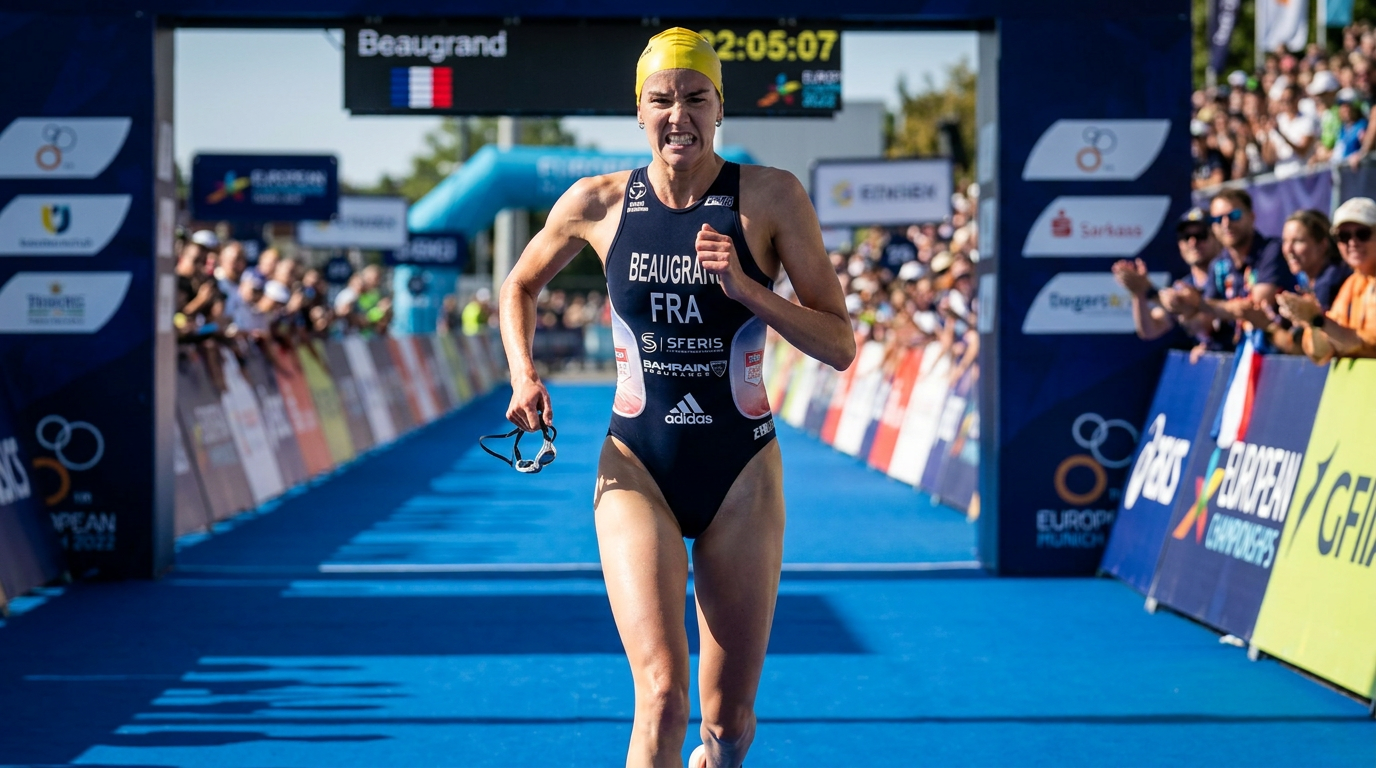
Polish standout Roksana Slupek provided one of the most emotional highlights at WTCS Alghero. Slupek had been absent from the top tier of racing for ten agonizing months following a severe bike crash at the Hamburg WTCS event last summer [1]. The road back was fraught with uncertainty, and even in the weeks leading up to Alghero, a minor injury worry forced her to reduce her training load [1]. Stepping back onto the pontoon against the deepest field in the world was a massive test of both her physical healing and her psychological readiness to race in a tight pack.[1]
Slupek did more than just survive the choppy Sardinian waters and the highly technical bike course; she genuinely thrived in her return to the highest level of the sport. She crossed the finish line in a highly commendable 18th place, a result that far exceeded the baseline expectations for an athlete coming off such an extended absence [1]. Most impressively, Slupek clocked a blistering 34:36 in the 10-kilometer run, which tied for the seventh-best split of the entire day among the world's fastest women [1]. The performance shattered her own modest expectations and sent a clear signal to the rest of the WTCS field that she is rapidly returning to her World Cup-medalist form [1].[1]

Across the globe, American athlete Reese Vannerson engineered a recovery timeline that left even seasoned high-performance coaches stunned. Competing in Haikou, China, earlier this spring, the young triathlete suffered a heavy crash that resulted in a broken collarbone [2]. For elite triathletes, a fractured clavicle is notoriously difficult to rehabilitate, primarily because the overhead motion of swimming places immense, repetitive stress on the healing bone [2]. For nearly two weeks, Vannerson was completely immobilized, forced to sit with his thoughts and practice extreme patience during the critical first year of the Olympic qualification cycle [2]. The sudden halt to his momentum was a jarring experience for an athlete whose entire career trajectory had been defined by constant forward motion [2].[2]
Rather than writing off the season, Vannerson and his medical team initiated an aggressive, phased physical therapy regimen. Running returned first, followed by indoor cycling, and finally, the pool [2]. Just six weeks after lying in an ambulance in China, Vannerson stepped onto the start line at the World Triathlon Cup in Chengdu, where he successfully finished the race [2]. A week later, he backed it up by racing at WTCS Yokohama, the highest echelon of short-course racing [2]. USA Triathlon National Team coach Parker Spencer described Vannerson's rapid return as "nothing short of incredible," praising the young athlete's grit in beating the medical odds [2].[2]
Rather than writing off the season, Vannerson and his medical team initiated an aggressive, phased physical therapy regimen.
The mental toll of these injuries is often heavier than the physical damage, a reality that French Olympic bronze medalist Leo Bergere recently laid bare. Bergere was sidelined for four months with a persistent knee injury that derailed his early-season ambitions on the T100 tour [3]. Watching his rivals battle for podiums in Singapore and Miami from the sidelines induced a profound sense of frustration and doubt [3]. Bergere admitted that the lack of consistency in his training made it difficult to maintain a positive mindset, as he constantly worried whether the knee would hold up to elite-level volume [3].[3]

Bergere finally made his long-awaited return to the blue carpet at the T100 San Francisco race in early June. Taking a highly measured approach, he focused on taking the season "one race at a time" rather than projecting too far into the future or setting unrealistic podium expectations [3]. His transparency about the psychological struggle of rehab has resonated widely across the endurance sports community, highlighting that even Olympic medalists are not immune to the dark days of recovery [3]. His successful navigation of the brutal, hilly San Francisco course marked a critical turning point in his 2026 campaign, proving his knee could withstand the ultimate test.[3]
While Slupek, Vannerson, and Bergere celebrate their returns, other stars are currently navigating the difficult "risk versus reward" calculus of the rehab process. British powerhouse Kate Waugh, the defending T100 series champion, has taken a highly cautious approach to a slow-healing calf injury [5]. Waugh made the difficult decision to withdraw from both the Gold Coast season opener and the recent T100 Spain event, prioritizing her long-term health over immediate points [5]. She noted that pushing a minor injury too soon could jeopardize her entire WTCS and T100 season [5].[5]
Similarly, British Olympic medalist Sam Dickinson is facing a lengthy and frustrating spell on the sidelines after being diagnosed with a Grade 4 bone stress—a severe injury that borders on a possible fracture—in his second metatarsal following the T100 Singapore race [6]. The foot injury forced Dickinson to miss both the T100 San Francisco event and his highly anticipated home WTCS race in London [6]. Despite the devastating timing of the setback, Dickinson has publicly committed to channeling his energy into his recovery, stating his mindset is to "rehab as hard as I normally train," embodying the relentless work ethic that defines the sport's top tier [6].[6]

Ultimately, the 2026 season is proving that the true measure of a triathlete isn't just their wattage on the bike or their pace on the run, but their capacity to rebuild when the sport breaks them down. As medical protocols advance and athletes become more sophisticated in their recovery strategies, the timeline from the hospital bed back to the blue carpet is shrinking. For fans watching Slupek surge through the run in Alghero or Vannerson dive into the water in Chengdu, these comebacks offer the most uplifting victories of the year.
How we got here
Summer 2025
Roksana Slupek suffers a severe bike crash at WTCS Hamburg, beginning a 10-month absence.
Spring 2026
Reese Vannerson breaks his collarbone in a crash in Haikou, China.
May 9, 2026
Vannerson makes a rapid return to racing at the World Triathlon Cup in Chengdu, just six weeks after his crash.
May 30, 2026
Slupek returns to the WTCS circuit in Alghero, securing 18th place with a blistering run split.
June 6, 2026
Leo Bergere returns to the T100 tour in San Francisco after a four-month battle with a knee injury.
Viewpoints in depth
Sports Medical Teams
Emphasizes the advancements in physical therapy and phased rehabilitation that are shrinking recovery timelines.
Medical professionals in elite endurance sports point to cases like Reese Vannerson's six-week collarbone recovery as proof of evolving rehab protocols. Rather than total rest, modern sports medicine utilizes aggressive, phased re-entry—starting with low-impact modalities like running and indoor cycling before reintroducing the heavy shoulder load of swimming. These teams argue that maintaining cardiovascular fitness while protecting the localized injury is the key to preventing a lost season.
Athlete Psychology Advocates
Focuses on the hidden mental toll of injuries and the psychological courage required to return to elite competition.
For advocates focused on athlete mental health, the physical healing is only half the battle. As Leo Bergere openly discussed, the isolation of watching competitors race while dealing with a stagnant rehab process can breed profound doubt and anxiety. Returning to the pack—especially after a traumatic bike crash like Roksana Slupek's—requires immense psychological fortitude to overcome the fear of reinjury and trust the body in high-stakes, high-speed environments.
Strategic Coaches
Prioritizes long-term career health and Olympic cycles over immediate race results, advocating for cautious returns.
High-performance coaches often have to protect athletes from their own competitive drive. The "risk versus reward" calculus cited by Kate Waugh is a prime example of this philosophy. Coaches argue that rushing back for a single event on the T100 or WTCS calendar is rarely worth the risk of turning a minor strain into a chronic issue. They advocate for skipping early-season races to ensure the athlete is fully bulletproof for the World Championship finals and Olympic qualification windows.
What we don't know
- Whether Kate Waugh's calf injury will heal in time for the crucial mid-summer WTCS events.
- How Sam Dickinson's Grade 4 bone stress will impact his chances of securing a spot for the LA 2028 qualification cycle.
Key terms
- WTCS
- World Triathlon Championship Series, the highest tier of short-course elite triathlon racing.
- T100 Triathlon World Tour
- A premium 100-kilometer distance racing series featuring a contracted roster of the world's top professional triathletes.
- Grade 4 bone stress
- A severe stress reaction in the bone that is on the verge of, or already is, a stress fracture, requiring significant rest.
- Blue carpet
- The iconic blue finishing chute used at World Triathlon events.
Frequently asked
How long was Roksana Slupek out of WTCS racing?
She was sidelined for 10 months following a severe bike crash at the Hamburg WTCS event last summer.
What injury did Reese Vannerson suffer?
Vannerson suffered a broken collarbone during a bike crash in Haikou, China, which is a notoriously difficult injury for swimmers to rehabilitate.
Why did Kate Waugh withdraw from recent T100 races?
The defending T100 champion withdrew from the Gold Coast and Spain races to allow a slow-healing calf injury to fully recover, avoiding long-term damage.
Sources
Source coverage
6 outlets
3 viewpoints surfaced





[1]World Triathlon
Five things we took away from WTCS Alghero 2026
Read on World Triathlon →[2]USA TriathlonSports Medical Teams
Reese Vannerson Returns to Racing Six Weeks After Breaking Collarbone
Read on USA Triathlon →[3]T100 Triathlon World TourAthlete Psychology Advocates
Leo Bergere on his injury battles and return to racing
Read on T100 Triathlon World Tour →[4]Tri247Strategic Coaches
WTCS champion Matt Hauser insists he was 'smiling' despite suffering a shocking crash in Alghero
Read on Tri247 →[5]Triathlon TodayStrategic Coaches
Kate Waugh Withdraws from T100 Start List Again due to Calf Injury
Read on Triathlon Today →Injury blow rules Brit star out of home WTCS race and T100 San Francisco
Read on Tri247 →
More in sports
See all 29 stories →Standings
Champions Chess Tour Standings: Duda and Lazavik Chase Carlsen as Esports World Cup Roster Takes Shape
7 sources
Injury
The Comeback Trail: Teague-Neeld and Sinclair Headline Crucial Injury Returns Across Global Netball
7 sources
Standings
Championship Picture: Manchester Thunder Claim NSL Crown as SSN and ANZ Premiership Reach Do-or-Die Stages
6 sources

Injury
AFL Injury Update: Brisbane's Cavalry Nears Return as Hawthorn Manages Mid-Season Setbacks
7 sources

Every angle. Every day.
Get sports stories with full source coverage and perspective breakdowns delivered to your inbox.