
The Ultimate Guide to Buying an E-Bike in 2026: Motors, Batteries, and Classes Explained
As electric bicycles mature into sleek, highly integrated machines in 2026, navigating the market requires understanding key metrics like torque, watt-hours, and sensor types. This comprehensive guide demystifies e-bike technology to help buyers choose the perfect model for their commuting, cargo, or recreational needs.
By Factlen Editorial Team
- Urban Commuters
- Prioritizing efficiency, reliability, and the ability to replace daily car trips.
- Recreational & Trail Riders
- Focusing on natural ride feel, high torque, and off-road capability.
- Accessibility & Senior Riders
- Valuing stability, ease of use, and physical assistance for mobility challenges.
- Safety & Regulatory Officials
- Focusing on class compliance, battery safety standards, and speed limits.
What's not represented
- · Traditional analog cyclists concerned about trail crowding
- · Pedestrians navigating shared multi-use paths with high-speed e-bikes
Why this matters
Purchasing the wrong e-bike can lead to thousands of dollars wasted on a machine that lacks the torque for your local hills or the battery capacity for your daily commute. Understanding the underlying engineering ensures you invest in a vehicle that seamlessly replaces car trips, improves your health, and perfectly matches your lifestyle.
Key points
- Motor torque (Nm) is more important than wattage for climbing hills and hauling cargo.
- Mid-drive motors leverage the bike's gears for superior efficiency compared to hub motors.
- Torque sensors provide a natural, bionic-leg feel, while cadence sensors act like an on/off switch.
- Battery capacity should be measured in Watt-hours (Wh) to accurately compare range across models.
- Class 1 and 2 e-bikes are limited to 20 mph, while Class 3 models can reach 28 mph.
- Hydraulic disc brakes are considered a mandatory safety feature due to the heavy weight of e-bikes.
The electric bicycle market in 2026 has reached a state of refined maturity, shedding the clunky, bolted-on aesthetics of early iterations in favor of sleek integration and specialized engineering. Today’s e-bikes feature batteries tucked invisibly into downtubes and motors so compact they are easily mistaken for standard bottom brackets. This evolution has transformed the e-bike from a niche novelty into a primary mode of transportation and recreation for millions. However, this technical maturation has also introduced a dizzying array of specifications—from torque ratings and watt-hours to sensor types and legal classifications. Navigating this landscape requires moving beyond marketing buzzwords to understand the underlying mechanics of how these machines actually operate.[1][8]
The most common mistake new buyers make is fixating entirely on motor wattage. It is easy to assume that a 750-watt motor is universally superior to a 250-watt motor, but industry experts caution that wattage is merely a measure of raw electrical consumption, not real-world performance. In the electric bike world, watts dictate your potential top speed, but torque—measured in Newton-meters (Nm)—is the actual muscle. Torque is the rotational force that gets a heavy bike moving from a dead stop at a traffic light or pulls a rider up a steep incline without stalling.[5][7]
For flat urban commuting, a motor producing 30 to 40 Nm of torque is generally sufficient. However, for riders tackling hilly terrain, hauling groceries, or navigating off-road trails, a motor outputting 60 to 85 Nm or more becomes essential. A high-torque 250-watt motor will easily outperform a low-torque 750-watt motor on a steep climb. Understanding this distinction prevents buyers from overpaying for high-wattage systems that ultimately feel sluggish when the road tilts upward.[7][8]

Beyond raw power, the placement of the motor fundamentally alters the riding experience. Hub motors, located in the center of the rear or front wheel, are the most common and affordable option. They push or pull the bike independently of the gears, making them excellent for flat-terrain cruising and throttle-heavy riding. However, because they do not leverage the bicycle's drivetrain, they can struggle on long, steep climbs and may overheat under heavy loads.[3][4]
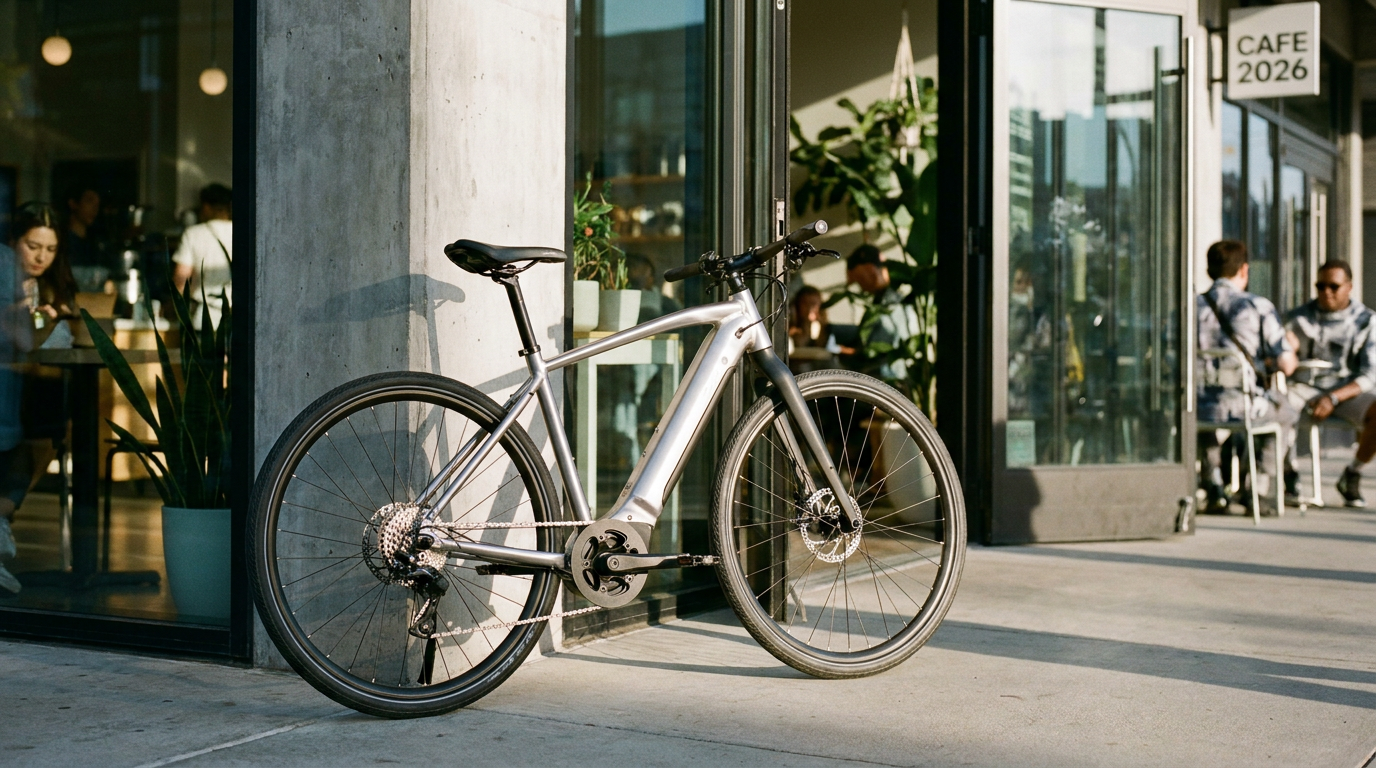
Mid-drive motors, positioned at the pedals, represent the premium standard for modern e-bikes. Because a mid-drive motor powers the chain directly, it takes full advantage of the bike’s rear cassette. When a rider shifts into an easier gear for a climb, the motor also benefits from that mechanical advantage, allowing it to spin efficiently and deliver massive torque without draining the battery. This synergy between human gearing and electric assist makes mid-drives the undisputed choice for mountain biking, heavy cargo hauling, and steep urban environments.[3][5]
The way a motor decides to deliver its power is governed by its sensor technology, which dictates whether the bike feels like a natural extension of the rider or a jerky moped. Basic e-bikes rely on cadence sensors, which act essentially like an on/off switch. They detect whether the pedals are turning and deliver a predetermined burst of power. This can feel abrupt, often lurching the rider forward the moment the cranks rotate, regardless of how much effort the rider is actually exerting.[3][8]
In contrast, premium e-bikes utilize torque sensors, which measure the exact amount of physical force the rider is applying to the pedals in real-time. The motor then multiplies that effort proportionally. If you pedal lightly, the motor whispers; if you stand up and mash the pedals on a hill, the motor surges with matching intensity. This seamless, intuitive power delivery is what creates the famous "e-bike smile"—the sensation of having bionic legs rather than simply being pushed by an engine.[3][8]

In contrast, premium e-bikes utilize torque sensors, which measure the exact amount of physical force the rider is applying to the pedals in real-time.
Powering these motors requires understanding the "fuel tank" of the e-bike: the lithium-ion battery. While manufacturers often advertise maximum range in ideal conditions, the only objective way to compare battery capacity is by looking at Watt-hours (Wh). Watt-hours are calculated by multiplying the battery's voltage (V) by its amp-hours (Ah). A 48-volt battery with a 14-amp-hour rating yields 672 Watt-hours. As a general rule of thumb, a rider can expect to consume between 15 and 25 Watt-hours per mile, depending on the assist level, terrain, and rider weight.[6][9]
Choosing a larger battery capacity is not solely about achieving massive single-trip distances; it is fundamentally about battery health and margin of error. Lithium-ion cells degrade faster when they are frequently drained to zero. A larger battery allows a daily commuter to operate comfortably between 20% and 80% charge, significantly extending the lifespan of the expensive battery pack. It also provides a crucial buffer for cold weather, which can temporarily reduce battery efficiency by up to 30%.[6][9]
The legal landscape of electric bicycles is governed by a three-class system that dictates where and how fast you can ride. Class 1 e-bikes are pedal-assist only, meaning the motor provides power strictly while the rider is pedaling, and the assistance cuts off completely at 20 miles per hour. Because they most closely mimic traditional bicycles, Class 1 models enjoy the widest access to paved bike paths, multi-use trails, and state parks.[6][10]

Class 2 e-bikes share the same 20 mph speed limit as Class 1, but they introduce a throttle mechanism. This allows the rider to propel the bike forward without pedaling at all, much like a scooter. Throttles are incredibly valuable for riders with knee issues, seniors, or anyone who needs help getting a heavy cargo bike moving from a dead stop. However, because of the throttle, Class 2 bikes are increasingly restricted from natural-surface mountain bike trails and certain pedestrian-heavy greenways.[6][10]
Class 3 e-bikes are designed for speed and efficiency, catering primarily to long-distance commuters. Like Class 1, they are typically pedal-assist only, but the motor continues to provide support up to 28 miles per hour. This higher top speed allows riders to safely keep pace with urban traffic flows, but it also means Class 3 bikes are legally classified closer to mopeds in some jurisdictions, barring them from standard bike paths and requiring riders to stick to road shoulders and dedicated commuter lanes.[6][10]
Beyond the electronics, the mechanical components of an e-bike must be scaled to handle the increased weight and speed. The most critical upgrade is the braking system. A standard e-bike weighs between 50 and 75 pounds—double the weight of a traditional bicycle. When traveling at 20 mph, mechanical rim brakes or cheap cable disc brakes are dangerously inadequate. Hydraulic disc brakes are widely considered a non-negotiable safety standard for modern e-bikes, offering superior stopping power, better heat dissipation, and requiring far less hand strength to operate.[4][5]

Frame geometry has also evolved to prioritize accessibility and stability. The traditional "step-over" diamond frame is no longer the default. Step-through frames, which remove the high top tube, have surged in popularity across all demographics. They allow riders to easily mount and dismount without swinging a leg high in the air—a crucial feature when the bike is loaded with groceries, child seats, or when the rider has limited hip mobility.[3][8]
Ultimately, the best electric bike is not the one with the highest specifications on paper, but the one that perfectly aligns with a rider's daily reality. A heavy, fat-tire adventure bike might look rugged, but it will feel sluggish and cumbersome on a paved city commute. Conversely, a lightweight, narrow-tired urban commuter will rattle a rider to the bone on a gravel trail. By defining the primary use case first—whether that is replacing a car for grocery runs, keeping up with a faster spouse on weekend rides, or tackling steep mountain singletrack—buyers can navigate the technical jargon and invest in a machine that will actually get ridden.[1][4]
How we got here
Early 2010s
Early e-bikes rely heavily on heavy lead-acid batteries and clunky, bolted-on hub motors.
2015
Lithium-ion battery technology becomes the industry standard, drastically reducing bike weight and increasing range.
2019
The three-class legal system is widely adopted across the United States, clarifying where e-bikes can be legally ridden.
2022
Mid-drive motors and torque sensors begin trickling down from premium mountain bikes to everyday commuter models.
2026
Seamless integration becomes the norm, with batteries hidden inside frames and lightweight motors mimicking traditional bicycles.
Viewpoints in depth
Urban Commuters
Prioritizing efficiency, reliability, and the ability to replace daily car trips.
For the urban commuter, an e-bike is a utility vehicle first and a bicycle second. This camp heavily favors Class 3 e-bikes that can reach 28 mph, allowing riders to safely keep pace with city traffic and shorten long commutes. They prioritize high-capacity batteries (often 600Wh or more) to ensure they can complete round trips without range anxiety, and they view integrated lighting, fenders, and hydraulic disc brakes as non-negotiable safety features rather than optional accessories.
Recreational & Trail Riders
Focusing on natural ride feel, high torque, and off-road capability.
Riders looking to tackle steep mountain singletrack or unpaved rail-trails prioritize the mechanical synergy between the rider and the machine. This group overwhelmingly prefers mid-drive motors paired with highly sensitive torque sensors, which provide a natural, bionic-leg sensation rather than the jerky acceleration of a cadence sensor. Because they often face steep, loose inclines, they look for motors outputting 85 Nm of torque or more, and they generally stick to Class 1 e-bikes to comply with strict trail access regulations.
Accessibility & Senior Riders
Valuing stability, ease of use, and physical assistance for mobility challenges.
For older riders or those recovering from injuries, e-bikes represent a profound expansion of freedom and mobility. This perspective places a premium on step-through frames that eliminate the need to swing a leg over a high top tube, drastically reducing the risk of falls. They also highly value Class 2 e-bikes equipped with throttles, which allow riders to get a heavy bike moving from a dead stop at an intersection without putting immediate strain on their knees or joints.
What we don't know
- How future battery recycling infrastructure will scale to handle the millions of lithium-ion e-bike batteries reaching the end of their lifespan.
- Whether local municipalities will begin requiring registration or licensing for high-speed Class 3 e-bikes as urban adoption continues to surge.
Key terms
- Watt-hours (Wh)
- A measurement of a battery's total energy capacity, calculated by multiplying volts by amp-hours, which serves as the most accurate indicator of an e-bike's range.
- Torque (Nm)
- The rotational pulling force of a motor, measured in Newton-meters, which determines how well an e-bike accelerates and climbs steep hills.
- Mid-drive motor
- An electric motor positioned at the bike's pedals that leverages the bicycle's mechanical gears for highly efficient power delivery.
- Torque sensor
- An advanced sensor that measures exactly how hard a rider is pedaling and smoothly multiplies that physical effort with electric power.
- Cadence sensor
- A basic sensor that detects whether the pedals are turning and delivers a fixed amount of motor assistance, regardless of the rider's physical effort.
- Step-through frame
- A bicycle frame design that removes the high top tube, allowing riders to easily mount and dismount without swinging a leg over the seat.
Frequently asked
How long do e-bike batteries actually last?
Most high-quality lithium-ion e-bike batteries last between 500 and 1,000 full charge cycles, which typically translates to 3 to 5 years of regular use. Keeping the battery charged between 20% and 80% can significantly extend its lifespan.
Do I still get a workout on an electric bike?
Yes. Studies show that e-bike riders often get as much or more exercise than traditional cyclists because they ride more frequently and for longer distances. Torque-sensing pedal-assist systems still require human effort to propel the bike.
Can I ride an e-bike in the rain?
Most modern e-bikes are highly water-resistant and perfectly safe to ride in the rain or through puddles. However, they are not fully waterproof, so they should never be fully submerged or cleaned with a high-pressure power washer.
What is the difference between a hub motor and a mid-drive motor?
A hub motor sits in the center of the wheel and pushes the bike independently of the gears, making it great for flat terrain. A mid-drive motor sits at the pedals and uses the bike's mechanical gears, providing vastly superior torque for climbing steep hills.
Sources
Source coverage
10 outlets
4 viewpoints surfaced









[1]BicyclingUrban Commuters
Buying an E-Bike This Summer? 15 Editor-Tested Picks Worth the Money
Read on Bicycling →[2]Electric Bike ReportRecreational & Trail Riders
The Best Electric Bikes of 2026
Read on Electric Bike Report →[3]EveloAccessibility & Senior Riders
The Complete Electric Bike Buying Guide for 2026
Read on Evelo →[4]OutdoorGearLabUrban Commuters
How to Buy the Best Electric Bike for You
Read on OutdoorGearLab →[5]Cycling WeeklyRecreational & Trail Riders
Best electric bikes 2026: our expert choices
Read on Cycling Weekly →[6]AventonSafety & Regulatory Officials
Ebike Classes Explained: 1, 2, and 3
Read on Aventon →[7]Seemoon EbikeSafety & Regulatory Officials
2026 E-Bike Buying Guide: Torque vs Watts
Read on Seemoon Ebike →[8]BikelineAccessibility & Senior Riders
E-bike buying guide for beginners (2026)
Read on Bikeline →[9]EM3EVSafety & Regulatory Officials
E-Bike Battery Basics: Volts, Amps, and Watts Explained
Read on EM3EV →[10]Factlen Editorial TeamSafety & Regulatory Officials
Synthesis by Factlen editorial team
Read on Factlen Editorial Team →



Every angle. Every day.
Get shopping stories with full source coverage and perspective breakdowns delivered to your inbox.