
The Science of Space: How Neuroaesthetics and Biophilic Design Measurably Improve Mental Health
Advances in neuroscience reveal that interior design is not just about aesthetics, but a biological intervention that can significantly reduce stress and enhance cognitive function.
By Factlen Editorial Team
- Neuroaesthetics Researchers
- Scientists focused on quantifying the brain's response to spatial stimuli.
- Biophilic Design Advocates
- Professionals emphasizing the evolutionary necessity of nature in human habitats.
- Public Health Experts
- Advocates viewing architecture as a scalable tool for preventative healthcare.
- Architectural Practitioners
- Designers tasked with balancing scientific principles with functional and budgetary realities.
What's not represented
- · Real estate developers balancing the upfront costs of biophilic architecture against standard construction methods.
- · Low-income communities advocating for equitable access to health-promoting urban design.
Why this matters
For decades, interior design was treated as a luxury focused purely on visual appeal. Understanding that the spaces we inhabit actively rewire our brains and regulate our nervous systems transforms home and office design into a vital, accessible form of preventative mental healthcare.
Key points
- Neuroaesthetics proves that interior design triggers measurable biological responses, shifting it from an art to a science.
- Thoughtfully designed spaces can reduce stress hormones by 15 to 20 percent and lower blood pressure.
- Biophilic design uses natural light, plants, and organic shapes to signal safety to the brain, aiding emotional recovery.
- Hospitals utilizing these principles report faster patient recovery times and reduced need for pain medication.
- Industry leaders are pushing to make evidence-based, health-promoting design a standard for all future architecture.
Have you ever walked into a room and instantly felt your shoulders drop, your breathing slow, and your mind clear? Conversely, have you ever entered a space that inexplicably made you feel anxious, fatigued, or on edge? For decades, interior designers attributed these reactions to subjective aesthetic taste. However, modern neuroscience is proving that our response to the built environment is not merely a matter of preference—it is a measurable biological reflex. The spaces we inhabit actively modulate our nervous systems, shaping our mood, memory, and mental health in real time.
This realization has given rise to "neuroaesthetics," a rapidly expanding discipline at the intersection of brain science and spatial design. Originally focused on how the human brain perceives fine art, neuroaesthetics has broadened to encompass architecture and interior design. It provides a scientifically grounded framework for understanding how visual, tactile, auditory, and spatial elements influence emotional and mental well-being. By mapping brain activity in response to different environments, researchers are decoding the specific design choices that trigger comfort, anxiety, focus, or relaxation.[1]
The implications of this research are profound, shifting interior design from a purely visual or functional endeavor into a form of preventative healthcare. At recent industry convenings, such as the Global Wellness Summit, experts have begun framing design as a biological intervention. The consensus is clear: because environments inherently shape health outcomes, intentional, evidence-based design is essential for fostering collective human flourishing. It is no longer enough for a room to look beautiful; it must also actively support the psychological resilience of its occupants.[5]
To understand how a room alters our biology, scientists look to the brain's complex neural networks. Human-building interactions are primarily shaped by three systems: the sensory-motor network, which processes physical features like light and temperature; the knowledge-meaning network, which interprets the cultural or personal significance of a space; and the emotion-valuation network, which synthesizes these inputs to generate a feeling of pleasure, safety, or distress. When these networks are harmoniously engaged, the brain rewards the body with a cascade of positive neurochemicals.[1]

Functional magnetic resonance imaging (fMRI) studies reveal that aesthetically pleasing, well-designed spaces directly stimulate the orbitofrontal cortex—the brain region associated with emotional regulation and decision-making. Simultaneously, these environments can increase the baseline tone of the parasympathetic nervous system, which controls the body's "rest and digest" functions. The physiological results are striking: research consistently demonstrates that thoughtfully designed spaces can yield a 15 to 20 percent reduction in stress hormones, alongside decreased heart rates and lowered blood pressure.[4]
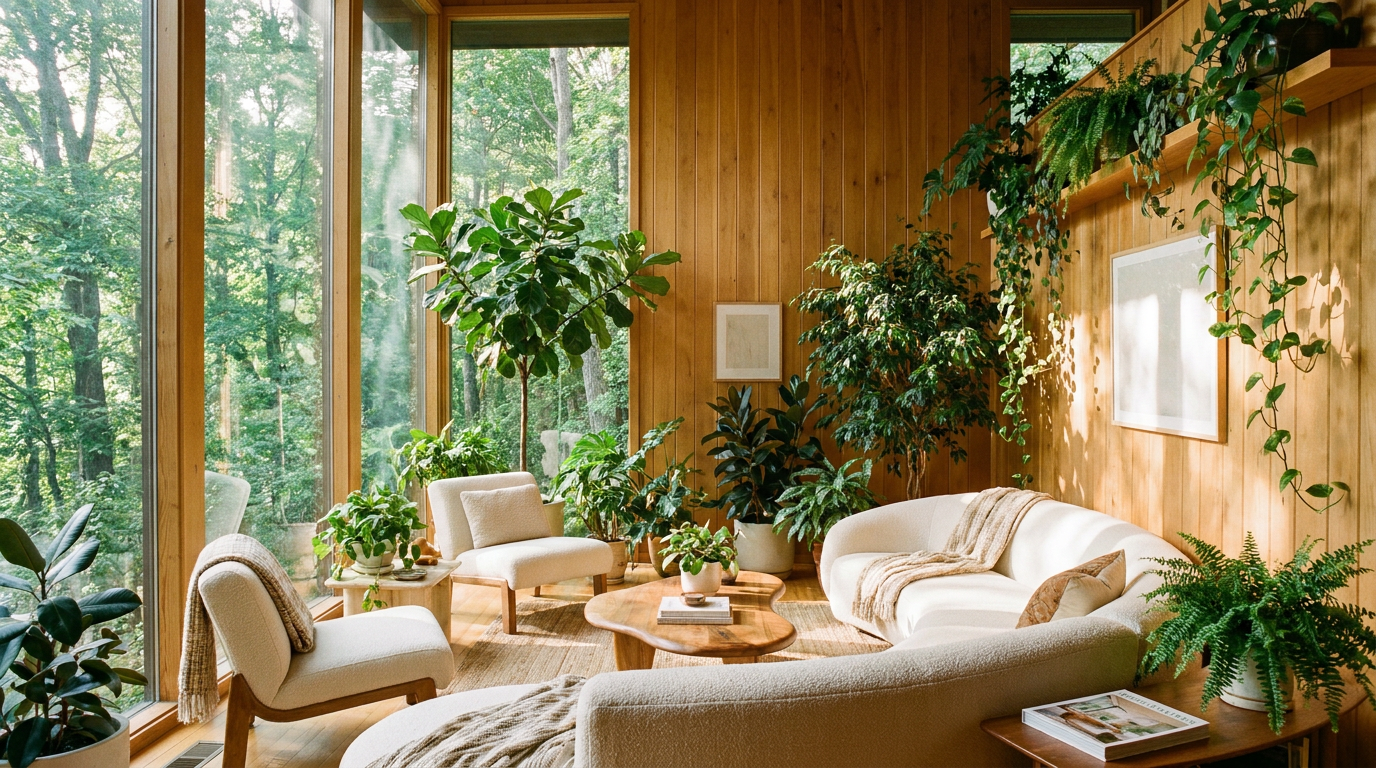
A central pillar of neuroaesthetic design is "biophilia"—the innate human instinct to connect with nature and other living systems. Biophilic design goes beyond simply placing a potted plant in a corner; it involves the systemic integration of natural light, organic materials, vegetation, water features, and nature-referencing spatial patterns into the built environment. This approach draws heavily on evolutionary psychology, which posits that human brains are hardwired to feel safe and restored in environments that mimic the natural habitats where our species evolved.[2]
According to the widely cited stress-reduction framework developed by environmental psychologist Roger Ulrich, early humans were constantly scanning for threats, leading to chronic cortisol spikes. Safe, unthreatening environments were typically open, naturally lit, and rich in resources like water and vegetation. Consequently, modern interiors that replicate these attributes—through expansive windows, natural textures, and clear sightlines—subconsciously signal safety to the brain, rapidly down-regulating the body's stress response and promoting emotional recovery.[2]
Safe, unthreatening environments were typically open, naturally lit, and rich in resources like water and vegetation.
The measurable benefits of biophilic integration are extensively documented across various settings. In corporate environments, studies have shown that employees working in offices with strong biophilic elements report up to a 15 percent increase in productivity and a significant reduction in mental fatigue. Exposure to nature-themed imagery, indoor greenery, and dynamic daylighting not only alleviates anxiety but also restores depleted attention spans, making it easier for individuals to focus on complex cognitive tasks.[4]

Lighting is perhaps the most critical neuroaesthetic variable. The human circadian rhythm—our internal 24-hour biological clock—is deeply dependent on the shifting color temperature and intensity of natural sunlight. Artificial lighting that remains static and overly bright throughout the day disrupts melatonin production, leading to poor sleep, irritability, and chronic fatigue. Neuroaesthetic design prioritizes dynamic, circadian-aligned lighting that mimics the sun's progression, utilizing cool, blue-toned light to stimulate alertness in the morning and warm, amber-toned light to promote relaxation in the evening.[3]
Beyond light, the brain is highly sensitive to shapes and textures. Neuroimaging reveals that the human brain generally prefers curvilinear forms over sharp, jagged angles. Curved furniture, arched doorways, and rounded architectural details activate the brain's pleasure centers, evoking feelings of comfort and approachability. Similarly, tactile engagement with natural materials like wood, stone, or woven fabrics stimulates the somatosensory cortex, fostering a subconscious sense of warmth and belonging that synthetic materials often fail to provide.[1]
While visual elements dominate the conversation, neuroaesthetics also addresses the invisible stressors within a space, particularly acoustics. Unpredictable, harsh ambient noise elevates cortisol levels and maintains the brain in a state of heightened vigilance. Conversely, pleasant acoustic environments—achieved through sound-absorbing soft furnishings, strategic spatial layouts, and the introduction of white noise or gentle water sounds—reduce stress markers and significantly improve concentration and emotional stability.[4]

The most urgent applications of neuroaesthetics are found in healthcare settings, where the built environment can literally alter the trajectory of a patient's recovery. Hospitals that incorporate biophilic design principles—such as providing patients with views of nature, maximizing natural daylight, and utilizing biomorphic shapes—report remarkable outcomes. Patients in these environments often experience reduced hospitalization times, lower perceived pain levels, and a decreased need for analgesic medications compared to those in sterile, windowless rooms.[2][3]
The movement is now expanding into residential design, particularly as a tool for managing chronic conditions like migraines, depression, and chronic pain. Therapeutic interior environments are being developed to foster disease-specific self-care. For example, a home designed for a migraine sufferer might feature advanced acoustic dampening, highly controllable circadian lighting, and specific color palettes known to soothe the nervous system, transforming the residence into an active participant in the healing process.[3]
As the science matures, industry leaders are pushing to democratize these principles. The recently launched "Intentional Spaces Roadmap" aims to provide architects and designers with a standardized, science-backed framework for creating environments that actively support health and equity. The goal is to ensure that neuroaesthetic benefits are not restricted to luxury real estate or high-end corporate headquarters, but are integrated into public housing, schools, and community centers as a baseline standard for human habitation.[5][6]

Ultimately, the rise of neuroaesthetics represents a profound paradigm shift. It validates what many have long suspected: beauty, meaning, and sensory harmony are not frivolous luxuries, but fundamental biological needs. By bridging the gap between art and neuroscience, designers now have the empirical tools to craft spaces that do more than shelter us. They can create environments that actively heal, restore, and elevate the human experience, proving that the right room can indeed change a life.[6]
How we got here
1984
Environmental psychologist Roger Ulrich publishes a landmark study showing hospital patients with nature views recover faster.
1990s
The term 'neuroaesthetics' is coined, initially focusing on how the brain perceives fine art.
2010s
Advances in fMRI technology allow researchers to measure real-time brain responses to architectural spaces.
2025
The Global Wellness Summit highlights neuroaesthetics as a primary driver of the future wellness economy.
2026
The 'Intentional Spaces Roadmap' is launched, providing a standardized framework for health-promoting architecture.
Viewpoints in depth
Neuroaesthetics Researchers
Scientists focused on quantifying the brain's response to spatial stimuli.
For neuroscientists, the built environment is a massive, underutilized lever for public health. By utilizing functional magnetic resonance imaging (fMRI) and biometric sensors, researchers in this camp are moving design away from subjective intuition and toward empirical data. They argue that because specific architectural choices—like curvilinear forms or circadian lighting—reliably activate the orbitofrontal cortex and lower cortisol, building codes should eventually reflect these neurological baselines to protect public health.
Biophilic Design Advocates
Professionals emphasizing the evolutionary necessity of nature in human habitats.
This perspective is rooted in evolutionary psychology, arguing that human biology has not adapted to the sterile, right-angled, artificially lit boxes of modern architecture. Biophilic advocates point to the stress-reduction framework, which suggests our nervous systems only truly relax in environments that mimic the resource-rich natural habitats of our ancestors. For them, integrating plants, water features, and natural textures isn't an aesthetic trend, but a necessary restoration of the human-nature connection.
Public Health Experts
Advocates viewing architecture as a scalable tool for preventative healthcare.
Public health officials look at neuroaesthetics through the lens of population-level outcomes. With chronic stress, anxiety, and burnout reaching epidemic levels, they view the built environment as a passive, continuous intervention. If redesigning a hospital ward can reduce the need for analgesic medication, or if optimizing a school's acoustics can improve student emotional stability, these experts argue that health-promoting design must be democratized and integrated into public infrastructure, not just luxury real estate.
Architectural Practitioners
Designers tasked with balancing scientific principles with functional and budgetary realities.
For the architects and interior designers on the ground, neuroaesthetics provides powerful validation for their work, proving that good design improves lives. However, they face the practical challenge of implementing these science-backed principles within strict client budgets, building codes, and spatial limitations. Their focus is on translating high-level neuroscience into accessible, everyday design strategies—like optimizing window placements, selecting the right paint light reflectance value, and sourcing sustainable natural materials.
What we don't know
- How individual cultural backgrounds and personal memories alter baseline neurological responses to specific design elements.
- The long-term, multi-generational health impacts of raising children in fully optimized neuroaesthetic environments.
- How to perfectly standardize neuroaesthetic metrics across diverse building types, from high-density public housing to industrial workspaces.
Key terms
- Neuroaesthetics
- The scientific study of how the brain responds to visual stimuli, art, and spatial environments.
- Biophilic Design
- An architectural approach that connects building occupants more closely to nature through light, plants, and organic materials.
- Circadian Rhythm
- The body's internal 24-hour clock that regulates sleep and wakefulness, heavily influenced by light exposure.
- Orbitofrontal Cortex
- A region of the brain involved in emotional regulation and decision-making, stimulated by aesthetically pleasing environments.
- Parasympathetic Nervous System
- The network of nerves that relaxes the body after periods of stress, often called the 'rest and digest' system.
Frequently asked
What is the difference between interior design and neuroaesthetics?
While traditional interior design often focuses on visual appeal and function, neuroaesthetics uses brain science to measure and optimize how a space physically affects your nervous system and mental health.
Do I need a large budget to apply biophilic design?
No. While large architectural changes are impactful, simple interventions like maximizing natural light, adding indoor plants, and using curved furniture can significantly improve a space's psychological profile.
How does lighting affect mental health?
Static, bright artificial light disrupts the body's circadian rhythm. Dynamic lighting that mimics the sun's natural progression helps regulate melatonin, improving sleep quality and daytime focus.
Sources
Source coverage
6 outlets
4 viewpoints surfaced






[1]ArchDailyNeuroaesthetics Researchers
Neuroesthetics: The Influence of Design on Human Experience
Read on ArchDaily →[2]Global Wellness InstituteBiophilic Design Advocates
Biophilic Design: Health, Well-being, and Sustainability
Read on Global Wellness Institute →[3]National Institutes of HealthPublic Health Experts
Healthy Dwelling: Design of Biophilic Interior Environments Fostering Self-Care Practices
Read on National Institutes of Health →[4]Science in DesignNeuroaesthetics Researchers
Neuroaesthetics for Interior Designers
Read on Science in Design →[5]ArchiExpoPublic Health Experts
Neuroaesthetics Is Reshaping Wellness and the Built Environment
Read on ArchiExpo →[6]Factlen Editorial TeamArchitectural Practitioners
Synthesis by Factlen editorial team
Read on Factlen Editorial Team →



Every angle. Every day.
Get home stories with full source coverage and perspective breakdowns delivered to your inbox.