
The Rise of Regenerative Hotels: How 'Net-Positive' Stays Actually Work
The hospitality industry is shifting from 'sustainable' net-zero goals to 'regenerative' models that actively restore ecosystems and enrich local communities.
By Factlen Editorial Team
- Regenerative Pioneers
- Argue that hotels must actively heal ecosystems and communities, moving from an extractive model to a net-positive one.
- Pragmatic Hoteliers
- Focus on the business case, noting that regenerative practices drive guest loyalty, command rate premiums, and require rigorous KPIs.
- Sustainable Tourism Academics
- Emphasize the roots in regenerative agriculture and architecture, advocating for systems-level thinking in destination management.
What's not represented
- · Local residents in over-touristed areas
- · Mid-scale hotel developers
Why this matters
As travelers increasingly seek to align their spending with their values, understanding the difference between basic sustainability and true regeneration empowers you to choose accommodations that actively heal the destinations you visit.
Key points
- The hospitality industry is moving beyond 'net-zero' sustainability toward 'net-positive' regeneration.
- Regenerative hotels actively restore local ecosystems and reinvest operational surpluses into their host communities.
- Consumer demand for regenerative travel is surging, with 69% of travelers seeking to leave destinations better than they found them.
- New certification frameworks track over 200 metrics to prevent 'greenwashing' and ensure properties deliver real impact.
For decades, the hospitality industry's highest aspiration was simply to do less damage. The gold standard of "sustainability" meant asking guests to reuse their towels, eliminating single-use plastic water bottles, and striving for a "net-zero" carbon footprint. Hotels proudly displayed placards about saving water and installed energy-efficient lighting, measuring their success by the negative impacts they managed to avoid. While these efforts were necessary first steps in an industry known for massive resource consumption, they ultimately represented a strategy of mitigation rather than transformation. The underlying business model remained fundamentally extractive, taking resources from the local environment and labor from the community to generate profits that were often exported elsewhere.[2]
But as the realities of climate change and over-tourism become impossible to ignore, a growing coalition of hoteliers, researchers, and travelers are realizing that merely sustaining the status quo is no longer enough. Enter "regenerative hospitality"—a paradigm-shifting movement that moves the goalpost entirely, transitioning from the concept of net-zero to the ambitious target of net-positive. Instead of asking how a property can minimize its harm, regenerative hoteliers are asking how their presence can actively heal the landscape and enrich the people who live there.[2][6]
The core premise of regenerative travel is radical but straightforward: a hotel should leave its surrounding ecosystem and community measurably better off than if the property had never been built. It views the hotel not as an isolated fortress of luxury, but as a living, breathing node within a complex local ecology. This requires a fundamental rewiring of how hospitality businesses operate, shifting from a linear model of consumption to a circular model of continuous renewal.[4][7]
"Sustainability is the baseline. Regeneration is the evolution," explains Hector De Castro, chairman of Regenera Luxury, an organization that certifies these forward-thinking properties. He notes that while sustainability focuses on reducing harm, regeneration demands a complete mindset shift—asking operators to actively improve the destination. This means reconnecting tourism with the authentic realities of a place, supporting family-run businesses, and prioritizing long-term ecological health over short-term quarterly profits.[1]

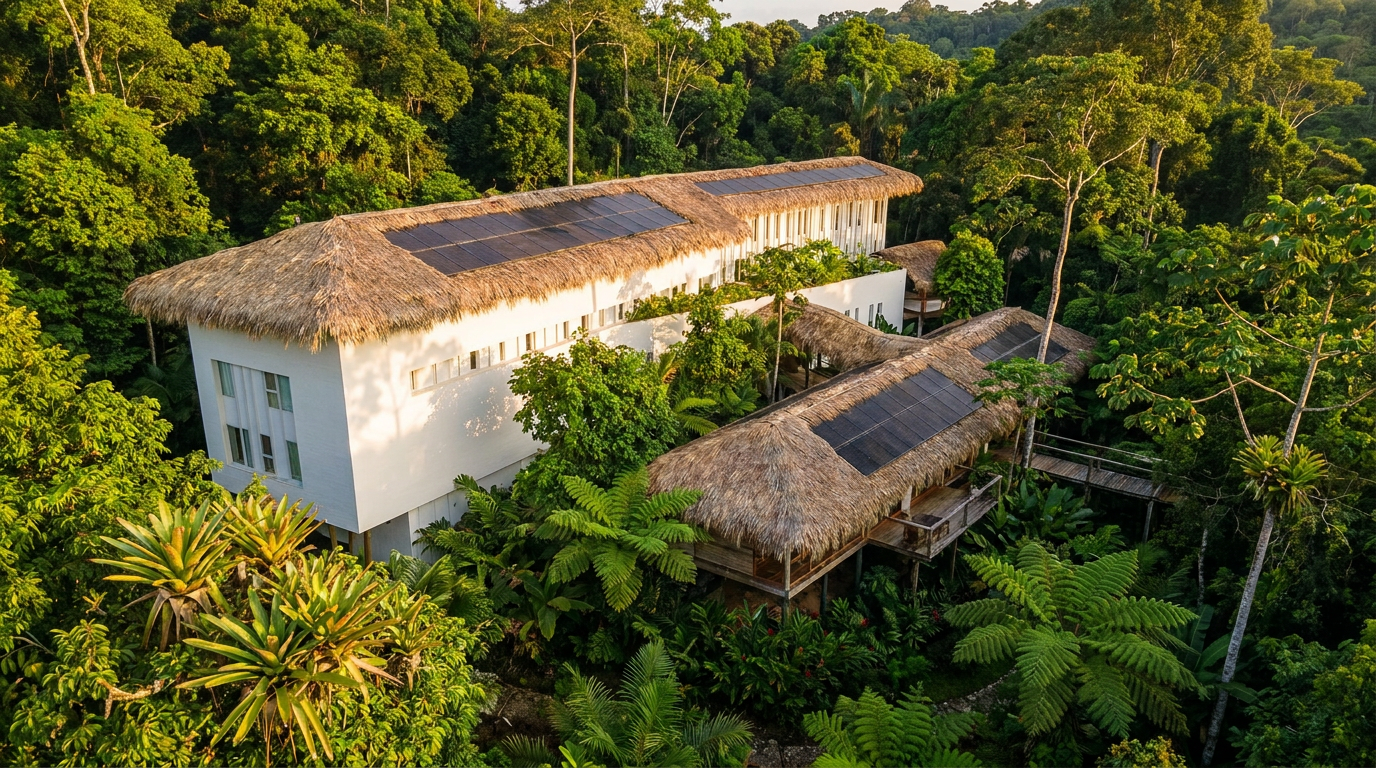
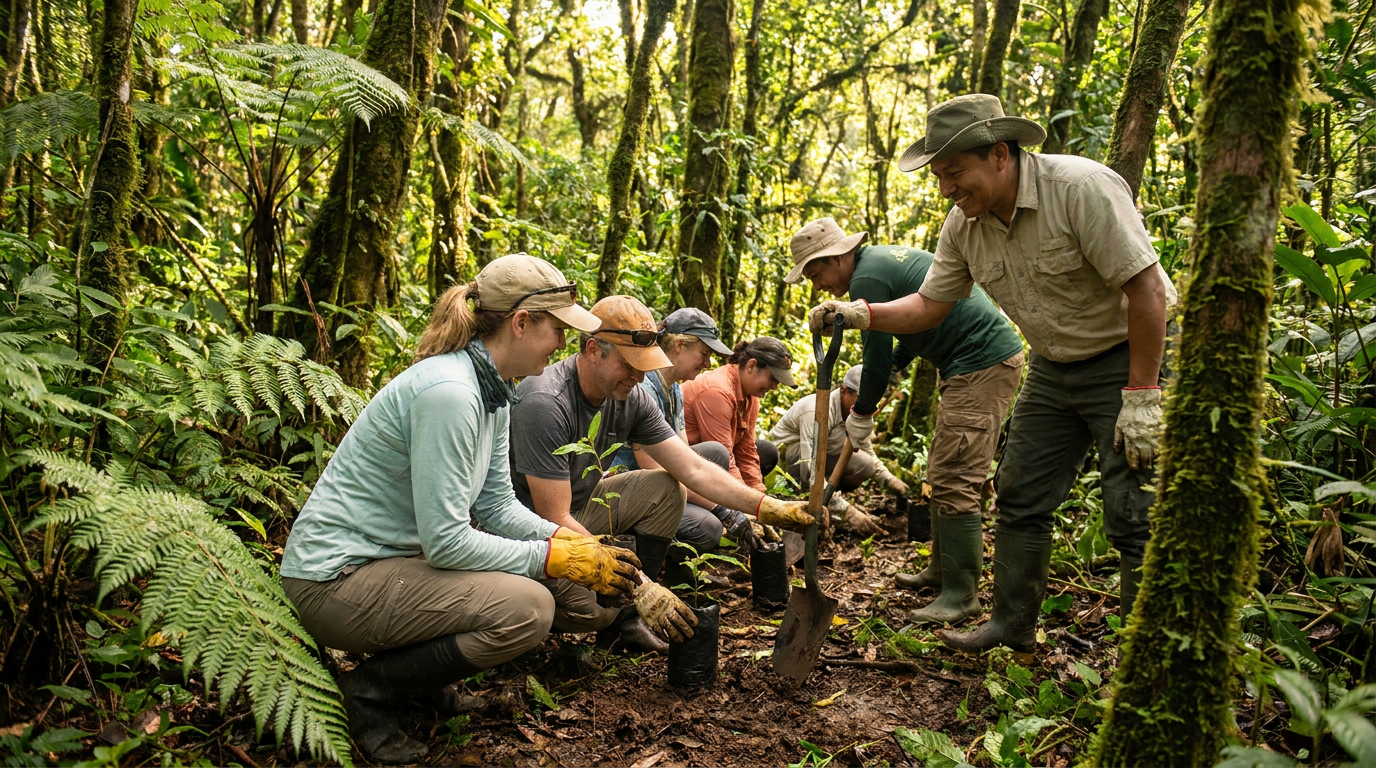
In practice, this evolution manifests through aggressive environmental restoration. Rather than simply purchasing carbon offsets from distant projects to balance their ledgers, regenerative hotels actively rehabilitate their immediate surroundings. They rebuild depleted topsoil, restore natural water cycles, and create protected corridors for local wildlife. The property itself becomes an engine for biodiversity, utilizing architecture that mimics natural systems and landscaping that prioritizes endemic species over manicured, water-intensive lawns.[3][6]
A prime example of this philosophy in action is the Ibiti Projeto in Minas Gerais, Brazil. Originally conceived as an experimental socio-environmental project, it uses high-end tourism as the economic engine to rewild more than 6,000 hectares of heavily degraded land. By reintroducing native species and allowing the Atlantic Forest to reclaim former pastureland, the project demonstrates how luxury travel can directly fund massive-scale ecological recovery. Guests are not just observers; their presence financially underwrites the survival of the biome.[2]
Similarly, Playa Viva in Mexico operates on the principle that the resort must act as a foundational pillar for the local environment. The property actively restores vital coastal ecosystems, including mangrove forests and sea turtle habitats, while simultaneously investing heavily in local health and education infrastructure. By tying the success of the resort directly to the health of the surrounding watershed and community, Playa Viva creates a symbiotic relationship where nature and commerce mutually reinforce one another.[2]
The second, and perhaps more challenging, pillar of regenerative hospitality is economic reciprocity. Traditional tourism has a long history of extracting value from destinations—profits are routinely siphoned off to multinational corporate headquarters, while local residents are relegated to low-wage, seasonal service jobs. This dynamic often leads to the hollowing out of local cultures and the pricing out of indigenous populations, a phenomenon witnessed in heavily touristed areas around the globe.[5][7]
The second, and perhaps more challenging, pillar of regenerative hospitality is economic reciprocity.
Regenerative properties actively dismantle this extractive model by intentionally circulating wealth locally. At the critically acclaimed Fogo Island Inn in Newfoundland, Canada, the economic structure is designed specifically to benefit the island's residents. An astonishing 100% of the property's operational surpluses are reinvested directly into the community through the Shorefast Foundation, funding microloans, cultural preservation, and local infrastructure projects. The money does not leave the island; it compounds, creating a resilient local economy.[3][5]

This commitment to local economic integration touches every aspect of the Fogo Island Inn's operations. The inn's striking modernist furniture is handcrafted by local woodworkers, and its intricate textiles are stitched by island residents. The gardens that supply the property's award-winning restaurant were restored by locals using seed funding provided by the hotel. By ensuring that the economic multiplier effect stays within the immediate geography, the hotel proves that luxury hospitality can be a powerful tool for wealth distribution.[5]
While the ethical arguments for regenerative hospitality are compelling, the business case for this shift is becoming equally undeniable. According to Booking.com's 2025 Sustainability and Travel Report, a staggering 69% of global travelers now explicitly state that they want to leave destinations better than they found them. This represents a massive shift in consumer psychology, particularly among younger demographics who are increasingly aligning their discretionary spending with their deeply held environmental and social values.[5]
This surging consumer demand is translating into tangible financial outperformance for properties that genuinely embrace the regenerative ethos. Industry data suggests that implementing deep regenerative operations—such as localized supply chains, on-site energy generation, and circular waste systems—can reduce long-term operational costs by up to 20% over a two-year period. Furthermore, because these properties offer deeply authentic, place-based experiences, they can often command a 10% to 15% premium on room rates compared to their conventional luxury peers.[5]

However, as the movement accelerates, it faces a significant and familiar hurdle: the challenge of measurement and accountability. As the term "regenerative" gains mainstream traction, the risk of "greenwashing"—where properties adopt the aspirational marketing language without doing the difficult operational work—increases exponentially. Without rigorous standards, the concept risks being diluted into just another meaningless buzzword used to sell expensive hotel rooms.[1][6]
To combat this dilution, industry organizations are developing highly rigorous, data-driven metrics. Regenera Luxury, for instance, evaluates properties against a comprehensive framework of more than 200 key performance indicators. These metrics are not arbitrary; they map directly to over 90% of the United Nations' Sustainable Development Goals, providing a standardized, auditable methodology for proving that a hotel is actually achieving a net-positive impact.[1]
These advanced metrics track a wide array of complex data points that go far beyond basic carbon accounting. Auditors measure soil health, track local biodiversity indices, and monitor the health of adjacent coral reefs or forest canopies. On the social side, they measure the percentage of management and executive roles held by indigenous or local community members, the volume of goods purchased within a 50-mile radius, and the tangible improvements in local educational outcomes funded by the property.[1][4]
Executing this level of integration requires a fundamental mindset shift for hotel developers and operators. It demands what academics call "systems thinking," where a property is viewed not as a standalone real estate asset, but as a highly interdependent participant within a complex local ecology. This approach requires hoteliers to collaborate deeply with local governments, conservation biologists, indigenous leaders, and agricultural experts long before the first shovel hits the ground.[2][6]

As Jonathon Day, an associate professor of sustainable tourism at Purdue University's School of Hospitality and Tourism Management, notes, the concept borrows heavily from established movements in regenerative agriculture and architecture. These disciplines have long asked: "How can we replenish the earth as we take from it?" By applying this lens to tourism, the industry is finally moving beyond the guilt-driven paradigm of minimizing footprints, and stepping into a proactive role of environmental stewardship.[3]
The transition from net-zero to net-positive will not happen overnight, and it presents immense operational challenges for legacy hotel brands burdened by massive global supply chains. Yet, the independent boutique properties and visionary eco-resorts leading the charge are proving that the model is not only possible, but highly profitable. They are writing the playbook for a new era of travel that prioritizes mutual flourishing over unilateral extraction.[5][7]
Ultimately, regenerative hospitality offers a profoundly hopeful blueprint for the future of global travel. It proves that luxury, exploration, and leisure do not have to come at the expense of the planet or its most vulnerable communities. By transforming hotels from extractive businesses into powerful engines of ecological and social renewal, the industry is demonstrating that tourism—when thoughtfully designed and rigorously executed—can be one of the most effective forces for global healing.[1][6][7]
How we got here
1990s–2010s
The hospitality industry focuses heavily on 'sustainability,' aiming to reduce water usage, cut carbon footprints, and eliminate single-use plastics.
2019
The concept of regenerative tourism gains formal traction with the launch of networks like Regenerative Travel, shifting the focus from net-zero to net-positive.
2022
Regenera Luxury launches as the world's first dedicated certification for regenerative luxury hotels, establishing rigorous metrics to prevent greenwashing.
2025–2026
Regenerative hospitality moves from a niche concept to a mainstream operational standard, driven by consumer demand and proven financial returns.
Viewpoints in depth
The Purist Vision
Advocates for a holistic, living-systems approach where hotels are fully integrated into local ecology.
This camp, often led by environmental scientists and community activists, argues that true regeneration requires a radical departure from traditional capitalism. They believe hotels must function like natural organisms—producing their own energy, treating their own waste, and existing solely to serve the health of the local biome and indigenous populations. For purists, anything less than total ecological integration is merely a half-measure.
The Pragmatic Business Case
Focuses on the financial viability and scalable metrics of net-positive operations.
Industry leaders and hospitality investors approach regeneration through the lens of long-term asset value. They point to data showing that regenerative properties command higher daily rates, foster intense brand loyalty, and future-proof assets against climate regulations. This camp emphasizes the need for standardized KPIs—like those developed by Regenera Luxury—to ensure that 'net-positive' claims can be audited, scaled, and presented to shareholders.
The Community Stewards
Prioritizes social equity, cultural preservation, and local economic empowerment over pure environmental metrics.
For this group, the most important aspect of regeneration is human. They argue that environmental restoration is impossible without first addressing the economic extraction that traditional tourism inflicts on local populations. Their focus is on ensuring that operational surpluses stay within the community, that management roles are held by locals, and that indigenous cultural heritage is protected from commodification.
What we don't know
- Whether large, multinational hotel chains can successfully adopt regenerative practices at scale without diluting the concept.
- How regenerative metrics will be standardized globally across vastly different ecosystems and regulatory environments.
- If the premium pricing associated with regenerative properties will limit the movement to the ultra-luxury sector.
Key terms
- Net-Positive
- An operational model where a business creates more environmental and social value than it extracts, leaving the ecosystem better off.
- Regenerative Agriculture
- Farming practices that rehabilitate soil health, increase biodiversity, and improve the water cycle, often integrated into the food supply of regenerative hotels.
- Greenwashing
- The deceptive practice of marketing a company or product as environmentally friendly when its actual operations do not support those claims.
- Economic Reciprocity
- The practice of ensuring that financial wealth generated by a business circulates within and benefits the local community, rather than being extracted by outside entities.
Frequently asked
What is the difference between sustainable and regenerative travel?
Sustainability focuses on minimizing harm and achieving a 'net-zero' impact, like reducing carbon emissions. Regeneration goes further, aiming for a 'net-positive' impact by actively restoring ecosystems and enriching local communities.
Do regenerative hotels cost more to stay at?
While some regenerative properties command a 10% to 15% premium due to their high-quality, localized experiences, the operational efficiencies they achieve often make them highly competitive in the luxury and boutique markets.
How can I tell if a hotel is truly regenerative?
Look for properties that transparently report their community reinvestment, source materials and food locally, and hold certifications like Regenera Luxury, which tracks over 200 specific performance metrics.
Sources
Source coverage
7 outlets
3 viewpoints surfaced







[1]ForbesPragmatic Hoteliers
Standout Regenerative Projects Driving Ecological And Social Renewal
Read on Forbes →[2]EHL Hospitality Business SchoolRegenerative Pioneers
From Sustainability to Regeneration: A Paradigm Shift
Read on EHL Hospitality Business School →[3]VirtuosoSustainable Tourism Academics
What Is Regenerative Travel?
Read on Virtuoso →[4]Regenerative TravelRegenerative Pioneers
What is Regenerative Hospitality?
Read on Regenerative Travel →[5]WebRezProPragmatic Hoteliers
Regenerative Hospitality for Independent Hoteliers
Read on WebRezPro →[6]The SuitestRegenerative Pioneers
Defining Regenerative Travel
Read on The Suitest →[7]Factlen Editorial TeamSustainable Tourism Academics
Synthesis by Factlen editorial team
Read on Factlen Editorial Team →
Every angle. Every day.
Get travel stories with full source coverage and perspective breakdowns delivered to your inbox.