
The Antidote to Dystopia: How Cozy Fantasy and Hopepunk Are Reshaping Publishing
A massive shift in reader appetite is driving the publishing industry away from gritty dystopias and toward low-stakes, optimistic genres focused on community and emotional healing.
By Factlen Editorial Team
- Literary Optimists
- Readers and authors who view low-stakes fiction as a necessary emotional sanctuary.
- Publishing Industry Analysts
- Market researchers and agents tracking the economic viability of the cozy trend.
- Speculative Futurists
- Academics and advocates who see these genres as blueprints for real-world change.
What's not represented
- · Traditional Epic Fantasy Authors
- · Literary Critics of Escapism
Why this matters
As real-world anxieties mount, the publishing industry is undergoing a massive economic and cultural shift toward optimistic, low-stakes fiction, proving that readers are increasingly prioritizing emotional healing and community over apocalyptic drama.
Key points
- Cozy fantasy and hopepunk are rapidly replacing "grimdark" as dominant forces in speculative fiction.
- These genres focus on low-stakes conflicts, emotional healing, and community building.
- The publishing industry is seeing massive economic growth in this sector, driven by high series loyalty.
- Solarpunk applies this optimistic framework to climate fiction, imagining sustainable, renewable-powered futures.
- The trend accelerated during the 2020 pandemic as readers sought "active comfort" from real-world anxieties.
For decades, the speculative fiction landscape was dominated by the grim and the gritty. The massive cultural footprint of franchises like Game of Thrones and The Walking Dead cemented "grimdark" as the default setting for serious fantasy and science fiction, operating on the premise that realism requires brutality, betrayal, and apocalyptic stakes [2][7]. But a quiet rebellion has been brewing on bookstore shelves. In recent years, a massive shift in reader appetite has birthed a new era of optimistic literature, categorized under the banners of cozy fantasy, hopepunk, and solarpunk [6]. These subgenres trade world-ending wars for community building, and cynical antiheroes for protagonists whose greatest radical act is simply being kind [3].[2][3][6][7]
This movement is not merely a niche internet aesthetic; it has evolved into a dominant market force reshaping the publishing industry's economics [4]. Major publishers are actively seeking out low-stakes narratives, recognizing that readers are increasingly exhausted by real-world anxieties and are demanding fiction that offers a sanctuary rather than a stressor [1]. By prioritizing emotional resonance over visceral shock, these optimistic genres are proving that wonder, rather than warfare, is the true heart of speculative storytelling [4].[1][4]
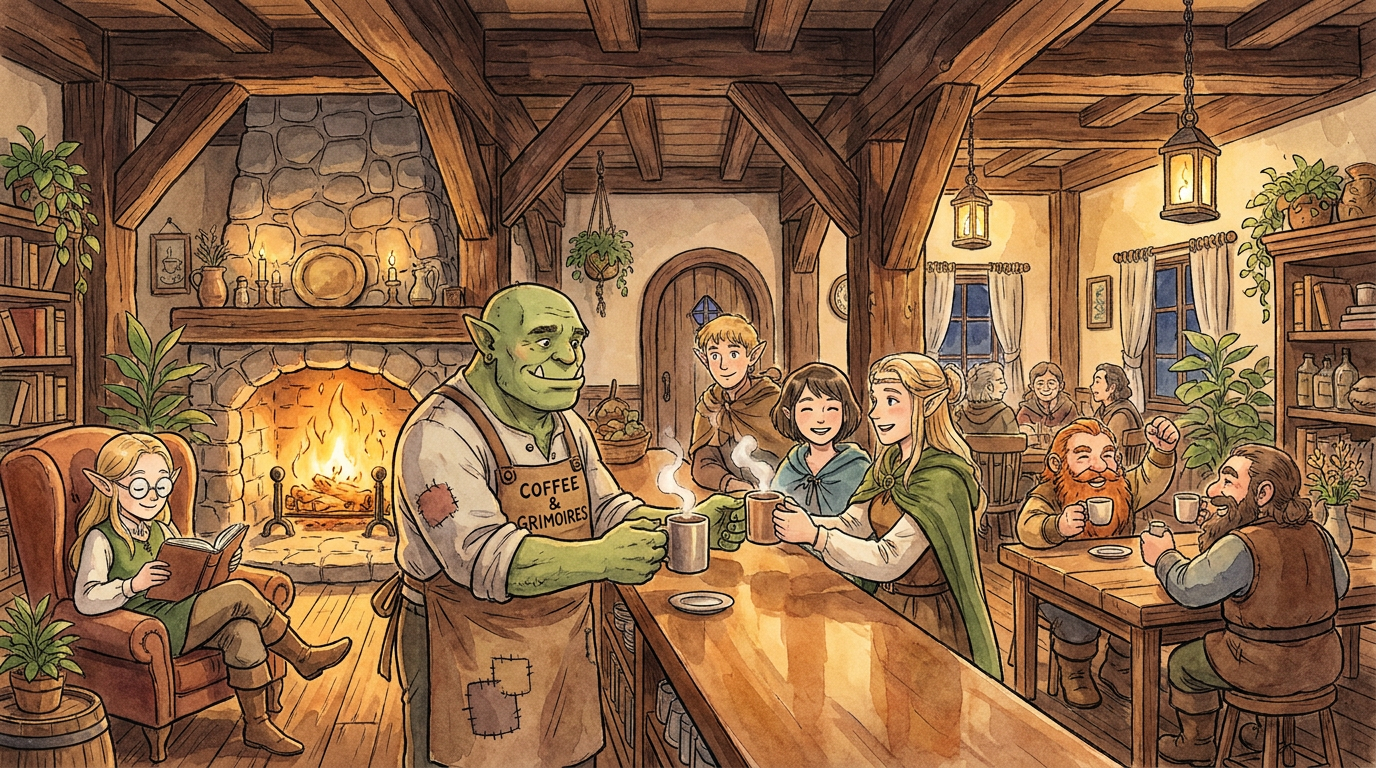
At the forefront of this shift is "cozy fantasy," a subgenre that essentially asks what happens when the epic quest is over and the adventurer just wants to settle down [2]. The breakout success of Travis Baldree's 2022 novel Legends & Lattes—which follows a battle-weary orc who retires to open a coffee shop—served as the blueprint for the modern cozy fantasy boom [7]. These stories occupy the same emotional territory as traditional cozy mysteries, but they trade the village murder for the village itself [4]. The stakes are deeply personal rather than apocalyptic, focusing on found families, small-scale problem-solving, and the simple joys of domestic magic [2].[2][4][7]
Industry analysts note that the appeal of cozy fantasy lies in its ability to provide "active comfort" [4]. According to market research from K-lytics, the genre is characterized by heartwarming resolutions, sensory immersion, and a strong sense of community [1]. It has been described as a form of "literary ASMR," offering readers a soothing, predictable emotional arc that acts as a direct antidote to the unpredictability of the modern news cycle [1]. Searches for cozy reading and cozy fantasy have grown exponentially since 2022, driven heavily by social media platforms like BookTok, where the genre's highly visual, cottagecore-adjacent aesthetic thrives [7].[1][4][7]

Adjacent to cozy fantasy is "hopepunk," a term coined in 2017 by fantasy author Alexandra Rowland in a viral Tumblr post that simply stated: "The opposite of grimdark is hopepunk. Pass it on" [3]. The post garnered tens of thousands of interactions and quickly coalesced into a defined literary movement [3]. If cozy fantasy is about retreating to a safe haven, hopepunk is about fighting to create one [6]. It operates on the philosophy that in a world structured around cynicism and nihilism, choosing to care about others is a profoundly rebellious act [3].[3][6]
Hopepunk narratives do not guarantee easy victories or utopian perfection. Instead, they focus on characters who persevere through difficult realities, motivated by noble intentions and a commitment to collective well-being [3]. Works in this vein—ranging from Becky Chambers' science fiction to the intricate political fantasies of Katherine Addison—emphasize cooperation over conflict [3]. They argue that softness does not equal weakness, and that the struggle for positive social systems is always a worthwhile endeavor, even when the outcome is uncertain [3].[3]
Hopepunk narratives do not guarantee easy victories or utopian perfection.
The third pillar of this optimistic wave is "solarpunk," which applies the ethos of hopepunk specifically to climate fiction and technological advancement [5]. While traditional cyberpunk imagines a hyper-capitalist, neon-lit dystopia, solarpunk envisions a future where humanity has successfully integrated renewable energy, ecological repair, and social justice [5]. It is a genre of speculative fiction that refuses to accept climate doom as an inevitability, choosing instead to map out practical, community-driven solutions [5].[5]

Solarpunk literature often features decentralized energy systems, botanical realism, and societies that value mutual aid over endless economic growth [5]. Authors in this space are not merely writing escapist fantasies; they are engaging in thought experiments about how humanity might actually adapt and thrive in the Anthropocene [3]. By presenting viable, sustainable futures, solarpunk aims to move readers past climate anxiety and inspire real-world environmental activism [5].[3][5]
The timing of this optimistic literary renaissance is entirely deliberate. The initial surge in these genres aligns perfectly with the onset of the global pandemic in 2020, a period when existential dread drove readers to seek out stories that offered hope and comfort [2]. As the world emerged from lockdowns, the appetite for low-stakes fiction did not wane; instead, it solidified as readers continued to grapple with political polarization, economic instability, and climate crises [1]. Traditional epic fantasy, with its high body counts and political betrayals, began to feel less like an escape and more like an extension of daily stress [4].[1][2][4]
From an economic perspective, the publishing industry has quickly adapted to this new reality. Cozy fantasy and its adjacent genres inspire fierce series loyalty, as readers who find a reliable source of comfort are highly likely to become repeat customers [4]. The core audience overlaps significantly with the lucrative cozy mystery demographic, but it also draws in former young adult readers who have aged out of teenage protagonists but still crave optimistic, character-driven narratives [4]. Advances for established authors pivoting into the cozy space are climbing, and publishers are actively requesting manuscripts that promise a "warm hug" rather than a harrowing journey [2][4].[2][4]

Writing compelling fiction without life-or-death stakes presents a unique narrative challenge. Critics of the cozy movement sometimes question how a story can maintain momentum without traditional sources of tension [4]. The answer lies in the recalibration of what constitutes a "stake." In cozy fantasy and hopepunk, the tension comes from the risk of a ruined friendship, a failing business, or a misunderstood intention [2]. These personal, relatable conflicts require intricate character development and emotional intelligence, proving that a story does not need to save the world to be profoundly engaging [4].[2][4]
The influence of Japanese media, particularly the films of Studio Ghibli, cannot be overstated in the development of this aesthetic. Films like Howl's Moving Castle and Kiki's Delivery Service—both based on books—have long championed the idea of domestic magic and pastoral serenity [7]. This tradition of finding wonder in the mundane has seamlessly merged with Western publishing trends, creating a cross-cultural appreciation for stories that prioritize healing over harm [7].[7]

Ultimately, the rise of cozy fantasy, hopepunk, and solarpunk represents a fundamental shift in how we consume and value art. For a long time, cultural critics equated seriousness with darkness, assuming that a story had to be tragic to be important [4]. This new wave of literature dismantles that assumption, insisting that optimism, comfort, and the pursuit of a better world are legitimate, necessary artistic choices [4][6]. In an era defined by its challenges, the decision to imagine a kinder future may be the most powerful story we can tell.[4][6]
How we got here
1989
The Malice Domestic conference formalizes the core attributes of the "cozy mystery" genre.
2014
Visual artist Olivia Louise popularizes the solarpunk aesthetic online, moving it beyond a niche concept.
2017
Author Alexandra Rowland coins the term "hopepunk" on Tumblr as the direct opposite of grimdark.
2020
The global pandemic triggers a massive reader shift toward comforting, low-stakes media.
2022
Travis Baldree publishes Legends & Lattes, cementing the modern cozy fantasy boom.
Viewpoints in depth
Literary Optimists
Readers and authors who view low-stakes fiction as a necessary emotional sanctuary.
This camp argues that the real world currently provides more than enough stress, making the traditional "grimdark" narrative exhausting rather than entertaining. They champion the idea that stories focusing on emotional healing, found families, and domestic magic offer a vital form of "active comfort." For these readers, the absence of world-ending stakes is not a lack of narrative drive, but a deliberate choice to explore the quieter, equally complex facets of human connection.
Publishing Industry Analysts
Market researchers and agents tracking the economic viability of the cozy trend.
From a business perspective, this camp views the rise of optimistic fiction as a highly lucrative market correction. They note that cozy fantasy inspires intense series loyalty and draws in diverse demographics, including former young adult readers and cozy mystery fans. Analysts emphasize that this is no longer a niche internet trend; it is a major publishing category driving high advances, dedicated bookstore displays, and significant sales growth across major retail platforms.
Speculative Futurists
Academics and advocates who see these genres as blueprints for real-world change.
This perspective, particularly prominent within the solarpunk and hopepunk communities, views optimistic literature as a tool for social and environmental activism. They argue that constantly consuming dystopian media breeds climate anxiety and political apathy. By contrast, narratives that model community resilience, renewable energy integration, and radical kindness serve as thought experiments that can inspire readers to implement practical solutions in their own communities.
What we don't know
- Whether the cozy fantasy trend will sustain its current explosive growth or plateau as a stable subgenre.
- How traditional epic fantasy publishers will adapt their long-term strategies to compete with low-stakes narratives.
Key terms
- Cozy Fantasy
- A subgenre of fantasy characterized by low stakes, emotional resonance, and a focus on community rather than world-ending conflict.
- Hopepunk
- A literary movement that views kindness, softness, and the fight for positive social change as radical acts of rebellion.
- Solarpunk
- A speculative fiction genre that imagines optimistic, sustainable futures powered by renewable energy and community resilience.
- Grimdark
- A subgenre of speculative fiction known for its dystopian, amoral, or highly violent tone, often featuring cynical antiheroes.
- Literary ASMR
- A term used by industry analysts to describe books that provide a soothing, predictable emotional experience for the reader.
Frequently asked
Do cozy fantasy books have any conflict at all?
Yes, but the stakes are personal rather than apocalyptic. Conflicts usually revolve around relationships, community building, or small-scale problem-solving rather than life-or-death battles.
How is solarpunk different from cyberpunk?
While cyberpunk typically envisions a hyper-capitalist, neon-lit dystopia, solarpunk imagines a sustainable, optimistic future focused on ecological repair and renewable energy.
Why did these genres become so popular recently?
Industry analysts trace the massive spike in popularity to the 2020 pandemic, as readers sought out "active comfort" and escapism to cope with mounting real-world anxieties.
Sources
Source coverage
7 outlets
3 viewpoints surfaced







[1]Jane FriedmanPublishing Industry Analysts
The rise of cozy fantasy offers important signals for all writers
Read on Jane Friedman →[2]Paste MagazineLiterary Optimists
Why So Much Cozy? Thoughts on Jam, Cheese, and the Rise of Cozy
Read on Paste Magazine →[3]World Literature TodaySpeculative Futurists
Hopepunk and Solarpunk: The Literature of Radical Optimism
Read on World Literature Today →[4]Novelists, Inc.Publishing Industry Analysts
The Economics of Cozy Fantasy
Read on Novelists, Inc. →[5]The FeelEd LabSpeculative Futurists
What is Solarpunk? A Framework for Real-World Change
Read on The FeelEd Lab →[6]Factlen Editorial TeamSpeculative Futurists
Synthesis by Factlen editorial team
Read on Factlen Editorial Team →[7]Winter Is ComingLiterary Optimists
The rise of cozy fantasy books
Read on Winter Is Coming →
Every angle. Every day.
Get culture stories with full source coverage and perspective breakdowns delivered to your inbox.