
Stem Cell Transplant Banishes Severe Autoimmune Disease for 15 Years in Landmark Medical First
Two patients with a debilitating neurological disorder have remained symptom-free for over 15 years after receiving donor stem cells, offering unprecedented evidence that the immune system can be permanently reset.
By Factlen Editorial Team
- Clinical Immunologists
- Focus on the biological proof of concept that an allogeneic transplant can permanently eradicate autoreactive cells.
- Patient Advocates
- Emphasize the life-changing quality of life improvements and the freedom from lifelong immunosuppressive drugs.
- Transplant Safety Experts
- Highlight the severe toxicity and mortality risks of the procedure, arguing it must remain a last-resort salvage therapy.
What's not represented
- · Health Insurance Providers weighing the massive upfront cost of a transplant against decades of monoclonal antibody therapies.
- · Patients with milder autoimmune conditions who are ineligible for high-risk experimental trials.
Why this matters
Autoimmune diseases typically require lifelong, expensive medications that only manage symptoms. This 15-year milestone provides biological proof that a complete immune system replacement can permanently halt severe autoimmunity, paving the way for next-generation curative therapies.
Key points
- Two patients with severe NMOSD have been symptom-free for over 15 years after receiving donor stem cells.
- The procedure involved wiping out their defective immune systems with high-dose chemotherapy.
- Donor stem cells successfully grew into new, self-tolerant immune systems that no longer attack the body.
- The treatment carries severe risks, including graft-versus-host disease and secondary cancers.
- Experts caution the procedure is currently too toxic for widespread use and remains a salvage therapy.
The holy grail of autoimmune research is not just managing symptoms, but teaching the body to stop attacking itself. For two patients with a devastating neurological condition, that holy grail has been a reality for more than a decade and a half. Following a high-risk procedure to completely replace their immune systems, both individuals have remained symptom-free for over 15 years without the need for daily immunosuppressive drugs.[1][3]
The patients suffer from Neuromyelitis Optica Spectrum Disorder (NMOSD), a rare and aggressive disease where the immune system mistakenly targets the optic nerves and the spinal cord. Driven by rogue antibodies that attack a specific water-channel protein called AQP4, the condition causes recurring episodes of blindness, severe pain, intractable vomiting, and paralysis.[3][6]
Historically, an NMOSD diagnosis meant a lifetime of heavy immunosuppression. While modern monoclonal antibodies can effectively reduce the risk of relapses, they do not cure the underlying defect. Patients remain tethered to expensive, lifelong therapies that leave them perpetually vulnerable to opportunistic infections. For the two patients in this landmark follow-up, standard therapies had completely failed to halt their physical decline.[5][6]

Facing a dire prognosis, researchers opted for an extreme intervention: an allogeneic hematopoietic stem-cell transplant (HSCT). While autologous transplants—which use a patient’s own cleaned stem cells—have gained traction for diseases like multiple sclerosis, allogeneic transplants rely on stem cells from a healthy donor. The goal is not merely to suppress the immune system, but to evict it entirely and move a new one in.[1][2]
The biological mechanism requires taking the patient to the brink. Doctors administered a severe conditioning regimen featuring the chemotherapy drugs fludarabine and treosulfan, alongside B-cell depleting antibodies. This chemical bombardment systematically wiped out the patients' malfunctioning, AQP4-producing immune cells, effectively leaving them with no immune defense at all.[1][2]
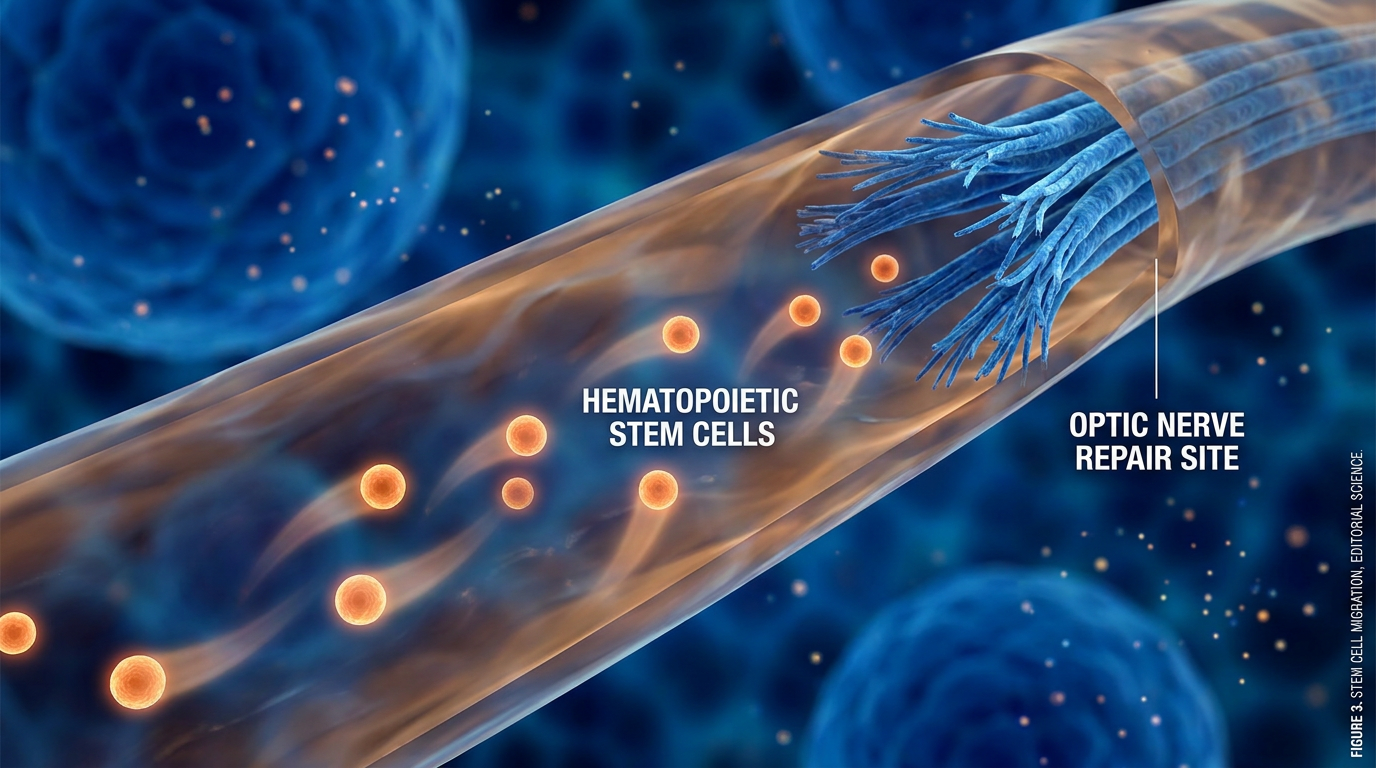
Once the autoreactive slate was wiped clean, the patients received a single infusion of donor stem cells. In 2009, the male patient received cells from his sister; the following year, the female patient received a graft from an unrelated donor. These microscopic seed cells migrated to the bone marrow, where they began the months-long process of growing an entirely new, self-tolerant immune system.[3]
Once the autoreactive slate was wiped clean, the patients received a single infusion of donor stem cells.
The long-term evidence, published this week in the journal Med and highlighted by Nature, provides a stunning proof of concept. More than 15 years post-transplant, neither patient has experienced a single clinical relapse. Blood tests confirm that the disease-causing AQP4 antibodies have completely vanished from their systems, suggesting the biological root of the disease has been eradicated.[1][2]

The clinical improvements have been life-altering. The male patient’s neurological function recovered sufficiently for him to resume a normal life, return to work, and start a family. The female patient regained significant motor control in her arms and has lived for a decade and a half free from the burden of daily NMOSD medications.[3][4]
However, the researchers are transparent about the profound uncertainties and severe risks that accompany this data. Allogeneic HSCT is one of the most toxic procedures in modern medicine. Because the new immune system comes from a donor, it can recognize the patient's own body as foreign—a potentially fatal complication known as graft-versus-host disease (GVHD).[2][5]

The 15-year remission did not come without a steep physiological cost. Both patients required additional medications to manage the risk of GVHD. Over the years, they experienced significant adverse effects directly linked to the transplant, including swollen lymph nodes and chronic antibody deficiencies that require ongoing medical management. One patient eventually developed bladder cancer, a known risk of heavy chemotherapy conditioning.[3]
Because of this extreme toxicity profile, transplant safety experts emphasize that allogeneic HSCT is not a frontline therapy. The procedure carries a baseline mortality risk that makes it ethically unviable for patients whose disease is well-controlled by standard drugs. It remains a salvage therapy, strictly reserved for young patients with highly aggressive, refractory disease who are out of other options.[3][6]

Despite the caveats, the study represents a monumental milestone in immunology. It proves that a severe, antibody-driven autoimmune disease can be permanently halted by replacing the immune repertoire. The challenge now is to engineer the safety of the procedure—perhaps through targeted cell-depletion techniques or advanced gene editing—so that the benefits of a total immune reset can be achieved without the life-threatening collateral damage.[5][6]
For the broader medical community, the 15-year milestone is a beacon of hope. It demonstrates that the human body can be coaxed into unlearning its most destructive habits. As researchers continue to refine stem-cell therapies, the dream of a definitive, one-time cure for autoimmune diseases like NMOSD, lupus, and multiple sclerosis is inching closer to reality.[4][5]
How we got here
2009
A male patient with severe NMOSD receives an allogeneic stem-cell transplant from his sister.
2010
A female patient with the same condition undergoes the procedure using stem cells from an unrelated donor.
2014–2022
Multiple studies explore stem-cell therapies for autoimmune diseases, but long-term data on allogeneic transplants remains scarce.
June 2026
Researchers publish a 15-year follow-up confirming both patients remain entirely free of NMOSD symptoms and disease-causing antibodies.
Viewpoints in depth
Clinical Immunologists' View
A focus on the biological milestone of permanently resetting a defective immune system.
For immunologists, the 15-year remission proves a long-held hypothesis: if you completely replace the bone marrow of a patient with severe autoimmunity, the new donor-derived immune system will not inherit the disease. The complete disappearance of AQP4 antibodies demonstrates that the root cause of the disease was eradicated, not just suppressed. This biological proof of concept is driving new research into whether safer, more targeted cell therapies could achieve the same reset without the need for toxic chemotherapy.
Transplant Safety Experts' View
A cautious perspective emphasizing the severe risks of allogeneic stem-cell transplants.
Safety experts caution against viewing this as a scalable cure. Allogeneic transplants carry a high risk of transplant-related mortality, primarily from severe infections and graft-versus-host disease (GVHD), where the donor cells attack the recipient's organs. Because the two patients in the study experienced significant adverse effects—including antibody deficiencies and secondary cancer—experts argue this procedure must remain strictly limited to patients who have exhausted all other pharmacological options and face imminent, life-threatening neurological decline.
What we don't know
- Whether this procedure would be equally effective and safe for patients with milder forms of NMOSD.
- If newer, highly targeted gene-editing techniques could eventually replace the toxic chemotherapy conditioning used in this trial.
- How the long-term risks of secondary cancers from the conditioning regimen compare to the lifelong risks of standard immunosuppressive drugs across a larger population.
Key terms
- Neuromyelitis Optica Spectrum Disorder (NMOSD)
- A rare, severe autoimmune disease characterized by inflammation and damage to the optic nerve and spinal cord.
- Allogeneic Hematopoietic Stem-Cell Transplant
- A medical procedure that replaces a person's faulty immune system with healthy blood-forming stem cells from a donor.
- AQP4 Antibodies
- Rogue proteins produced by a malfunctioning immune system that mistakenly attack water channels in the central nervous system.
- Conditioning Regimen
- The use of high-dose chemotherapy to intentionally destroy a patient's existing immune system prior to a stem-cell transplant.
- Graft-Versus-Host Disease (GVHD)
- A potentially severe complication where the newly transplanted donor immune cells recognize the recipient's body as foreign and attack it.
Frequently asked
What is Neuromyelitis Optica Spectrum Disorder?
NMOSD is a rare autoimmune disease where the immune system mistakenly attacks the optic nerves and spinal cord, leading to vision loss and paralysis.
How does an allogeneic transplant work?
It involves wiping out the patient's defective immune system with chemotherapy and replacing it with healthy blood-forming stem cells from a donor.
Is this a widely available cure?
No. Because the procedure carries severe risks, including fatal infections and graft-versus-host disease, it is currently reserved only for the most severe, treatment-resistant cases.
Did the patients experience side effects?
Yes. While their autoimmune disease was halted, they faced complications from the transplant, including swollen lymph nodes, antibody deficiencies, and one case of bladder cancer.
Sources
Source coverage
6 outlets
3 viewpoints surfaced






[1]NatureClinical Immunologists
Stem cells banish severe autoimmune disease for 15 years
Read on Nature →[2]MedClinical Immunologists
Long-term remission of NMOSD following allogeneic hematopoietic stem-cell transplantation
Read on Med →[3]QazinformPatient Advocates
Rare autoimmune disease halted for 15 years after stem-cell transplant
Read on Qazinform →[4]Positron TodayPatient Advocates
Stem cells banish severe autoimmune disease for 15 years
Read on Positron Today →[5]National Institutes of HealthTransplant Safety Experts
Hematopoietic stem cell transplantation for autoimmune diseases
Read on National Institutes of Health →[6]MDPITransplant Safety Experts
Stem-Cell Therapies in Neuromyelitis Optica Spectrum Disorder
Read on MDPI →

More in science
See all 6 stories →Stem Cell Therapy
How a Stem Cell Transplant Banished a Severe Autoimmune Disease for 15 Years
7 sources
Stem Cell Therapy
Donor Stem Cells Halt Severe Autoimmune Disease for 15 Years in Landmark Study
7 sources
Cellular Therapy
Donor Stem Cells Banish Severe Autoimmune Disease for 15 Years in Landmark Study
5 sources
Stem Cell Tech
Stem Cell Transplant Banishes Severe Autoimmune Disease for 15 Years in Medical First
7 sources
Every angle. Every day.
Get science stories with full source coverage and perspective breakdowns delivered to your inbox.