
Donor Stem Cells Halt Severe Autoimmune Disease for 15 Years in Landmark Study
Two patients with a debilitating autoimmune disorder have remained symptom-free for over 15 years after an experimental donor stem-cell transplant completely reset their immune systems.
By Factlen Editorial Team
- Clinical Researchers
- Focus on the biological mechanism and the unprecedented achievement of a 15-year cure.
- Patient Advocates
- Emphasize the life-changing impact for those facing inevitable paralysis and blindness.
- Medical Cautious
- Highlight the severe toxicity and risks associated with the conditioning regimen.
What's not represented
- · Health Insurance Providers
- · Medical Ethicists
Why this matters
Autoimmune diseases are notoriously difficult to cure, usually requiring lifelong immune suppression. This 15-year milestone provides the strongest evidence yet that replacing a malfunctioning immune system with healthy donor cells can offer a permanent cure for some of the most devastating neurological conditions.
Key points
- Two patients with severe NMOSD have achieved over 15 years of remission following a stem-cell transplant.
- The procedure used donor stem cells to completely replace the patients' malfunctioning immune systems.
- Post-transplant blood tests showed a complete absence of the antibodies that cause the disease.
- Patients recovered enough to resume normal lives without the need for lifelong immunosuppressive drugs.
- Due to severe risks like toxicity and infections, the treatment is currently reserved for extreme cases.
For patients diagnosed with severe autoimmune diseases, the prognosis is often a lifelong battle of managing symptoms and suppressing the immune system. But a landmark paper published in the journal Med, and highlighted by Nature, has provided unprecedented evidence that a permanent cure might be possible. Two patients suffering from a devastating neurological condition have remained completely symptom-free for more than 15 years following an experimental donor stem-cell transplant.[1][2]
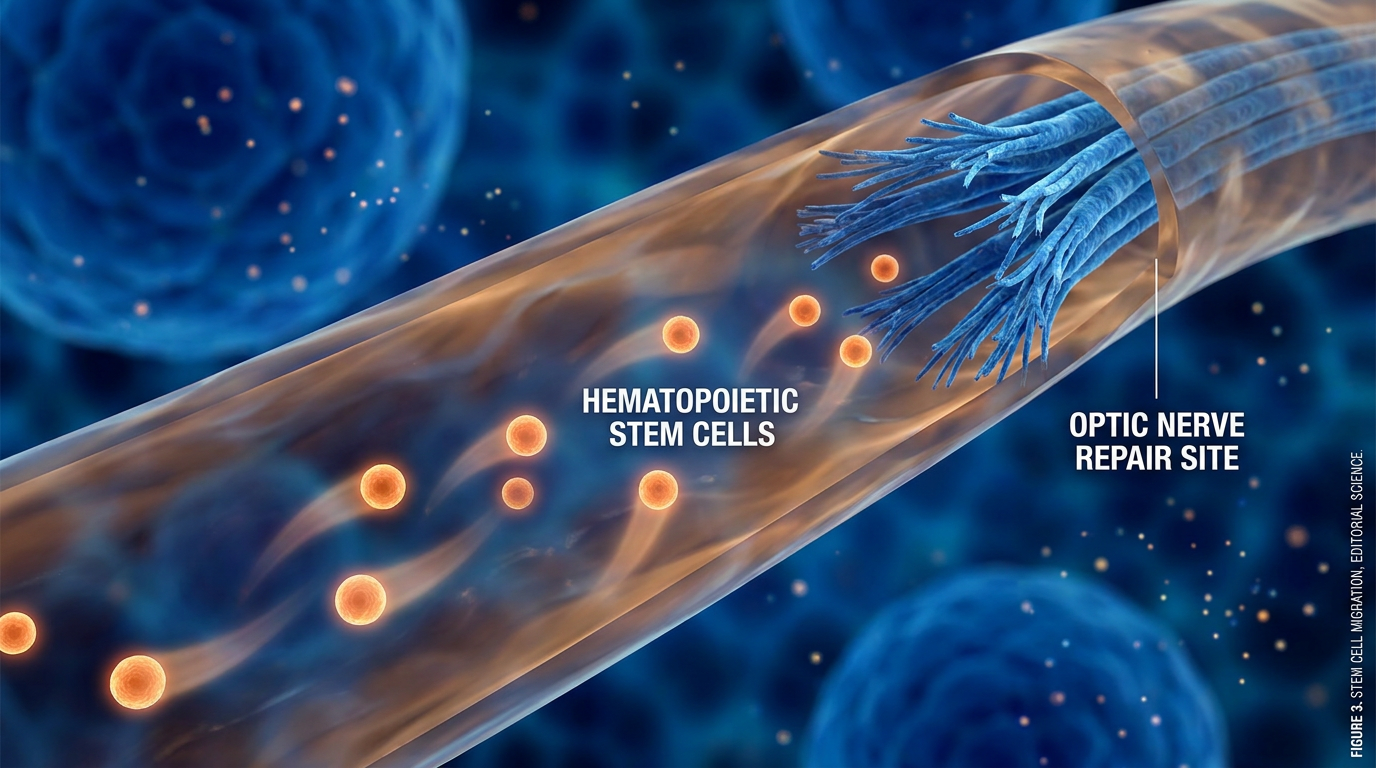
The patients were diagnosed with neuromyelitis optica spectrum disorder (NMOSD), a rare and debilitating disease where the immune system mistakenly attacks the spinal cord and the optic nerve. The condition causes recurring episodes of vision loss, severe eye pain, vomiting, weakness, and progressive paralysis. Within five years of diagnosis, approximately half of all NMOSD patients lose their sight and their ability to walk.[3][4]
Standard therapies for NMOSD rely on continuous, lifelong immunosuppression to reduce the risk of relapses. However, these treatments do not cure the underlying dysfunction and were entirely ineffective for the two patients involved in this study. Facing progressive disability, researchers opted for an aggressive and unprecedented intervention: an allogeneic hematopoietic stem-cell transplant.[2][3]
Hematopoietic stem-cell transplantation (HSCT) is a procedure designed to completely "reset" the immune system. While autologous transplants—which use the patient's own stem cells—have been explored for autoimmune diseases like multiple sclerosis, this study utilized an allogeneic approach. In an allogeneic transplant, the blood-forming stem cells are harvested from a healthy donor, effectively replacing the patient's defective immune system with a brand new, self-tolerant one.[1][7]

The procedure is grueling. Before receiving the donor cells, the patients underwent intense pre-transplant conditioning. Doctors administered high doses of chemotherapy drugs, including fludarabine and treosulfan, alongside antibody-based therapies. The goal was to entirely eradicate the patients' malfunctioning, self-reactive immune cells. Once the immune system was wiped out, the donor stem cells were infused to rebuild a healthy immune network from scratch.[1][3]
Before receiving the donor cells, the patients underwent intense pre-transplant conditioning.
The first patient, a man suffering from severe NMOSD, received donor stem cells from his sister in 2009. The following year, a woman with the same condition underwent the procedure using stem cells from an unrelated donor. Both patients received only a single infusion of the healthy cells, followed by medication to prevent graft-versus-host disease—a severe complication where the new immune cells attack the recipient's body.[2][3]
The long-term results have exceeded all clinical expectations. More than 15 years after their respective transplants, neither patient has experienced a single relapse. Furthermore, blood tests reveal a complete absence of aquaporin-4 (AQP4) antibodies—the specific biological marker that drives the autoimmune attack in NMOSD. According to the study authors, no other prior therapy has ever led to the complete and sustained removal of AQP4 antibodies.[2][4]

The clinical improvements have been life-changing. The male patient's neurological condition recovered sufficiently for him to resume a normal life and start a family. The female patient regained better use of her arms and no longer requires any medication to manage her symptoms. By replacing the immune system entirely, the treatment appears to have removed the source of the autoimmune attack altogether.[3][6]
Despite the profound success, medical experts urge caution, emphasizing that allogeneic stem-cell transplants carry significant, sometimes life-threatening risks. The conditioning regimen is highly toxic, and patients are left severely immunocompromised while the new immune system establishes itself. Stem-cell transplants can lead to severe infections, organ toxicity, and graft-versus-host disease.[2][3]
The two patients in the study did experience adverse effects from the intense therapy. Complications included swollen lymph nodes, an antibody deficiency that required ongoing medical care, and in one case, the development of bladder cancer. Because of these severe risks, researchers stress that the procedure is not a first-line treatment and should be reserved for specific populations.[3]

Currently, scientists suggest that allogeneic HSCT should be considered primarily for younger patients whose disease is highly aggressive, who do not respond to standard therapies, or who suffer from multiple overlapping autoimmune disorders. The risk-to-reward ratio must be carefully weighed, balancing the danger of the transplant against the certainty of severe disability from the untreated disease.[2][3]
The findings are sparking immense interest in the broader immunological community. Because the treatment fundamentally replaces the immune system rather than just suppressing it, the mechanism could theoretically be applied to other severe, treatment-resistant autoimmune diseases. Larger clinical trials are now needed to determine if this approach can be safely scaled to benefit a wider population of patients.[5][6]
How we got here
2009
The first patient, a man with severe NMOSD, receives an allogeneic stem-cell transplant from his sister.
2010
A second patient, a woman with the same condition, receives a transplant from an unrelated donor.
2019
Studies begin confirming that autologous (self-donated) stem cell transplants can slow or reverse similar neurological diseases.
June 2026
Researchers publish 15-year follow-up data in the journal Med, confirming both patients remain completely symptom-free.
Viewpoints in depth
Clinical Researchers
Focus on the biological mechanism and the unprecedented achievement of a 15-year cure.
For immunologists and neurologists, the significance of this study lies in the complete eradication of the AQP4 biomarker. Traditional therapies only suppress the immune system, meaning the underlying blueprint for the disease remains dormant but present. By utilizing an allogeneic (donor) transplant, researchers proved that completely replacing the immune system's hardware can permanently delete the disease's memory, offering a true biological cure rather than just symptom management.
Patient Advocates
Emphasize the life-changing impact for those facing inevitable paralysis and blindness.
From the perspective of those living with severe autoimmune diseases, this breakthrough represents profound hope. NMOSD is a terrifying diagnosis, often leading to rapid loss of independence, sight, and mobility. For patients who fail to respond to standard immunosuppressants, the disease is a ticking clock. The ability of this treatment to not only halt the disease but allow patients to resume normal lives, start families, and remain drug-free for over a decade is viewed as a monumental victory.
Medical Cautious
Highlight the severe toxicity and risks associated with the conditioning regimen.
Despite the success, cautious voices in the medical community warn against viewing this as a scalable miracle cure. The pre-transplant conditioning requires near-lethal doses of chemotherapy, and the risk of graft-versus-host disease—where the new immune system attacks the patient's organs—is substantial. Given that the study patients experienced severe side effects, including bladder cancer and antibody deficiencies, experts argue this extreme intervention must remain a salvage therapy strictly reserved for patients facing imminent, severe disability.
What we don't know
- Whether this allogeneic transplant method can be safely applied to other, more common autoimmune diseases like multiple sclerosis or lupus.
- How the long-term toxicity of the pre-transplant chemotherapy will affect a larger cohort of patients over decades.
- If the remission is permanent for the rest of the patients' lives, or if the donor immune system could eventually develop autoimmune tendencies.
Key terms
- Neuromyelitis optica spectrum disorder (NMOSD)
- A rare autoimmune disease where the immune system attacks the optic nerve and spinal cord, often leading to blindness and paralysis.
- Allogeneic transplant
- A medical procedure where a patient receives stem cells or tissue from a healthy donor, rather than using their own cells.
- Hematopoietic stem cells
- Immature cells found in the bone marrow that can develop into all types of blood and immune cells.
- Graft-versus-host disease
- A severe complication of donor transplants where the newly transplanted immune cells attack the recipient's body.
- Aquaporin-4 (AQP4) antibodies
- Specific proteins produced by a malfunctioning immune system that mistakenly target and damage cells in the central nervous system.
Frequently asked
What is the difference between autologous and allogeneic transplants?
Autologous transplants use the patient's own stem cells, which are cleaned and returned to the body. Allogeneic transplants use stem cells from a healthy donor, completely replacing the patient's original immune system.
Is this a cure for all autoimmune diseases?
Not currently. This specific study focused on NMOSD. While the mechanism could theoretically work for other severe autoimmune diseases, the extreme risks mean it is only considered when standard treatments fail.
Why is the treatment considered dangerous?
Before receiving the donor cells, the patient's existing immune system must be destroyed using highly toxic chemotherapy. This leaves the patient vulnerable to severe infections, organ damage, and graft-versus-host disease.
Sources
Source coverage
7 outlets
3 viewpoints surfaced





[1]NatureClinical Researchers
Stem cells banish severe autoimmune disease for 15 years
Read on Nature →[2]MedClinical Researchers
Long-term remission of neuromyelitis optica with allogeneic hematopoietic stem cell transplant
Read on Med →[3]QazinformMedical Cautious
Rare autoimmune disease halted for 15 years after stem-cell transplant
Read on Qazinform →[4]Pharmacy TimesMedical Cautious
Study: Stem Cell Transplant Reverses Neuromyelitis Optica
Read on Pharmacy Times →[5]Masters of LongevityPatient Advocates
Stem cells banish severe autoimmune disease for 15 years
Read on Masters of Longevity →[6]Positron TodayPatient Advocates
Stem cells banish severe autoimmune disease for 15 years
Read on Positron Today →[7]NeurologyMedical Cautious
Autologous nonmyeloablative hematopoietic stem cell transplantation for neuromyelitis optica
Read on Neurology →

More in science
See all 5 stories →
Every angle. Every day.
Get science stories with full source coverage and perspective breakdowns delivered to your inbox.