
Ocean Freight Crisis Deepens: Early Peak Season and Geopolitics Drive Transpacific Rates to Near-Record Highs
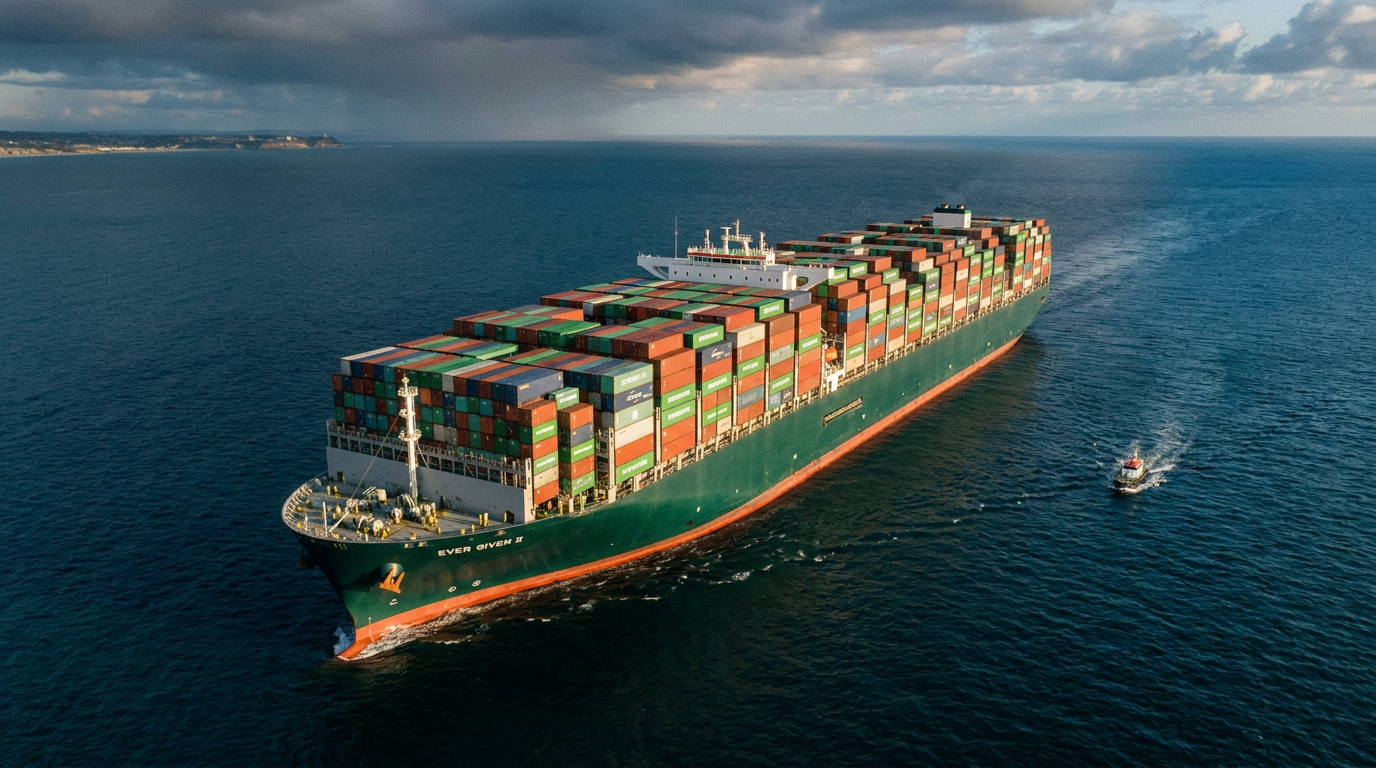
A convergence of Red Sea diversions, carrier capacity constraints, and shippers rushing to beat July tariffs has triggered an unusually early 'peak season' in global shipping. Transpacific spot rates have surged to near-record highs, forcing importers to radically adjust their supply chain strategies.
By Factlen Editorial Team
- Importers and Retailers
- Focused on securing vessel space and frontloading inventory to avoid looming tariffs and stockouts.
- Ocean Carriers
- Prioritizing capacity management through blank sailings and surcharges to maximize profitability amid network inefficiencies.
- Logistics Analysts
- Advising a shift from panic booking to structured, long-term supply chain planning to navigate structural volatility.
What's not represented
- · Small-to-Medium Enterprises (SMEs) unable to afford premium spot rates
- · Port workers managing the sudden influx of early cargo
Why this matters
For consumers and businesses, skyrocketing ocean freight rates directly translate to higher prices for imported goods, from electronics to furniture. Understanding these supply chain mechanics is crucial for companies trying to protect their margins and ensure product availability ahead of the holiday season.
Key points
- The traditional late-summer shipping peak season has arrived months early in 2026, driven by importers frontloading cargo.
- Transpacific spot rates have surged, with U.S. West Coast rates hitting $5,700 per FEU and East Coast rates reaching $7,400.
- Ongoing Red Sea diversions are absorbing 5 to 7 percent of global container capacity, creating a structural shortage of vessels.
- Shippers are increasingly routing cargo to the U.S. West Coast to avoid the $800 to $1,500 premium associated with East Coast deliveries.
The global supply chain operates on a predictable rhythm, with the late-summer "peak season" traditionally marking the rush to stock shelves for the holidays. But in 2026, that rhythm has been violently disrupted.[1][2]
By early June, the ocean freight market had already entered a state of frenzy, with demand surging simultaneously across major east-west trades.[3]
The result has been a staggering spike in costs. Drewry's World Container Index surged 23 percent in a single week in early June, reaching $3,433 per 40-foot container globally.[5]
On the transpacific routes, the numbers are even more severe. Spot rates from Asia to the U.S. West Coast have climbed past $5,700 per forty-foot equivalent unit (FEU), while East Coast rates have breached $7,400.[6]

To understand why the market is moving so aggressively, analysts point to a behavioral shift among importers known as "frontloading."[4]
Shippers are not reacting to a sudden, organic boom in consumer demand; rather, they are racing against the clock. Importers are accelerating their shipments to get ahead of expected U.S. tariff changes—including Section 301 introductions—slated for July.[2][6]
Adding to the urgency are looming manufacturer price hikes, rising bunker fuel surcharges, and the desire to avoid peak-season congestion later in the year.[4][6]
This artificial demand surge is colliding with a global shipping network that is already operating with a severely reduced shock absorber.[7]
This artificial demand surge is colliding with a global shipping network that is already operating with a severely reduced shock absorber.
The ongoing geopolitical crisis in the Red Sea has forced most major carriers to abandon the Suez Canal in favor of the much longer route around Africa's Cape of Good Hope.[8]
This diversion adds 10 to 14 days to transit times for Asia-Europe and Asia-U.S. East Coast lanes, effectively absorbing 5 to 7 percent of the world's total container fleet capacity.[7]

With so many vessels tied up on longer voyages, carriers have had to redeploy ships from less profitable routes to cover the shortfall, creating a cascading capacity crunch across the globe.[7]
Furthermore, ocean carriers are actively managing the remaining capacity to their advantage. Through strategic "blank sailings"—canceling scheduled voyages—and reshuffling vessels, shipping lines have tightened supply just as demand spikes.[4]
The routing dynamics have also created a stark divide between the U.S. East and West Coasts. Because East Coast all-water services traditionally rely on the Suez or Panama canals, they now carry a "Red Sea premium" of $800 to $1,500 per container.[7]
In response, many shippers are pivoting to Pacific routing, bringing cargo into West Coast ports and utilizing rail or truck networks to reach eastern markets, a strategy that is currently proving faster and sometimes cheaper.[7]

The logistics strain is not limited to traditional retail goods. Massive investments in artificial intelligence infrastructure have created an air freight "super cycle," pushing some overflow cargo back onto the ocean as shippers seek alternative capacity.[3]
Additionally, preparations for the 2026 FIFA World Cup in North America are injecting a unique, localized demand surge into the transpacific logistics system.[5][8]
For logistics teams, the current environment requires a shift from routine booking to crisis management. Industry experts advise against panic booking, recommending instead that companies compare rates in real time and confirm space weeks in advance.[2]
How we got here
Late 2023
Houthi attacks in the Red Sea begin, prompting initial shipping diversions around the Cape of Good Hope.
Early 2026
Ocean freight rates stabilize briefly as the market adjusts to longer transit times.
May 2026
Importers begin aggressively frontloading orders to beat anticipated July tariff changes.
June 2026
Spot rates surge by over 20% in a single week, marking the unofficial start of an unprecedented early peak season.
Viewpoints in depth
Importers and Retailers
Racing against the clock to secure inventory before regulatory and pricing changes take effect.
For cargo owners, the summer of 2026 is defined by urgency. Rather than waiting for traditional back-to-school or holiday demand signals, retailers are frontloading their orders to beat a slew of anticipated July changes, including Section 301 tariff introductions and manufacturer price hikes. This strategy is defensive: paying a premium for spot rates today is viewed as less risky than facing stockouts or massive tariff burdens tomorrow. However, this rush has created a self-fulfilling prophecy, tightening space so severely that some premium services are sold out weeks in advance.
Ocean Carriers
Leveraging tight capacity and geopolitical disruptions to maintain pricing power.
Shipping lines are navigating a complex operational environment, but they are also actively managing it to their advantage. By implementing 'blank sailings' and carefully controlling the deployment of extra loaders, carriers ensure that supply remains tight even as demand spikes. The prolonged Red Sea diversions have provided a structural floor for these efforts, absorbing enough global capacity to justify steep peak season surcharges and elevated base rates across all major east-west trades.
Logistics Analysts
Warning that extreme volatility is the new baseline for global trade.
Industry watchers emphasize that the current crisis is not a temporary anomaly but a reflection of a 'structural reset' in global logistics. Analysts note that the compounding effects of geopolitical conflict, tariff uncertainty, and localized demand surges (like the AI infrastructure boom) mean that supply chains are operating without a safety net. Their primary advice to shippers is to abandon the hope of a return to pre-2020 normalcy and instead invest in resilient routing strategies, such as shifting to Pacific West Coast gateways to avoid Suez-dependent delays.
What we don't know
- Whether the U.S. will actually implement the anticipated Section 301 tariff changes in July, or if the threat alone was enough to permanently distort the 2026 shipping cycle.
- How long the Red Sea diversions will continue, as geopolitical tensions in the Middle East show no immediate signs of resolution.
- If consumer demand in Q3 and Q4 will be strong enough to absorb the massive influx of early inventory currently flooding U.S. warehouses.
Key terms
- FEU (Forty-foot Equivalent Unit)
- A standard measure of volume in container shipping, representing one 40-foot shipping container.
- Blank Sailing
- When a shipping carrier cancels a scheduled voyage or skips a specific port to manage capacity and maintain freight rates.
- Frontloading
- The practice of importers ordering and shipping goods months earlier than usual to avoid anticipated tariffs, price hikes, or delays.
- Spot Rate
- The current market price for a one-time shipment, as opposed to a long-term contracted rate.
- Bunker Adjustment Factor (BAF)
- A floating surcharge added to freight rates by carriers to compensate for fluctuations in fuel prices.
Frequently asked
Why is the shipping peak season happening in June instead of August?
Importers are 'frontloading' their shipments to get ahead of expected U.S. tariff changes in July, manufacturer price hikes, and potential congestion later in the year.
How is the Red Sea crisis affecting transpacific shipping?
While Pacific routes to the U.S. West Coast don't use the Red Sea, the diversion of ships around Africa absorbs 5-7% of global capacity, creating a cascading shortage of vessels worldwide.
Why are East Coast shipping rates higher than West Coast rates?
East Coast all-water services traditionally rely on the Suez or Panama canals. With Red Sea diversions, carriers are charging an $800 to $1,500 premium per container for East Coast deliveries.
Should shippers wait for rates to drop before booking?
Logistics analysts advise against waiting, as capacity is extremely tight. Instead, they recommend structured planning, comparing rates in real time, and booking priority cargo well in advance.
Sources
Source coverage
8 outlets
3 viewpoints surfaced








[1]Metro GlobalOcean Carriers
Early peak season surge tightens Asia ocean freight markets
Read on Metro Global →[2]SeaRatesLogistics Analysts
Early Peak Season Pushes Container Rates Higher on Asia–Europe and Transpacific Routes
Read on SeaRates →[3]SeaVantageOcean Carriers
Global Ocean Freight Trends & Capacity Updates
Read on SeaVantage →[4]TD Tech LogisticsImporters and Retailers
Why Are Ocean Freight Rates Rising Again in 2026?
Read on TD Tech Logistics →[5]FIDI FocusLogistics Analysts
Drewry's World Container Index surged 23 per cent last week
Read on FIDI Focus →[6]DC VelocityImporters and Retailers
Ocean freight: early peak season pushes container rates higher
Read on DC Velocity →[7]Suaid GlobalLogistics Analysts
Red Sea Shipping Crisis 2026: Impact on Your Supply Chain
Read on Suaid Global →[8]Vietnam Investment ReviewLogistics Analysts
Rising Middle East tensions are increasing logistics costs and delaying shipments
Read on Vietnam Investment Review →
Every angle. Every day.
Get transportation stories with full source coverage and perspective breakdowns delivered to your inbox.