
How AI is Transitioning from Finding Software Bugs to Automatically Fixing Them
As major tech firms acquire autonomous patching startups, the cybersecurity industry is shifting from threat detection to automated remediation. Current evidence shows AI agents excel at fixing routine vulnerabilities, though complex logic flaws still require human oversight.
By Factlen Editorial Team
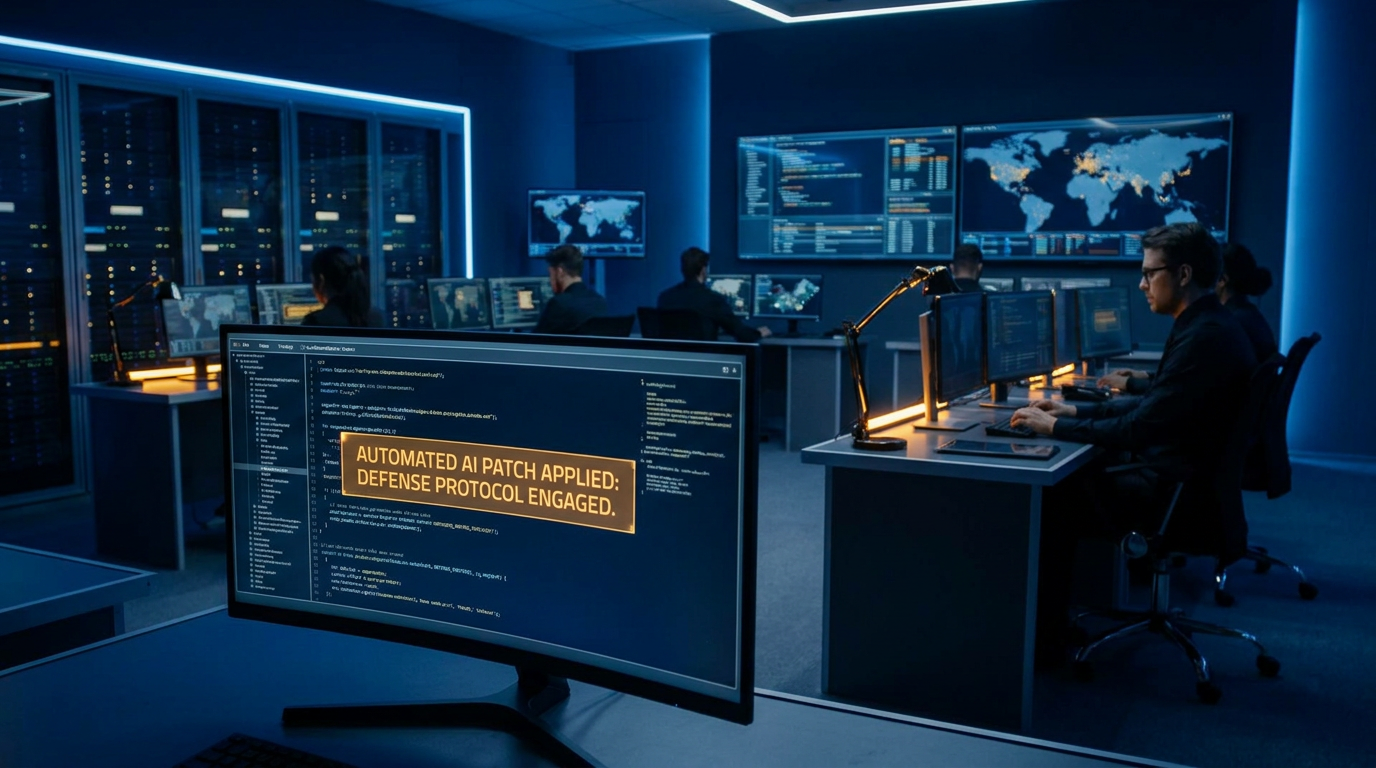
- Autonomous Security Advocates
- Argue that AI-driven patching is the only viable way to scale enterprise defense against increasingly automated cyberattacks.
- Security Researchers
- Emphasize the limitations of current LLMs, warning against fully autonomous deployment due to the risk of hallucinated vulnerabilities.
- Enterprise Risk Managers
- Focus on the practical integration of AI tools, prioritizing compliance, data sovereignty, and human-in-the-loop oversight.
What's not represented
- · Independent open-source developers relying on free AI tools
- · Cyber insurance providers assessing the risk of AI-generated code
Why this matters
For decades, cybersecurity has been a losing battle of human defenders trying to patch software faster than automated bots can exploit it. The proven ability of AI to write and deploy its own security patches fundamentally shifts the advantage back to the defenders, promising safer digital infrastructure for everyone.
Key points
- The cybersecurity industry is shifting from merely detecting threats to using AI for automated remediation.
- Elastic's $85M acquisition of DeductiveAI highlights enterprise demand for autonomous patching tools.
- AI agents can successfully generate secure patches for roughly 75% of common syntax-level vulnerabilities.
- Complex architectural flaws still require human intervention, as AI struggles with multi-service context.
- Most organizations use a 'human-in-the-loop' model to prevent AI from deploying hallucinated code.
- Automated patching drastically reduces Mean Time To Remediation, shrinking the window for cyberattacks.
The cybersecurity industry is undergoing a quiet but profound paradigm shift, moving from systems that merely alert humans about software flaws to systems that actively fix them. This transition was underscored this week by Elastic's agreement to acquire DeductiveAI, a three-year-old startup specializing in AI-driven bug resolution, for up to $85 million. The acquisition highlights a growing consensus among enterprise technology leaders: finding vulnerabilities is no longer the primary bottleneck; the real challenge is remediating them before they can be exploited by malicious actors.[1][6]
For years, security operations centers have been plagued by "alert fatigue." Automated scanning tools generate thousands of vulnerability reports daily, overwhelming human engineers who must manually write, test, and deploy patches for each one. This asymmetry has historically favored attackers, who use automated scripts to scan the internet for unpatched systems. By deploying Large Language Models (LLMs) trained specifically on secure coding practices, defenders are finally automating the remediation side of the equation, creating a more balanced digital battlefield.[5][6]
The core mechanism behind this new wave of autonomous defense relies on integrating AI agents directly into the software development lifecycle. When a traditional scanning tool flags a vulnerability—such as a buffer overflow or a cross-site scripting flaw—the AI agent ingests the alert, analyzes the surrounding codebase, and generates a "pull request" containing the necessary code changes to fix the issue. The system then runs automated tests to ensure the patch does not break existing functionality before routing it to a human supervisor for final approval.[3][7]

The primary claim driving the adoption of these tools is a dramatic reduction in the Mean Time To Remediation (MTTR). According to market projections, the autonomous security sector is expected to grow into a $15 billion industry by 2028, largely because of this speed advantage. Organizations utilizing AI-driven patching report that the time between discovering a critical vulnerability and deploying a fix can be reduced from weeks to mere hours, fundamentally shrinking the window of opportunity for cybercriminals.[8]
Peer-reviewed evidence strongly supports this claim for specific classes of vulnerabilities. Studies published in IEEE Security & Privacy demonstrate that LLM-driven agents can successfully generate functional, secure patches for roughly 75% of common syntax-level flaws, such as SQL injections and improper input validation. In these controlled enterprise environments, the automated systems reduced the overall patching workload for human engineers by more than 40%, allowing security teams to focus on more strategic threat hunting.[7]
Peer-reviewed evidence strongly supports this claim for specific classes of vulnerabilities.
However, the evidence also reveals clear limitations in the current generation of AI coding agents, particularly regarding complex architectural flaws. Academic evaluations of LLMs on autonomous vulnerability repair show a steep drop in efficacy when a bug spans multiple microservices or involves deep business-logic errors. In these scenarios, the AI often lacks the broader systemic context required to understand how a change in one module might inadvertently expose data in another.[3][5]

This limitation introduces the risk of "hallucinated fixes"—instances where the AI generates code that appears correct but either fails to fully resolve the vulnerability or introduces a new, subtle security flaw. The Cybersecurity and Infrastructure Security Agency (CISA) has issued guidelines warning organizations about the risks of deploying AI-generated code without rigorous, independent verification. The agency emphasizes that while AI can accelerate the drafting of a patch, the validation process must remain robust and mathematically sound.[4]
To mitigate these risks, the industry has largely settled on a "human-in-the-loop" deployment model. Startups like DeductiveAI do not push code directly to production servers. Instead, they act as highly capable junior developers, preparing the fix, writing the accompanying documentation, and presenting a complete package to a senior human engineer for review. This workflow captures the speed benefits of AI while maintaining the critical oversight necessary to prevent hallucinated vulnerabilities from reaching the public.[1][6]

The push for automated remediation is also being driven by broader geopolitical and regulatory pressures. As the race for global AI dominance accelerates, the US government is increasingly focused on ensuring that domestic computing infrastructure remains secure and compliant. Industry leaders note that federal agencies are moving faster than ever to mandate strict data security protocols, forcing enterprise companies to adopt AI-driven defenses simply to keep pace with the sheer volume of compliance requirements and emerging threats.[2]
Looking ahead, the trajectory of autonomous security points toward proactive code hardening. Rather than waiting for a vulnerability to be discovered in production, the next generation of AI agents is being designed to sit inside the developer's coding environment, automatically rewriting insecure functions in real-time as the human types. This shift from reactive patching to proactive secure-by-design development represents one of the most promising advancements in the history of digital security.[5][7]

The consensus among security researchers is that while AI will not replace human security engineers in the near term, it has already proven its value as a force multiplier. The evidence confirms that for routine, well-documented vulnerabilities, autonomous remediation is highly effective and safe when paired with automated testing. As these models continue to ingest more security data, their ability to untangle complex logic flaws will inevitably improve, offering a hopeful vision for a more resilient internet.[3][6]
How we got here
Early 2020s
AI is primarily used in cybersecurity for threat detection and analyzing massive logs of network traffic.
2023-2024
Large Language Models demonstrate the ability to write functional code, sparking research into automated vulnerability repair.
2025
Federal agencies like CISA issue guidelines for the secure deployment of AI coding assistants in enterprise environments.
June 2026
Elastic agrees to acquire DeductiveAI for $85 million, signaling mainstream enterprise adoption of autonomous remediation.
Viewpoints in depth
Autonomous Security Advocates
Proponents argue that automated patching is the only mathematical way to defend against AI-powered cyberattacks.
This camp, heavily represented by enterprise tech firms and market analysts like Gartner, views the current asymmetry in cybersecurity as unsustainable. Because attackers use automated scripts to find flaws, defenders relying on manual human patching will always lose the race. They argue that deploying AI to instantly write and test patches is not just a cost-saving measure, but a fundamental necessity for national and corporate security. They point to the dramatic reduction in Mean Time To Remediation (MTTR) as proof that autonomous systems are already turning the tide.
Security Researchers
Academic and government researchers caution that LLMs lack the systemic understanding required for complex security architecture.
While acknowledging the speed benefits, this perspective emphasizes the fragility of current AI models. Researchers highlight that LLMs operate by predicting the next logical token of code, rather than possessing a true semantic understanding of a network's architecture. This makes them highly effective at fixing localized errors like SQL injections, but dangerous when tasked with repairing multi-stage authentication bypasses. Organizations like CISA stress that over-reliance on AI without rigorous human oversight could lead to a false sense of security, where 'hallucinated' patches leave networks quietly vulnerable.
What we don't know
- It remains unclear how cyber liability insurance providers will treat breaches caused by a 'hallucinated' AI patch that bypassed human review.
- The long-term impact of AI auto-patching on the skill development of junior cybersecurity engineers is not yet understood.
- We do not yet know if attackers will develop specific adversarial prompts designed to trick defensive AI agents into writing insecure patches.
Key terms
- Mean Time To Remediation (MTTR)
- A key cybersecurity metric measuring the average time it takes an organization to fix a vulnerability after it has been discovered.
- Pull Request
- A method of submitting proposed code changes to a software project, allowing other developers to review the modifications before they are merged into the main codebase.
- Buffer Overflow
- A common software vulnerability where a program writes more data to a block of memory than it can hold, potentially allowing an attacker to execute malicious code.
- Human-in-the-loop
- A system design where artificial intelligence performs the heavy lifting of a task, but a human operator is required to make the final decision or approval.
Frequently asked
Can AI fix any type of software bug?
No. Current evidence shows AI is highly effective at fixing localized syntax errors (like injection flaws) but struggles with complex, multi-stage architectural vulnerabilities that require deep systemic context.
Will AI patching replace human cybersecurity engineers?
Industry consensus indicates AI will act as a force multiplier rather than a replacement. The standard deployment model requires a human engineer to review and approve the AI-generated patch before it goes live.
What is a 'hallucinated fix'?
A hallucinated fix occurs when an AI generates code that looks correct but either fails to actually resolve the vulnerability or inadvertently introduces a new security flaw into the system.
Why is the speed of patching so important?
Cybercriminals use automated bots to scan the internet for unpatched systems immediately after a vulnerability is announced. Reducing the time it takes to deploy a fix shrinks the window attackers have to breach a network.
Sources
Source coverage
8 outlets
3 viewpoints surfaced








[1]TechCrunchAutonomous Security Advocates
Source: Elastic agrees to buy CRV-backed DeductiveAI for up to $85M
Read on TechCrunch →[2]BloombergEnterprise Risk Managers
Companies Move to Secure Data as AI Increases Security Risks
Read on Bloomberg →[3]arXivSecurity Researchers
Evaluating Large Language Models on Autonomous Vulnerability Repair
Read on arXiv →[4]Cybersecurity and Infrastructure Security AgencySecurity Researchers
Guidelines for Secure AI System Development and Deployment
Read on Cybersecurity and Infrastructure Security Agency →[5]MIT Technology ReviewSecurity Researchers
AI coding agents are getting better at fixing their own mistakes
Read on MIT Technology Review →[6]Factlen Editorial Team
Synthesis by Factlen editorial team
Read on Factlen Editorial Team →[7]IEEE Security & PrivacyEnterprise Risk Managers
The Efficacy of LLM-Driven Automated Patching in Enterprise Environments
Read on IEEE Security & Privacy →[8]GartnerAutonomous Security Advocates
Gartner Forecasts Autonomous Security Market to Reach $15 Billion by 2028
Read on Gartner →

More in technology
See all 5 stories →Battery Tech
The 7,000mAh Era: How Silicon-Carbon Batteries Are Finally Solving the Smartphone Power Crisis
6 sources

AI Defense
The AI Vulnerability Spike: Why a Record Number of Software Bugs is Actually Good News
8 sources

Mobile Accessibility
Apple and Google Unveil Breakthrough AI Accessibility Features for Next-Generation Smartphones
6 sources

Every angle. Every day.
Get technology stories with full source coverage and perspective breakdowns delivered to your inbox.