
Why Memory Stocks Remain the AI Boom's Biggest Bargain
Despite record-breaking revenue driven by artificial intelligence infrastructure, memory semiconductor companies are trading at historic discounts as markets weigh future oversupply risks.
By Factlen Editorial Team
- Cyclical Skeptics
- Maintain that the fundamental laws of semiconductor capital cycles remain intact, and current massive investments will inevitably lead to oversupply.
- Structural Bulls
- Argue that the complexity and lower yield rates of HBM have permanently altered the industry's supply dynamics, preventing future gluts.
- Hardware Technologists
- Focus on the physical limitations of chip architecture, noting that stacking memory vertically introduces bottlenecks that capital alone cannot quickly solve.
What's not represented
- · Retail investors heavily concentrated in logic chip designers
- · Consumer electronics manufacturers facing higher memory costs
Why this matters
For investors trying to navigate the artificial intelligence super-cycle, memory stocks offer a rare pocket of value, but capturing it requires understanding the boom-and-bust capital expenditure cycles that govern physical hardware manufacturing.
Key points
- Memory semiconductor stocks are trading at unusually low valuations despite posting record profits driven by AI demand.
- The market is pricing in a historical 'capital cycle' where current high investments lead to future oversupply and price crashes.
- AI requires High Bandwidth Memory (HBM), which is physically harder to manufacture and yields fewer usable chips per wafer.
- Bulls argue that HBM's manufacturing complexity will naturally constrain supply, preventing the gluts seen in previous cycles.
- The transition to running AI models locally on consumer devices is expected to create a secondary wave of memory demand.
The artificial intelligence hardware boom has minted trillion-dollar companies and dominated market headlines, but one crucial sector is lagging in valuation despite posting record profits: memory semiconductors. While the designers of logic chips and graphics processing units (GPUs) trade at massive premiums, the companies that manufacture the memory required to make those logic chips function are trading at a fraction of the valuation.[1]
MarketWatch recently highlighted this paradox, noting that memory semiconductor stocks are experiencing their most profitable year on record, yet they remain some of the cheapest equities in the technology sector. To understand why this discrepancy exists, investors must look past the artificial intelligence hype and examine the brutal, cyclical physics of hardware manufacturing.[1][6]
At the heart of the current boom is a technology known as High Bandwidth Memory, or HBM. Traditional logic processors, no matter how fast they are designed to be, face a physical limitation known as the "memory wall"—they can only calculate data as fast as it can be retrieved from storage.[3]
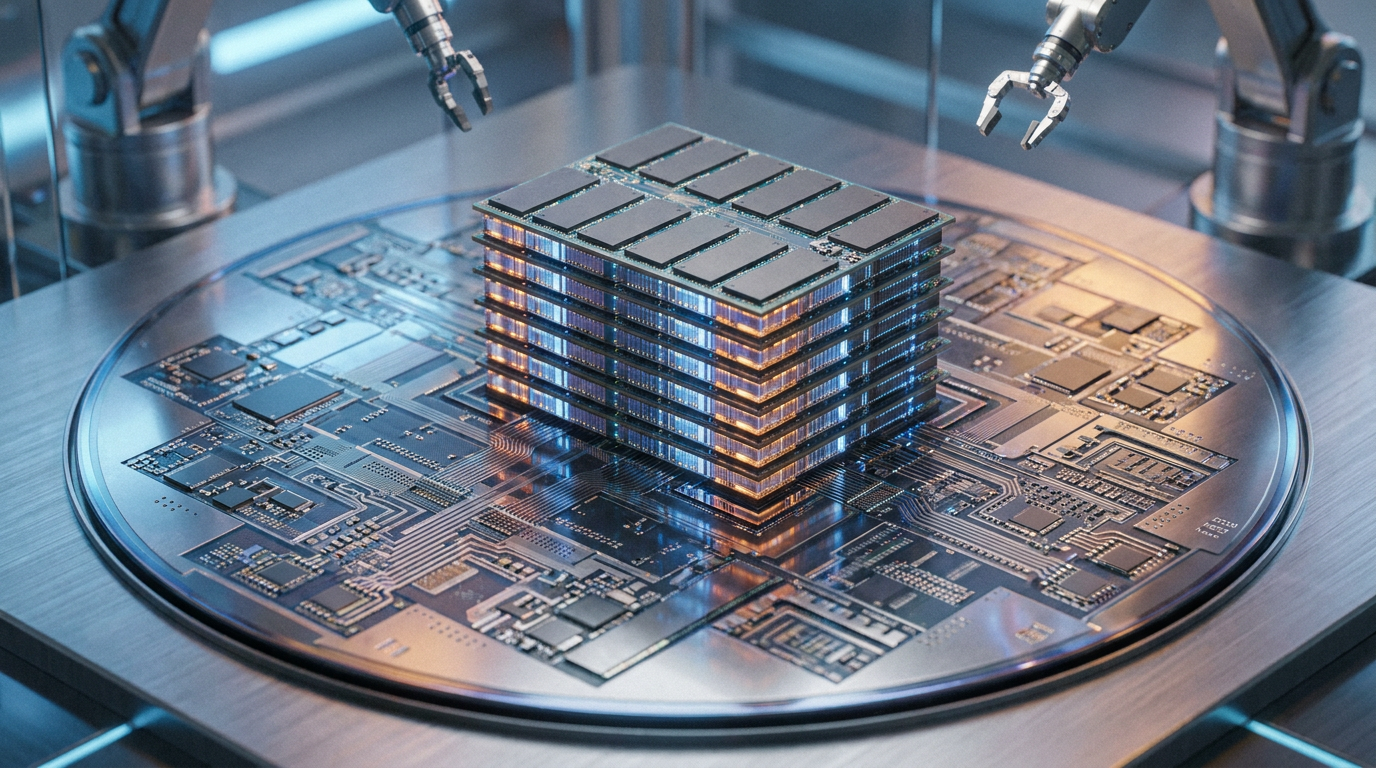
HBM solves this bottleneck by vertically stacking dynamic random-access memory (DRAM) chips and connecting them with microscopic wires called through-silicon vias. This three-dimensional architecture allows massive amounts of data to be fed to the processor simultaneously, which is an absolute requirement for training large language models.[3]

The demand for these advanced memory architectures has skyrocketed globally. Major manufacturers have reported unprecedented revenue surges in their 2026 filings, driven almost entirely by data center demand for AI training clusters, with supply struggling to keep pace with orders from major tech conglomerates.[2][4]
Despite these record-breaking financials and clear demand signals, the broader market is assigning these companies forward price-to-earnings multiples in the single digits. This deep discount reflects Wall Street's institutional memory of the semiconductor industry's notorious "capital cycle."[1][5]
Historically, memory chips have been treated as commodity products. When demand spikes, prices soar, and manufacturers generate massive cash flows. However, because memory companies compete primarily on scale and technological edge, they inevitably reinvest those cash flows into building massive new fabrication plants, or "fabs."[5]
Historically, memory chips have been treated as commodity products.
These fabrication facilities cost tens of billions of dollars and take several years to construct. By the time the new fabs come online and reach full production capacity, the supply of memory chips typically floods the market, crashing prices and wiping out profit margins.[5]
Financial researchers note that this boom-and-bust pattern has repeated reliably every three to four years for the past three decades. The current low valuations suggest that the broader market believes the clock is already ticking on the next bust.[5]

Investors are essentially pricing in the assumption that the billions currently being spent on new HBM capacity will inevitably lead to a massive oversupply by 2027 or 2028, compressing margins just as quickly as they expanded.[1][6]
But a growing chorus of structural bulls argues that "this time is different." They contend that HBM is not a traditional commodity and that the historical capital cycle model may no longer apply to the top tier of the memory market.[2][6]
Manufacturing HBM is incredibly difficult. The vertical stacking process is highly prone to defects, resulting in lower "yield rates"—the percentage of usable, sellable chips produced from a single silicon wafer.[3]

Because HBM consumes up to three times more wafer space than traditional DRAM to produce the exact same gigabyte capacity, the industry's overall output is naturally constrained by physics and manufacturing complexity. This physical limitation could prevent the kind of massive, sudden oversupply that triggered previous cyclical crashes.[4][6]
Furthermore, the transition from AI training in massive data centers to AI inference on edge devices—like smartphones and personal computers—is expected to create a secondary, sustained wave of memory demand. Running advanced models locally requires significantly more baseline RAM than previous generations of consumer hardware.[4]
Ultimately, the valuation of memory stocks rests on a tug-of-war between historical precedent and technological evolution. If the capital cycle holds true, the current discount is a rational warning; if HBM has structurally changed the industry's supply dynamics, these equities may indeed be the AI era's biggest bargain.[1][6]
How we got here
2018-2019
The last major memory market glut caused prices to crash following over-investment in fabrication facilities.
2021-2022
Pandemic-era supply chain constraints led to a massive shortage of legacy semiconductor chips.
2023-2024
The generative AI boom triggered unprecedented demand for High Bandwidth Memory to support data center GPUs.
Early 2026
Memory manufacturers report record profits, yet their stock valuations remain compressed due to fears of a looming 2027 oversupply.
Viewpoints in depth
Structural Bulls
Investors who believe the AI hardware boom has permanently changed the memory market's supply dynamics.
This camp argues that the historical boom-and-bust cycle is dead, at least for the highest tier of memory products. They point to the sheer physical difficulty of manufacturing High Bandwidth Memory. Because stacking chips vertically requires immense precision and results in lower yield rates, the industry simply cannot produce enough supply to flood the market, even with billions in new capital expenditure. Therefore, they view the current low valuations of memory stocks as a massive mispricing by a market stuck in outdated paradigms.
Cyclical Skeptics
Analysts who maintain that the fundamental laws of semiconductor capital cycles remain intact.
Skeptics warn that 'this time is different' are the most dangerous words in investing. They note that every time the semiconductor industry experiences a massive demand shock, companies over-build capacity to capture market share. While HBM is currently difficult to manufacture, they argue that yield rates will inevitably improve as the technology matures. Once those efficiencies are realized across the massive new fabrication plants currently under construction, supply will outstrip demand, crushing profit margins just as it has in every previous cycle.
Hardware Technologists
Engineers focused on the physical limitations of chip architecture and the 'memory wall.'
For technologists, the financial debate is secondary to the physical reality of computing. They emphasize that logic processors have outpaced memory speeds for a decade. The AI boom is entirely dependent on bridging this gap. They view HBM not just as a product cycle, but as a mandatory architectural shift for the entire computing industry. From their perspective, the demand for advanced memory is not a temporary spike but a permanent new baseline required to make next-generation software function.
What we don't know
- Exactly how quickly manufacturing yield rates for next-generation HBM4 will improve.
- The precise volume of memory that will be required for edge AI inference on consumer smartphones and PCs in 2027.
- Whether geopolitical trade restrictions will artificially constrain the supply chain for memory manufacturing equipment.
Key terms
- High Bandwidth Memory (HBM)
- A high-performance RAM interface that vertically stacks memory chips to dramatically increase the speed at which data is sent to a processor.
- Forward P/E Ratio
- A valuation metric that divides a company's current stock price by its estimated future earnings per share, used to gauge if a stock is cheap or expensive.
- Capital Expenditure (Capex)
- Funds used by a company to acquire, upgrade, and maintain physical assets such as property, industrial buildings, or equipment.
- Yield Rate
- The percentage of fully functional, sellable chips produced from a single silicon wafer during the manufacturing process.
Frequently asked
Why do AI chips need so much memory?
Large language models require massive datasets to be held in active memory simultaneously so the processor can access them instantly without waiting for slower storage drives.
What is the 'capital cycle' in semiconductors?
It is a historical pattern where high demand leads to massive profits, which companies reinvest into building new factories. When those factories finish years later, they flood the market with chips, crashing prices.
How is High Bandwidth Memory (HBM) different from regular RAM?
HBM stacks multiple memory chips vertically and connects them directly, allowing vastly more data to flow to the processor at once compared to traditional flat memory chips.
Sources
Source coverage
6 outlets
3 viewpoints surfaced






[1]MarketWatchStructural Bulls
Memory stocks are having their best year ever. Why do they still look so cheap?
Read on MarketWatch →[2]Financial TimesStructural Bulls
High Bandwidth Memory demand outpaces global supply as AI data center buildout accelerates
Read on Financial Times →[3]IEEE SpectrumHardware Technologists
The Architecture of High Bandwidth Memory in AI Accelerators
Read on IEEE Spectrum →[4]SEC EDGARStructural Bulls
Micron Technology, Inc. Form 8-K: Q3 2026 Financial Results
Read on SEC EDGAR →[5]SSRNCyclical Skeptics
Cyclicality and Capital Expenditures in the Semiconductor Industry
Read on SSRN →[6]Factlen Editorial TeamHardware Technologists
Synthesis by Factlen editorial team
Read on Factlen Editorial Team →

More in finance
See all 6 stories →AI Hardware
Memory Stocks Are Having Their Best Year Ever. Why Do They Still Look So Cheap?
6 sources
Semiconductor Boom
Memory Chip Stocks Hit $1 Trillion Valuations, Yet Remain the AI Boom's Biggest Bargain
7 sources

Retirement Planning
The late-career Roth 401(k) switch: When paying taxes now pays off in retirement
6 sources

Retirement Planning
Should You Switch to a Roth 401(k) in Your 50s? The Late-Career Catch-Up Explainer
6 sources

Every angle. Every day.
Get finance stories with full source coverage and perspective breakdowns delivered to your inbox.