
Pharmacological Hypothermia: How 'Cooling Drugs' Could Limit Stroke Damage
A new two-drug combination successfully induces a hibernation-like state in mice, lowering body temperature to protect brain tissue after a stroke without the need for physical cooling.
By Factlen Editorial Team
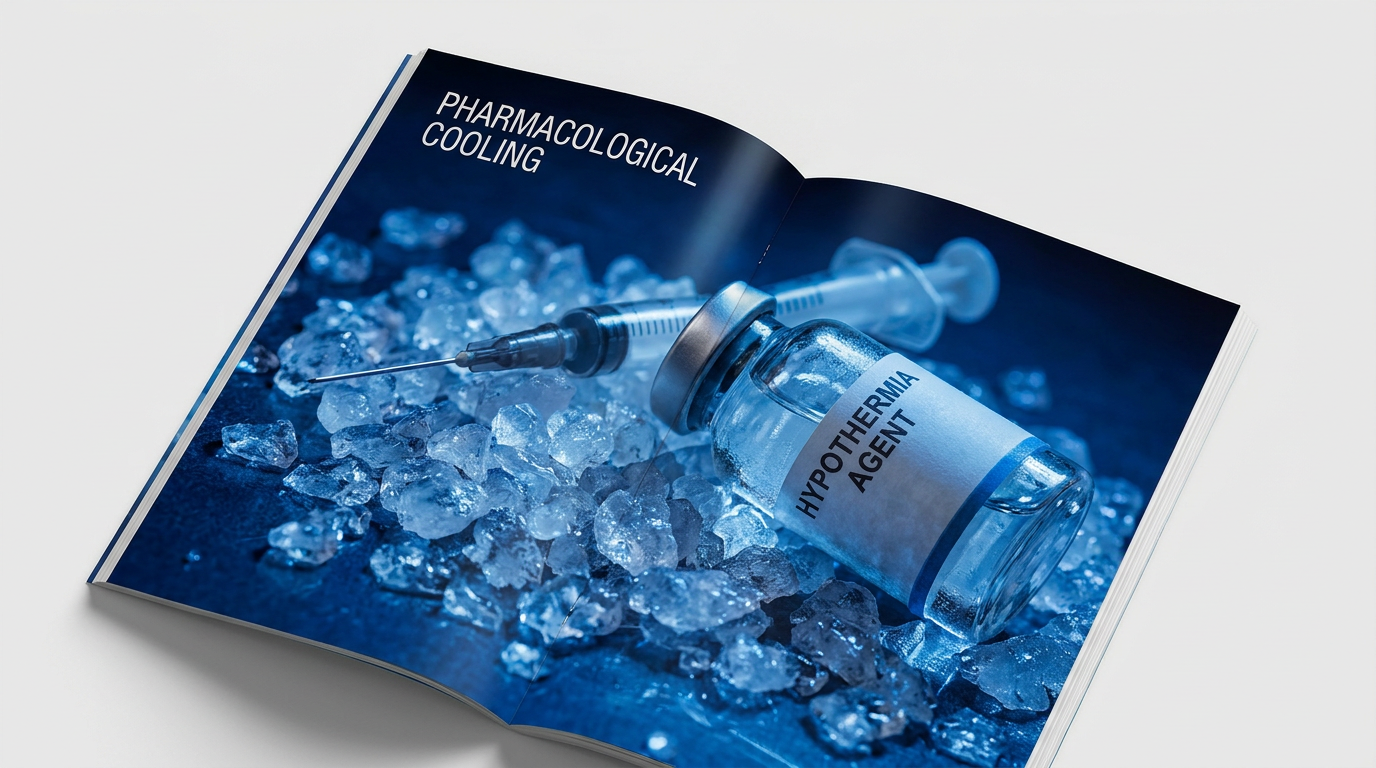
- Translational Optimists
- Believe pharmacological hypothermia will soon move from animal models to human clinical trials.
- Clinical Skeptics
- Argue that the vast differences in thermal mass between mice and humans will make the drugs ineffective or unsafe in patients.
- Emergency Medicine Advocates
- Focus on the potential for paramedics to administer the drugs in the field, revolutionizing pre-hospital stroke care.
What's not represented
- · Paramedics / First Responders
- · Stroke Survivors
Why this matters
Stroke is a leading cause of long-term disability, largely because brain cells die rapidly when deprived of oxygen. If this cooling therapy can be translated to humans, paramedics could administer a simple injection to 'freeze' brain damage in its tracks before the patient even reaches the hospital.
Key points
- Therapeutic hypothermia is a known neuroprotectant, but physical cooling causes violent shivering that requires heavy sedation.
- A new study in Nature demonstrates that a two-drug combination can safely lower body temperature in mice without triggering shivering.
- The experimental cocktail works by simultaneously suppressing the brain's metabolic rate and widening blood vessels to release heat.
- Mice treated with the drugs after an ischemic stroke showed significantly smaller brain lesions and better preserved motor function.
- Translating the therapy to humans remains challenging due to massive differences in thermal mass and cardiovascular responses.
When a blood clot blocks an artery in the brain, the clock starts ticking. Neurologists operate under the grim mantra that "time is brain," as an ischemic stroke destroys approximately 1.9 million neurons every minute it goes untreated. The immediate goal is always to restore blood flow, either by administering clot-busting drugs or physically extracting the blockage via a catheter. However, the initial lack of oxygen is only the first phase of the crisis. The brain's intricate network of cells is highly sensitive to energy deprivation, and the rapid loss of blood flow triggers a devastating chain reaction that threatens even the tissue surrounding the immediate blockage.[3]
Paradoxically, the return of blood flow can also cause harm. This phenomenon, known as reperfusion injury, occurs when oxygen suddenly floods back into the oxygen-starved tissue. The sudden influx triggers a massive wave of inflammation and oxidative stress, releasing toxic free radicals that further damage vulnerable neurons. This secondary "ischemic cascade" can continue to destroy brain tissue for hours or even days after the initial clot has been resolved. Finding a way to halt this secondary damage has been one of the most elusive goals in modern neurovascular medicine, prompting researchers to look beyond traditional blood-thinners.[3]
For decades, the most effective known method to protect the brain from this cascade has been temperature control. Therapeutic hypothermia—intentionally cooling the patient's body—acts as a broad-spectrum neuroprotectant. By lowering the brain's temperature, doctors can significantly slow down cellular metabolism. In this chilled, low-energy state, neurons require a fraction of their usual oxygen and glucose supply. The cooling effectively puts the brain cells into a temporary "hibernation," blunting the inflammatory response, reducing brain swelling, and preventing the toxic buildup of neurotransmitters that leads to cell death.[3]
Despite its proven efficacy, therapeutic hypothermia is rarely used for stroke patients today because of the severe logistical challenges involved in physical cooling. Currently, lowering a patient's core temperature requires external methods like ice packs, specialized cooling blankets, or the infusion of chilled intravenous fluids. The human body, however, is evolutionarily hardwired to fiercely defend its core temperature of 37°C (98.6°F). When exposed to physical cooling, the hypothalamus immediately triggers violent, uncontrollable shivering in a desperate attempt to generate heat.[3]

This shivering response completely undermines the goal of the therapy. Shivering is a highly energy-intensive muscle activity that dramatically increases the body's metabolic demand—the exact opposite of what a stroke-damaged brain needs. To safely cool a patient using physical methods, doctors must administer heavy sedatives and paralytic drugs to suppress the shivering reflex. This requires the patient to be intubated, placed on a mechanical ventilator, and monitored in an intensive care unit. For many elderly or frail stroke patients, the physiological stress of this process is simply too dangerous to justify the potential neuroprotective benefits.[4]
A recent breakthrough published in the journal Nature offers a tantalizing solution to this problem: achieving the benefits of hypothermia without the ice. Researchers have successfully demonstrated that a specific combination of "cooling drugs" can induce a hibernation-like state in mice, significantly limiting brain damage following a stroke. Rather than fighting the body's natural temperature defenses from the outside in, this pharmacological approach works from the inside out, effectively reprogramming the brain's internal thermostat to accept a lower core temperature without triggering a panic response.[1][2]
The experimental therapy relies on a precise two-drug cocktail, each targeting a different aspect of the body's thermoregulatory system. The first compound acts directly on the central nervous system to lower the basal metabolic rate. By interacting with specific receptors in the hypothalamus, the drug signals the brain to reduce heat production at the cellular level. This metabolic suppression is the crucial first step, as it prevents the body from actively trying to warm itself up, effectively bypassing the shivering reflex that makes physical cooling so difficult to manage.[1]
The experimental therapy relies on a precise two-drug cocktail, each targeting a different aspect of the body's thermoregulatory system.
However, simply turning down the body's furnace is not enough to rapidly induce hypothermia; the heat already trapped inside the body must be expelled. This is where the second drug in the combination comes into play. The second compound is a potent vasodilator, meaning it relaxes the smooth muscle cells lining the blood vessels. By widening the blood vessels, particularly those near the surface of the skin, the drug allows warm blood from the body's core to rush to the periphery, where the heat can rapidly dissipate into the surrounding environment.[1]
The synergy between these two drugs is what makes the therapy so effective. While the metabolic depressant lowers the thermostat, the vasodilator opens the windows, resulting in a rapid and smooth drop in core body temperature. In the Nature study, researchers induced ischemic strokes in mice and then administered the two-drug combination. The results were striking: the mice that received the cooling drugs exhibited significantly smaller brain lesions compared to the control group. The pharmacological hypothermia effectively froze the brain damage in its tracks, preserving the vulnerable tissue surrounding the core stroke area.[1][2]

The benefits of the drug combination extended beyond simply saving brain tissue; they translated into measurable improvements in physical recovery. Mice treated with the cooling cocktail demonstrated significantly better preserved motor function and neurological performance in the days following the stroke. By halting the secondary ischemic cascade, the therapy allowed the animals to retain critical neural pathways that would have otherwise been destroyed by inflammation and oxidative stress. For researchers, this functional recovery is the ultimate proof of concept for any neuroprotective drug.[1]
Despite the profound success in rodent models, experts caution that a massive translation gap remains before these drugs can be used in human hospitals. The scientific community refers to this hurdle as the "mouse problem." While mice are excellent models for studying basic cellular mechanisms, their thermoregulatory physics are vastly different from ours. Translating a temperature-altering therapy from a 30-gram rodent to an 80-kilogram human involves overcoming fundamental laws of thermodynamics that have derailed many promising neuroprotective drugs in the past.[4]
The primary challenge lies in the surface-area-to-volume ratio. Mice have a massive amount of skin surface area relative to their tiny internal volume. Because of this, they naturally lose body heat to the environment very quickly; in fact, a mouse must maintain a hyper-active metabolism just to stay warm. When a drug suppresses that metabolism, a mouse's temperature plummets almost instantly. Humans, by contrast, are massive thermal sinks. We have a very low surface-area-to-volume ratio, meaning we retain core heat stubbornly even when our metabolism is artificially lowered.[4]
Furthermore, the human cardiovascular system responds differently to rapid vasodilation. While widening the blood vessels helps a mouse dump heat, doing the same in a human can cause a dangerous drop in blood pressure. The human hypothalamus is also incredibly sophisticated, possessing redundant backup systems to defend our 37°C core temperature. Overriding these defenses with systemic drugs requires a delicate balancing act. If the dosage is too low, the patient won't cool down; if the dosage is too high, the patient could suffer severe cardiovascular collapse before the brain is protected.[3][4]

If researchers can successfully adapt this two-drug strategy for human physiology, the clinical implications would be revolutionary. The ultimate vision for pharmacological hypothermia is pre-hospital administration. Because the therapy relies on intravenous drugs rather than bulky cooling equipment, paramedics could potentially administer the cocktail in the ambulance the moment a stroke is suspected. By putting the patient's brain into a protective hibernation state before they even reach the emergency room, doctors could buy precious hours to perform scans and safely remove the clot.[2][4]
The potential applications for a safe, reliable cooling drug extend far beyond ischemic stroke. Any medical emergency characterized by a sudden loss of oxygen to the brain could theoretically benefit from this therapy. Patients who suffer cardiac arrest, where the heart stops pumping blood entirely, are highly vulnerable to global brain damage upon resuscitation. Similarly, victims of severe traumatic brain injury or spinal cord trauma suffer from massive secondary inflammation that could be blunted by rapid pharmacological cooling. The drugs could even be used to preserve organs longer prior to transplant surgery.[3]
The next critical step for the research team is to test the two-drug combination in large-animal models, such as pigs or sheep. These animals possess a thermal mass, surface-area-to-volume ratio, and cardiovascular system that much more closely resemble human physiology. These upcoming trials will be essential to determine whether the drugs can safely lower core temperature in a large mammal without causing fatal hypotension or triggering the shivering reflex. Only if these trials succeed will the FDA consider approving Phase 1 safety trials in healthy human volunteers.[4]
While a commercially available "cooling shot" for stroke patients is still years away, the proof-of-concept demonstrated in this recent study marks a major milestone in neuroscience. For decades, the field has struggled to find a way to harness the undeniable neuroprotective power of hypothermia without the debilitating side effects of physical cooling. By proving that the body's internal thermostat can be safely hacked with a precise combination of metabolic and vascular drugs, researchers have opened a highly promising new frontier in the race to save the brain.[4]
How we got here
1990s
Therapeutic hypothermia is firmly established as a neuroprotective strategy for patients recovering from cardiac arrest.
2010s
Clinical trials attempt to use physical cooling for stroke patients, but struggle with the severe side effects of the shivering reflex.
Early 2020s
Researchers begin identifying specific neural pathways in the hypothalamus that control the body's temperature setpoint.
June 2026
A study in Nature demonstrates that a two-drug combination can safely induce hypothermia and limit stroke damage in mice.
Viewpoints in depth
Neurovascular Researchers
Focused on the cellular mechanisms of neuroprotection and halting the ischemic cascade.
For neuroscientists, the primary excitement lies in the ability to pause the devastating chain reaction of excitotoxicity and inflammation that follows a stroke. By lowering the metabolic demand of neurons, the brain requires less oxygen and glucose, allowing cells to survive the temporary loss of blood flow. This 'hibernation' state effectively buys time, preserving the penumbra—the vulnerable tissue surrounding the core stroke lesion—until blood flow can be restored.
Clinical Neurologists
Cautiously optimistic but highly focused on the challenges of human translation and side effects.
Clinicians emphasize that while physical cooling is a proven neuroprotectant, it is logistically fraught. Patients fight the cooling with violent shivering, necessitating heavy sedation and mechanical ventilation. A drug that bypasses the shivering response would be a holy grail for emergency medicine. However, neurologists warn that human thermoregulation is far more robust than that of rodents. Overriding the human hypothalamus safely, without causing dangerous drops in blood pressure or cardiac arrhythmias, remains a significant hurdle.
Pharmacology Experts
Interested in the synergistic effects of combining metabolic suppression with vasodilation.
Pharmacologists highlight the elegance of the two-drug approach. Suppressing metabolism alone isn't enough to rapidly cool a body; the trapped heat must be expelled. By pairing a central metabolic depressant with a peripheral vasodilator, the therapy creates a 'heat dump' effect. The blood vessels near the skin widen, radiating core heat into the environment, while the brain's lowered thermostat prevents the body from fighting the temperature drop.
What we don't know
- Whether the two-drug combination can safely lower core temperature in large mammals without causing dangerous drops in blood pressure.
- The exact dosage required to override the human hypothalamus's robust thermoregulatory defenses.
- How long the pharmacological hypothermia can be safely maintained before adverse side effects occur.
Key terms
- Ischemic Stroke
- A type of stroke caused by a blockage, such as a blood clot, that cuts off blood flow to a part of the brain.
- Therapeutic Hypothermia
- The medical practice of intentionally lowering a patient's body temperature to protect the brain from injury.
- Vasodilation
- The widening of blood vessels, which increases blood flow near the skin and allows the body to release heat.
- Penumbra
- The area of vulnerable, damaged brain tissue surrounding the core of a stroke that can still be saved if blood flow is restored quickly.
- Hypothalamus
- A region deep in the brain that acts as the body's thermostat, regulating core temperature and metabolism.
Frequently asked
Why is cooling the brain helpful after a stroke?
Cooling slows down cellular metabolism, meaning brain cells need less oxygen and energy to survive. This puts them in a protective 'hibernation' state, delaying cell death until blood flow can be restored.
Why don't doctors just use ice packs?
Physical cooling triggers the body's natural defense mechanism: violent shivering. Shivering actually increases the body's metabolic rate and requires doctors to heavily sedate and paralyze the patient.
How do the new cooling drugs work?
The experimental two-drug combination works by simultaneously lowering the brain's internal thermostat and widening blood vessels near the skin, allowing the body to rapidly release heat without shivering.
Are these drugs available for human patients yet?
No. The current research has only been proven in mice. Because humans are much larger and retain heat differently, researchers must conduct further testing in larger animals before human trials can begin.
Sources
Source coverage
4 outlets
3 viewpoints surfaced




[1]NatureTranslational Optimists
Freezing brain damage in its tracks: cooling drugs limit stroke injury in mice
Read on Nature →[2]New ScientistTranslational Optimists
Chilling the body with drugs could limit brain damage from stroke
Read on New Scientist →[3]National Institutes of HealthClinical Skeptics
Therapeutic Hypothermia in Acute Ischemic Stroke
Read on National Institutes of Health →[4]Factlen Editorial TeamEmergency Medicine Advocates
Synthesis by Factlen editorial team
Read on Factlen Editorial Team →

Every angle. Every day.
Get science stories with full source coverage and perspective breakdowns delivered to your inbox.