
Justice Department Memo Challenges Disability Integration Mandate, Sparking Fears of Increased Institutionalization
A new legal opinion from the DOJ's Office of Legal Counsel argues that federal law does not require states to provide community-based care for people with disabilities. The memo reinterprets a landmark 1999 Supreme Court ruling, drawing immediate backlash from civil rights advocates who warn it could lead to widespread institutionalization.
By Factlen Editorial Team
- Disability Rights Advocates
- View the memo as a catastrophic rollback of fundamental civil rights that will lead to widespread institutionalization.
- Legal & Civil Rights Observers
- Warn that the memo signals a broader executive branch effort to dismantle anti-discrimination enforcement.
- The Justice Department
- Argues that federal law does not explicitly mandate community-based care for people with mental disabilities.
What's not represented
- · State health department officials who manage Medicaid and disability service budgets.
- · Families of individuals with severe mental health disabilities who rely on state-funded care.
Why this matters
The 1999 Olmstead decision is widely considered the cornerstone of disability civil rights, ensuring that disabled Americans can live in their communities rather than being warehoused in psychiatric hospitals or nursing homes. If the Justice Department ceases to enforce this integration mandate, states could drastically cut funding for home-based care, forcing millions of people with disabilities into restrictive institutions to receive necessary support.
Key points
- The DOJ's Office of Legal Counsel issued a memo stating federal law does not require states to provide community-based care for individuals with mental disabilities.
- The opinion reinterprets the landmark 1999 Supreme Court case Olmstead v. L.C., which established an 'integration mandate' under the ADA.
- Disability rights organizations strongly condemned the memo, warning it will lead to increased institutionalization and segregation.
- Legal experts suggest the memo may serve as the foundation for an upcoming executive order rolling back anti-discrimination enforcement.
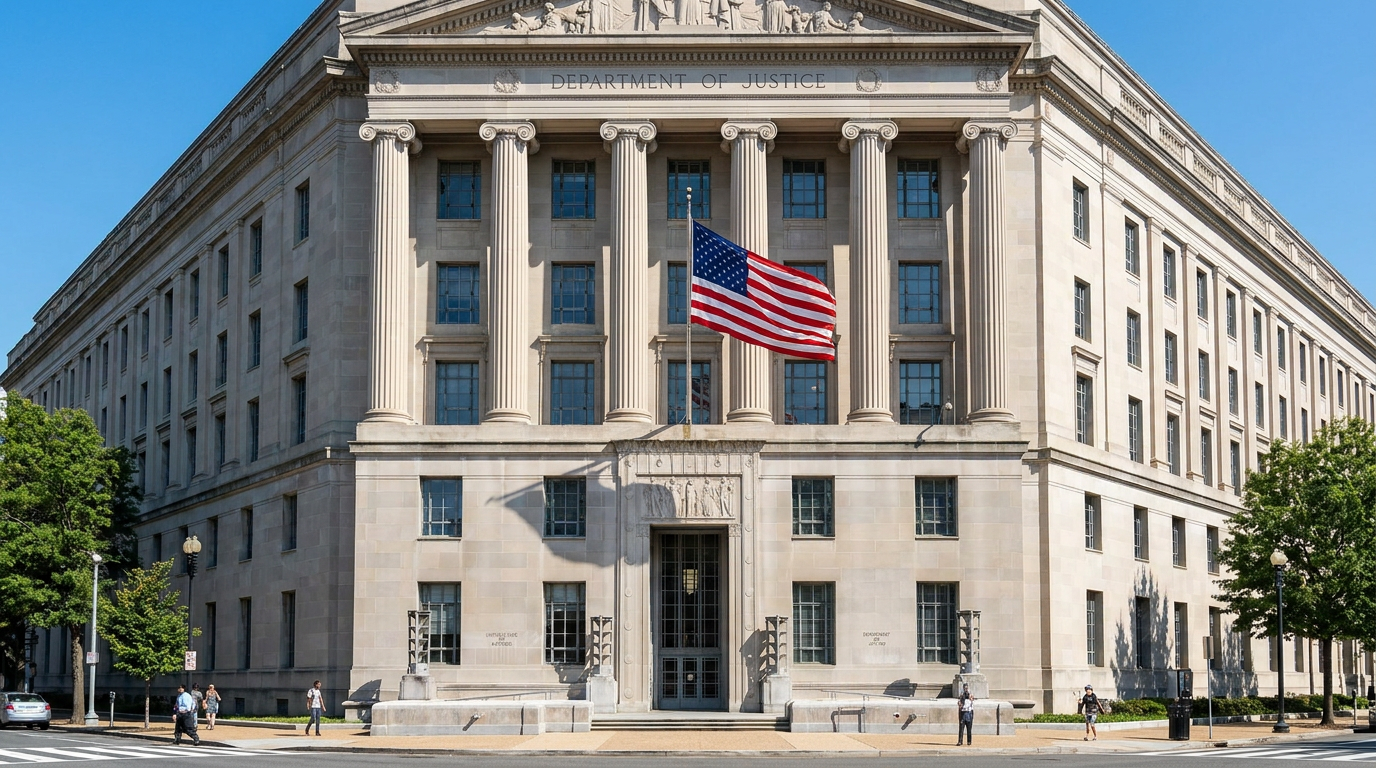
On June 18, the Department of Justice's Office of Legal Counsel (OLC) quietly issued a legal memorandum declaring that federal law does not require states to provide community- or home-based care for individuals with mental disabilities.[1][2]
The memo, authored by Principal Deputy Assistant Attorney General Lanora Pettit, reinterprets the landmark 1999 Supreme Court case Olmstead v. L.C., which has served as the bedrock of American disability rights for nearly three decades.[2][3]
In Olmstead, the Supreme Court ruled that the unjustified institutional isolation of people with disabilities constitutes discrimination under the Americans with Disabilities Act (ADA). The ruling established an "integration mandate," requiring states to provide care in the most integrated setting appropriate to a person's needs.[2][4][5]
However, the new OLC opinion argues that neither Section 504 of the Rehabilitation Act nor Title II of the ADA imposes such an integration mandate on states. The memo asserts that the Supreme Court never intended to make unnecessary institutionalization illegal, and that enforcing such a mandate would raise serious constitutional concerns regarding congressional power.[2][5][8]

The release of the document immediately sent shockwaves through the civil rights and disability advocacy communities. Advocates warn that the memo effectively gives states a "green light" to slash funding for home-based services and revert to warehousing disabled individuals in nursing homes, psychiatric hospitals, and segregated facilities.[1][5]
The release of the document immediately sent shockwaves through the civil rights and disability advocacy communities.
"This administration is trying to take away one of the most fundamental rights that people with disabilities have fought for," said Alison Barkoff, a former DOJ attorney who previously supervised Olmstead civil rights enforcement. Barkoff noted that the OLC's narrow reading of the law is completely inconsistent with how federal courts have historically interpreted the ADA.[2][3]
The American Civil Liberties Union issued a scathing response, with Disability Rights Program Director Zoe Brennan-Krohn stating that the Justice Department "cannot erase federal laws and decades of legal precedent with a single opinion." She emphasized that the right to live in the world, rather than facing neglect and isolation in institutions, is foundational to disability rights law.[4]
While the OLC memo does not officially change statutory law, it serves as binding legal advice for the executive branch. Legal experts warn it will fundamentally alter how the Justice Department and the Department of Health and Human Services enforce allegations of discrimination against patients receiving state-funded care.[2][8]

University of Michigan law professor Sam Bagenstos, a former general counsel for HHS, called the administration's claims "absurd." He and other legal scholars expressed concern that the memo was drafted at the instruction of the White House, potentially signaling an upcoming executive order directing federal agencies to formally roll back anti-institutionalization rules.[2][3]
The American Association of People with Disabilities highlighted the grim historical context of the policy shift, noting that institutions have repeatedly been found to be counterproductive to recovery and significantly more expensive than community-based care. "There is no such thing as a 'good' institution for disabled people," added the Disability Rights Education & Defense Fund. "There is only loss of freedom, choice, and community."[5][6]
The memo's release comes just days before the 27th anniversary of the Olmstead decision, a timing that advocates viewed as a particularly sharp blow. As the legal framework protecting community living faces its most significant threat in decades, disability rights organizations are vowing to fight the interpretation in court and mobilize against any resulting rollbacks in federal enforcement.[4][5][6]
How we got here
1990
Congress passes the Americans with Disabilities Act (ADA), prohibiting discrimination based on disability.
June 1999
The Supreme Court issues the Olmstead v. L.C. decision, establishing that unjustified institutionalization is a civil rights violation.
June 18, 2026
The DOJ's Office of Legal Counsel issues a memo arguing that federal law does not impose an integration mandate on states.
June 19, 2026
Disability rights organizations and civil liberties groups issue widespread condemnations of the DOJ memo.
Viewpoints in depth
The Justice Department's OLC
Argues that federal law does not mandate community-based care for people with mental disabilities.
The Office of Legal Counsel's memo asserts that neither the ADA nor Section 504 of the Rehabilitation Act explicitly imposes an "integration mandate" on states. It argues that the Supreme Court's 1999 Olmstead ruling was narrower than commonly understood and did not require states to treat people with mental health disabilities in the most integrated setting appropriate. The OLC also contends that enforcing such a mandate would raise constitutional concerns regarding the limits of congressional power over state healthcare systems.
Disability Rights Advocates
View the memo as a catastrophic rollback of fundamental civil rights that will lead to widespread institutionalization.
Organizations like the ACLU, AAPD, and DREDF argue that the right to live in the community is the bedrock of modern disability law. They point out that federal courts have consistently upheld the integration mandate for decades. Advocates warn that without federal enforcement, states will cut funding for home-based services, forcing disabled individuals back into restrictive, isolating, and often abusive institutional settings simply to receive necessary care.
Civil Rights Legal Experts
Warn that the memo signals a broader executive branch effort to dismantle anti-discrimination enforcement.
Former DOJ and HHS attorneys note that while an OLC memo cannot rewrite statutory law, it dictates how executive agencies enforce it. Legal scholars view the document as a "warning shot" that will effectively halt the Justice Department's efforts to sue states over unnecessary institutionalization. Many suspect the memo was drafted to provide legal cover for an upcoming executive order aimed at rolling back federal regulations that currently protect community living.
What we don't know
- It remains unclear if or when the White House will issue an executive order formally directing federal agencies to alter their enforcement of the ADA based on this memo.
- It is not yet known how quickly states might move to cut funding for community-based services in response to the DOJ's relaxed interpretation.
Key terms
- Office of Legal Counsel (OLC)
- A division within the Department of Justice that drafts legal opinions and provides binding legal advice to the President and executive branch agencies.
- Integration Mandate
- The legal requirement under the ADA that public entities must administer services to individuals with disabilities in the most integrated setting appropriate to their needs.
- Olmstead v. L.C.
- A 1999 Supreme Court decision holding that unjustified segregation of persons with disabilities constitutes discrimination in violation of Title II of the Americans with Disabilities Act.
- Section 504 of the Rehabilitation Act
- A national civil rights law that prohibits discrimination on the basis of disability in programs and activities that receive federal financial assistance.
Frequently asked
What is the Olmstead decision?
Olmstead v. L.C. is a landmark 1999 Supreme Court case that ruled the unjustified institutional isolation of people with disabilities is a form of discrimination under the ADA.
What does the new DOJ memo claim?
The Office of Legal Counsel memo argues that federal law does not actually require states to provide care for people with mental disabilities in community or home-based settings.
Does this memo change the law?
No, an OLC memo cannot rewrite statutory law or Supreme Court precedent. However, it serves as binding legal advice for the executive branch, meaning it will likely change how the DOJ and HHS enforce civil rights protections.
Why are advocates concerned?
Disability rights groups fear that without federal enforcement, states will cut funding for home-based care, forcing disabled individuals into nursing homes and psychiatric hospitals to receive support.
Sources
Source coverage
8 outlets
3 viewpoints surfaced








[1]NPRLegal & Civil Rights Observers
DOJ memo stokes fear among disability advocates of a return to institutionalization
Read on NPR →[2]CBS NewsLegal & Civil Rights Observers
States aren't required to provide community-based care for people with disabilities, new DOJ opinion claims
Read on CBS News →[3]Mother JonesLegal & Civil Rights Observers
The DOJ Just Quietly Released a Memo That Could Upend Disability Rights
Read on Mother Jones →[4]American Civil Liberties UnionDisability Rights Advocates
ACLU Statement on DOJ Memo Threatening the Right to Community Living for People with Disabilities
Read on American Civil Liberties Union →[5]American Association of People with DisabilitiesDisability Rights Advocates
AAPD Condemns DOJ Memo Undermining Olmstead and Disability Integration
Read on American Association of People with Disabilities →[6]Disability Rights Education & Defense FundDisability Rights Advocates
DREDF Statement on the U.S. Department of Justice Office of Legal Counsel’s Opinion
Read on Disability Rights Education & Defense Fund →[7]American Council of the BlindDisability Rights Advocates
ACB Deeply Troubled by DOJ Office of Legal Counsel Memo on Olmstead
Read on American Council of the Blind →[8]U.S. Department of JusticeThe Justice Department
Memorandum Opinion for the Counsel to the President: Application of the Integration Mandate
Read on U.S. Department of Justice →

More in news politics
See all 5 stories →Strait of Hormuz
Iran Claims Strait of Hormuz Closure as US Denies Shutdown and Threatens Tolls Ahead of Swiss Talks
8 sources

U.S.-Iran Talks
Vance Arrives in Switzerland for Iran Nuclear Talks Amid Dispute Over Strait of Hormuz
10 sources

Nuclear Talks
US and Iran Open Nuclear Talks in Switzerland Amid Dispute Over Strait of Hormuz
8 sources

Every angle. Every day.
Get news politics stories with full source coverage and perspective breakdowns delivered to your inbox.