
How 'Cozy Fantasy' and 'Hopepunk' Overthrew Grimdark to Reshape Publishing
Driven by a desire for emotional safety, readers are rejecting apocalyptic stakes in favor of 'cozy fantasy' and 'hopepunk'—genres where radical kindness and domestic magic take center stage.
By Factlen Editorial Team
- Cozy Fantasy Authors & Readers
- Argue that emotional safety and low stakes are valid, necessary literary goals that provide a sanctuary from real-world anxiety.
- Hopepunk Advocates
- View optimism, kindness, and community-building as radical, political acts of rebellion against a cynical society.
- Publishing Industry Analysts
- Focus on the massive commercial viability of the trend, driven by social media aesthetics and a fundamental shift in consumer demand.
What's not represented
- · Traditional Epic Fantasy Authors
- · Literary Critics
Why this matters
The massive shift toward low-stakes, emotionally restorative fiction reflects a broader cultural need for comfort in an anxious era. By proving that stories don't need to be traumatic to be meaningful, these genres are expanding how we process real-world stress through escapism.
Key points
- Readers are increasingly rejecting apocalyptic 'grimdark' fiction in favor of low-stakes, comforting narratives.
- Cozy fantasy replaces world-ending peril with personal stakes, domestic magic, and community building.
- Hopepunk frames radical kindness and optimism as political acts of rebellion against a cynical world.
- The trend, accelerated by the 2020 pandemic and BookTok, is now expanding into sci-fi and horror.
For decades, the speculative fiction landscape was dominated by "grimdark"—a subgenre defined by moral ambiguity, brutal violence, and apocalyptic stakes. From the blood-soaked thrones of Westeros to the bleak wastelands of dystopian futures, the prevailing industry wisdom was that fiction needed high stakes and heavy trauma to be considered meaningful. But in the mid-2020s, a quiet revolution has overthrown the dark lords. In their place are retired orcs opening coffee shops, witches running enchanted bakeries, and communities banding together to solve local disputes. This is the era of "cozy fantasy" and "hopepunk," a massive publishing shift that has fundamentally rewired what readers expect from escapism.[7]
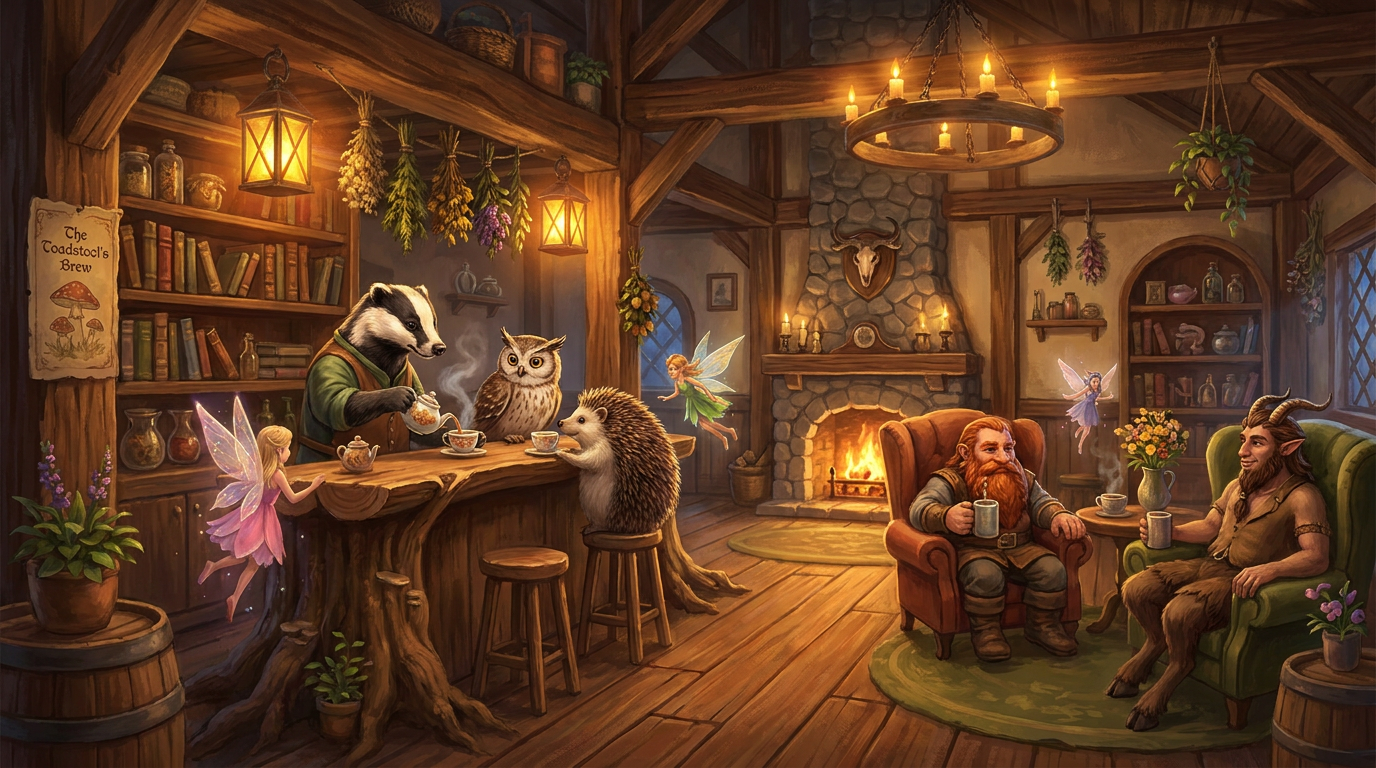
The cozy fantasy movement takes the sprawling world-building of traditional high fantasy and deliberately shrinks the lens. Instead of focusing on chosen ones destined to save the universe, these narratives center on ordinary people—or ordinary magical creatures—navigating daily life. The stakes are intensely personal rather than world-ending: a small business might fail, a recipe might be ruined, or a budding romance might hit a snag, but the kingdom itself is never in peril. It is a genre built on the promise of emotional safety, offering readers a literary sanctuary where conflicts are resolved through empathy and communication rather than warfare.[1][2][3]
The catalyst for this shift is widely traced to the onset of the COVID-19 pandemic in March 2020. As the real world became increasingly unpredictable and frightening, readers found themselves unable to stomach the existential dread of traditional epic fantasy. When reality feels apocalyptic, reading about the apocalypse ceases to be entertaining. Authors and readers alike began seeking out "high fantasy, low stakes" narratives that provided a sense of control, comfort, and restorative joy. What began as a trauma response to global lockdowns has since evolved into a permanent pillar of the publishing industry, with Google search interest in cozy reading multiplying exponentially over the last four years.[1][2][6]

The undisputed flagship of this movement is Travis Baldree’s 2022 novel Legends & Lattes, which follows a battle-weary orc who hangs up her broadsword to open the first-ever coffee shop in a fantasy city. The novel’s viral success on platforms like TikTok codified the modern cozy fantasy template. It proved to major publishers that there was a massive, untapped market for stories focused on "found family," domestic magic, and lovingly detailed descriptions of food and warm beverages. Today, publishers are actively soliciting manuscripts that prioritize emotional healing over dramatic conflict.[1][2][3]
But the cozy revolution is only one half of the equation. Running parallel to it is "hopepunk," a broader philosophical and literary movement coined in 2017 by author Alexandra Rowland. If cozy fantasy is about retreating to a safe haven, hopepunk is about stepping out into a broken world and fighting to fix it. Rowland defined hopepunk as the exact opposite of grimdark, arguing that in a culture saturated with brutal cynicism and nihilism, choosing to be kind is a radical, political act of rebellion.[5]
Hopepunk narratives do not require utopian settings; in fact, they often take place in bleak, dystopian, or post-apocalyptic environments. The "punk" element of the genre stems from the characters' weaponized optimism. They are fully aware that the world is flawed and that happy endings are not guaranteed, but they choose to fight for positive change anyway. As speculative fiction author Premee Mohamed notes, hope in this context is not unfounded optimism, but rather the belief that the work of building a better future is inherently valuable, regardless of the immediate outcome.[4][5]

Hopepunk narratives do not require utopian settings; in fact, they often take place in bleak, dystopian, or post-apocalyptic environments.
This shift toward aspirational gentleness is not confined to Western publishing. The rise of cozy fantasy has dovetailed perfectly with the explosion of East Asian "healing fiction" in global translation. Japanese and Korean novels centered around community proprietors—such as magical librarians, empathetic booksellers, or mysterious cafe owners—have found a massive international audience. While these stories approach coziness from a slightly different cultural angle, they share the same core mechanism: characters finding emotional restoration by building deep, supportive connections within a localized community.[6]
Writing a compelling story without life-or-death stakes requires a fundamental shift in narrative mechanics. How do authors maintain tension when the worst possible outcome is a burnt batch of scones or a misunderstood conversation? The answer lies in emotional resonance and relational stakes. Cozy and hopepunk authors replace external, physical threats with internal, emotional growth, forcing characters to confront their own vulnerabilities rather than a dark lord's army.[1][2]
The pacing of these novels is intentionally slower, allowing readers to linger in the sensory details of the world. Food and drink play an outsized role in the genre, serving as a universal language of care and community. Detailed descriptions of brewing tea, baking bread, or sharing a meal act as grounding mechanisms, pulling the reader into a state of mindfulness and signaling that the characters are safe enough to enjoy the present moment.[3][7]

Despite its massive commercial success, the movement initially faced skepticism from traditional publishing gatekeepers, who viewed it as a niche internet aesthetic rather than a sustainable genre. However, the viral power of BookTok and Bookstagram proved impossible to ignore. Readers began actively demanding "comfort reads" and "healing fiction," driving titles to the top of bestseller lists and forcing major imprints to pivot their acquisition strategies to meet the hunger for emotional restoration.[1][6]
Traditionalists sometimes dismiss cozy fiction as mere escapism, arguing that it lacks the literary weight or thematic complexity of grittier works. However, proponents counter that this criticism is rooted in a cultural bias that equates "serious" art with darkness and suffering. By insisting that optimism, comfort, and domestic life are legitimate artistic choices, cozy fantasy and hopepunk are expanding the boundaries of what speculative fiction can achieve, proving that joy is as complex an emotion as despair.[2][7]
The influence of this trend is now bleeding into adjacent genres, proving that "cozy" is an adaptable approach rather than a rigid set of tropes. The publishing industry is seeing the rise of "cozy sci-fi," where space operas focus on the daily logistics of interstellar cargo haulers rather than galactic wars. There is even a burgeoning market for "cozy horror," which blends spooky, atmospheric aesthetics with low-stakes, comforting narratives that prioritize survival and community over gore.[6]

Ultimately, the enduring popularity of hopepunk and cozy fantasy reflects a profound shift in the collective psyche of the 2020s. Readers are no longer looking to fiction to simulate stress; they are looking to it for a blueprint on how to survive it. Whether through the radical defiance of weaponized optimism or the quiet comfort of a magical tea shop, these stories offer a vital reminder: wonder, not warfare, is the true heart of fantasy.[2][5]
How we got here
2017
Author Alexandra Rowland coins the term 'hopepunk' on Tumblr as the ideological opposite of 'grimdark.'
March 2020
The onset of the global pandemic drives a massive spike in reader demand for comforting, low-stakes escapism.
2022
Travis Baldree publishes Legends & Lattes, which becomes a viral sensation and codifies the modern cozy fantasy template.
2024–2026
The cozy trend expands globally, merging with East Asian 'healing fiction' and crossing over into sci-fi and horror.
Viewpoints in depth
Cozy Fantasy Authors & Readers
Advocates for the necessity of emotional safety in fiction.
For this camp, the rejection of high-stakes trauma is a feature, not a bug. They argue that readers already face enough existential dread in the real world, making the demand for literary sanctuaries a matter of emotional self-care. By focusing on found family, domestic tasks, and personal growth, these authors prove that a story does not need to feature a war to have meaningful character development.
Hopepunk Advocates
Views optimism and kindness as active, political choices.
Hopepunk supporters differentiate themselves from pure 'cozy' readers by embracing darker settings, provided the characters respond to that darkness with weaponized optimism. They argue that in a society that rewards cynicism, choosing to care about others and fighting for a better future is a radical act of rebellion. For them, the genre is less about escapism and more about providing a blueprint for resilience.
Publishing Industry Analysts
Focuses on the market dynamics and commercial viability of the trend.
Industry watchers note that what began as a niche internet aesthetic has fundamentally rewired acquisition strategies at major publishing houses. Driven by the visual, aesthetic-heavy culture of BookTok and Bookstagram, cozy fiction has proven to be a highly lucrative, scalable model. Analysts point to the rapid expansion of the 'cozy' label into sci-fi and mystery as proof that this is a permanent market shift rather than a passing fad.
What we don't know
- Whether the cozy fiction boom will eventually plateau as global anxieties shift.
- How traditional literary awards and critics will evaluate these genres long-term.
Key terms
- Cozy Fantasy
- A subgenre characterized by low-stakes conflict, domestic magic, and a focus on community and emotional healing rather than epic warfare.
- Hopepunk
- A literary movement and aesthetic that positions radical kindness, optimism, and cooperation as acts of rebellion against a cynical world.
- Grimdark
- A subgenre of speculative fiction known for its dystopian, amoral, and highly violent themes, often featuring anti-heroes.
- Healing Fiction
- A genre centered on characters finding emotional restoration in community spaces, heavily popularized by translated Japanese and Korean literature.
- Cottagecore
- An internet aesthetic celebrating a romanticized vision of rural, domestic life, which heavily influences the visual branding of cozy fiction.
Frequently asked
What is the difference between cozy fantasy and hopepunk?
Cozy fantasy focuses on low-stakes, comforting narratives and emotional safety. Hopepunk can feature high stakes and dark worlds, but its characters fight back with radical kindness and weaponized optimism.
Did the pandemic start the cozy fantasy trend?
While the desire for comforting stories has always existed, industry experts trace the current explosion of the genre directly to the anxieties and lockdowns of 2020.
Are there stakes in cozy fantasy?
Yes, but they are personal rather than apocalyptic. A character might risk losing their small business or a new friendship, rather than fighting to save the world from a dark lord.
What is healing fiction?
A parallel literary trend, frequently originating in Japan and Korea, centered on characters finding emotional restoration in community spaces like cafes, libraries, or bookshops.
Sources
Source coverage
7 outlets
3 viewpoints surfaced







[1]Paste MagazineCozy Fantasy Authors & Readers
Why So Much Cozy? Thoughts on Jam, Cheese, and the Rise of Cozy Fantasy
Read on Paste Magazine →[2]Novelists, Inc.Publishing Industry Analysts
Cozy Fantasy: Magic for Healing and the Evolution of a Genre
Read on Novelists, Inc. →[3]Winter is ComingCozy Fantasy Authors & Readers
We're currently in the midst of a 'cozy' revolution in fantasy literature
Read on Winter is Coming →[4]CBCHopepunk Advocates
How 'hopepunk' literature is turning away from the doom and gloom of dystopian fiction
Read on CBC →[5]WikipediaHopepunk Advocates
Hopepunk
Read on Wikipedia →[6]The Cozy OwletCozy Fantasy Authors & Readers
The rise of cozy reading: mystery, fantasy, and healing fiction
Read on The Cozy Owlet →[7]Factlen Editorial TeamPublishing Industry Analysts
Synthesis by Factlen editorial team
Read on Factlen Editorial Team →
Every angle. Every day.
Get culture stories with full source coverage and perspective breakdowns delivered to your inbox.