
How Bidirectional Charging is Turning 2026 EVs into Massive Home Batteries
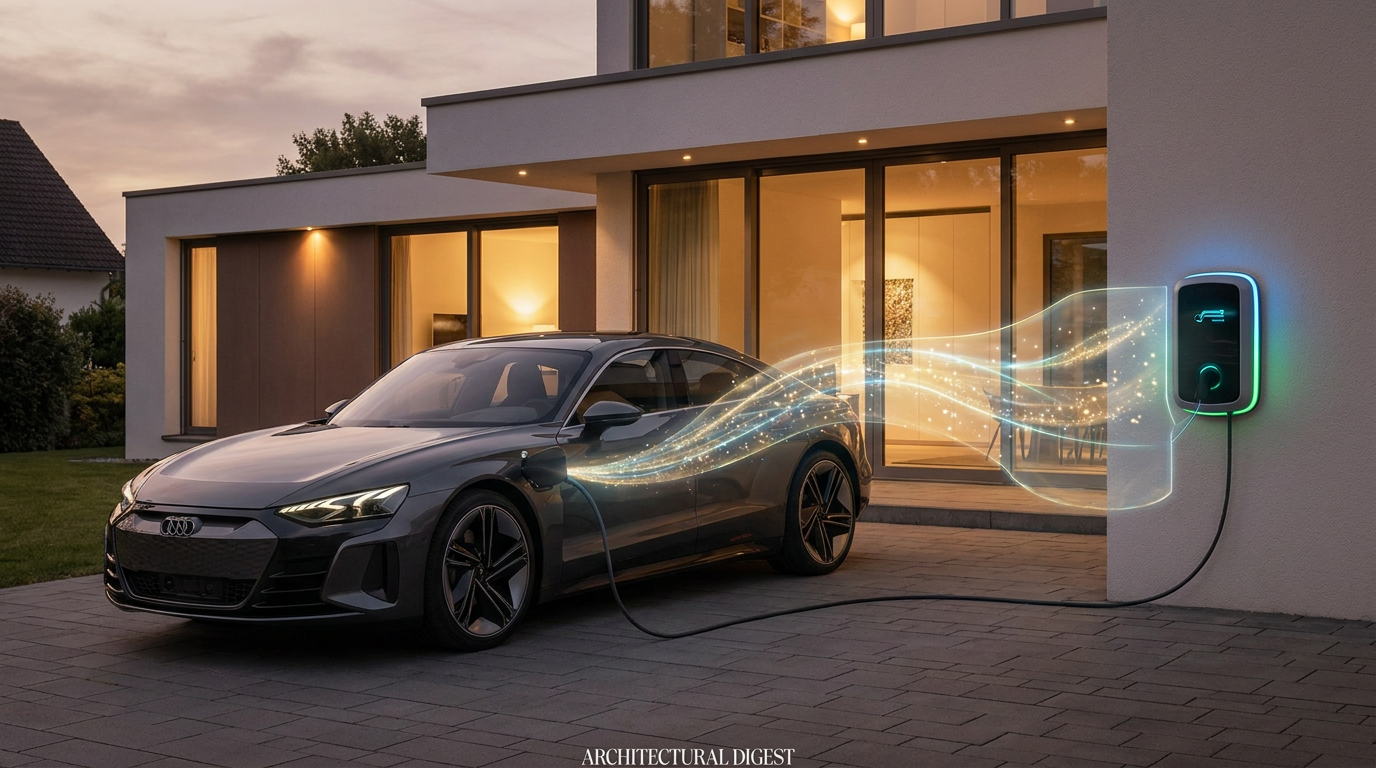
New electric vehicles are increasingly equipped with bidirectional charging, allowing drivers to power their homes during outages and sell energy back to the grid.
By Factlen Editorial Team
- Automakers & Hardware Providers
- Viewing bidirectional charging as a massive value-add to justify EV premiums.
- Utility Companies & Grid Operators
- Cautiously optimistic about V2G for grid stabilization, but moving slowly on approvals.
- Homeowners & EV Shoppers
- Eager for backup power and utility payouts, but hesitant about hardware costs.
What's not represented
- · Independent electricians navigating the complex installation and permitting processes.
- · Renters and multi-family housing residents who cannot install personal bidirectional chargers.
Why this matters
For car shoppers, an EV is no longer just transportation—it is a home resilience tool. Bidirectional charging can replace the need for a $13,000 dedicated home battery, keeping the lights on during blackouts and even generating passive income from utility companies.
Key points
- Bidirectional charging allows EVs to send power to appliances, homes, or the public grid.
- A typical EV battery holds enough energy to power an average home for 3 to 10 days.
- Vehicle-to-Home (V2H) setups cost $1,500–$8,000, significantly less than dedicated home batteries.
- Pilot programs show EV owners earning $420 to $780 annually by selling power back to the grid.
- Major automakers honor battery warranties for bidirectional use, citing negligible degradation.
- Utility interconnection rules and pending certifications remain the biggest hurdles to mass adoption.
The electric vehicle sitting in the driveway is no longer just a method of transportation; it is rapidly becoming a rolling power plant. In 2026, bidirectional charging has moved from a niche technological novelty to a mainstream selling point for major automakers. As extreme weather events and grid instability make home backup power more desirable, consumers are realizing that the largest battery they will ever own is parked in their garage.[6]
The sheer scale of an EV battery makes traditional home backup solutions look miniature by comparison. A standard dedicated home battery, such as the popular Tesla Powerwall 3, holds roughly 13.5 kilowatt-hours (kWh) of energy. In contrast, a modern electric vehicle battery holds anywhere from 60 to 131 kWh. A fully charged Ford F-150 Lightning contains enough energy to power an average American home for three to ten days during a blackout.[1][2]

Bidirectional charging is an umbrella term that covers three distinct capabilities, often referred to collectively as V2X. These are Vehicle-to-Load (V2L), Vehicle-to-Home (V2H), and Vehicle-to-Grid (V2G). While they all involve pulling energy out of the car's battery, they serve entirely different purposes and require different hardware setups.[2][5]
The most common and accessible format is Vehicle-to-Load (V2L). This feature simply provides built-in AC outlets directly on the vehicle. Models like the Hyundai Ioniq 5, Kia EV6, and various BYD vehicles offer V2L, allowing drivers to plug in camping gear, power tools, or a refrigerator directly into the car. It requires no special home installation and acts as a portable generator.[1][4]
Vehicle-to-Home (V2H) is where the technology becomes a true game-changer for household resilience. Instead of powering a single appliance via an extension cord, the EV connects directly to the home's electrical panel. During a power outage, the house automatically isolates itself from the dead grid and draws full power from the car, keeping the lights, HVAC, and appliances running seamlessly.[2][3]

To utilize V2H, a standard EV charger is not enough. Homeowners must install a specialized bidirectional charger, such as the Wallbox Quasar 2, the dcbel r16, or the Ford Charge Station Pro, alongside a transfer switch. These units are significantly more complex than standard Level 2 chargers because they must manage the flow of electricity in both directions safely.[2]
Homeowners must install a specialized bidirectional charger, such as the Wallbox Quasar 2, the dcbel r16, or the Ford Charge Station Pro, alongside a transfer switch.
The mechanism behind this involves complex power conversion. The public electrical grid and home appliances run on alternating current (AC), but electric vehicle batteries store energy as direct current (DC). A bidirectional charger contains a smart inverter that translates the car's DC power back into AC electricity, ensuring it is perfectly synchronized with the home's electrical system.[1][5]
While the hardware is an investment, the economics are highly favorable. Bidirectional chargers currently cost between $3,500 and $6,000, plus installation. However, the total setup cost of $1,500 to $8,000 (after incentives) is still vastly cheaper than installing a dedicated $13,000 home battery system, while providing nearly ten times the storage capacity.[2]
The final and most ambitious tier is Vehicle-to-Grid (V2G). This technology allows the car to export power all the way back to the public utility grid during periods of peak demand. Instead of firing up dirty fossil-fuel "peaker plants" on hot summer afternoons, utilities can draw a small amount of power from thousands of plugged-in EVs, stabilizing the grid.[4][5]
Utilities are highly motivated to pay consumers for this grid stabilization. Data from 2025 and 2026 pilot programs across the US and Europe show that households with V2G-enabled EVs earned an average of $420 to $780 per year in grid services and bill savings. In some aggressive programs, such as Massachusetts' ConnectedSolutions, standout participants cleared over $1,300 annually.[3][4]

A common hesitation among EV shoppers is the fear that discharging the battery to power a home will accelerate degradation and ruin the car. However, extensive studies from the Department of Energy and automakers have shown negligible impact from typical V2H use. Consequently, manufacturers including Ford, GM, Nissan, and Tesla officially honor their full battery warranties when the vehicles are used with certified bidirectional hardware.[3]
The primary bottleneck slowing mass adoption in 2026 is not the vehicles, but regulatory red tape. Utility interconnection rules vary wildly by region, making it difficult for installers to get V2H and V2G systems approved quickly. Furthermore, the formal UL 1741 SC certification standard for AC bidirectional charging is still navigating its final regulatory hurdles.[1][3]
Despite these bureaucratic friction points, the trajectory is clear. As the major CCS and NACS charging standards natively integrate bidirectional protocols, the ecosystem is rapidly maturing. Within a few years, the ability to power a home from a driveway will transition from a premium luxury feature to a standard expectation, fundamentally altering the calculus of buying a car.[4][6]
How we got here
Early 2010s
The Nissan Leaf introduces early bidirectional capabilities using the CHAdeMO charging standard, primarily utilized in Japan.
2022
Ford launches the F-150 Lightning with Intelligent Backup Power, bringing high-capacity V2H to the mainstream US market.
2024
Tesla rolls out the Powershare feature for the Cybertruck, enabling native bidirectional home backup.
2025
Major utility pilot programs in California, Massachusetts, and Europe demonstrate viable financial models for residential V2G.
2026
Bidirectional capability becomes a standard feature roadmap for GM's Ultium lineup and the broader CCS/NACS charging ecosystem.
Viewpoints in depth
Automakers & Hardware Providers
Viewing bidirectional charging as a massive value-add to justify EV premiums.
For vehicle manufacturers, bidirectional charging is a crucial tool to differentiate electric vehicles from their combustion-engine counterparts. By framing the EV as a home resilience asset that can replace a $13,000 generator or home battery, automakers can better justify the higher upfront purchase price of electric models. Companies like Ford and GM are actively building out "energy ecosystems"—selling the chargers, home integration kits, and solar panels alongside the trucks, aiming to own the entire home energy experience.
Utility Companies & Grid Operators
Cautiously optimistic about V2G for grid stabilization, but moving slowly on approvals.
Grid operators recognize that millions of EVs represent a massive, untapped reservoir of distributed energy storage. Tapping into these batteries during peak demand could eliminate the need to build expensive new power plants. However, utilities are highly risk-averse. They are moving slowly to approve bidirectional interconnections because they must ensure that power exported from a home doesn't backfeed into the grid during a blackout, which could electrocute line workers repairing the infrastructure.
Homeowners & EV Shoppers
Eager for backup power and utility payouts, but hesitant about hardware costs.
Consumers are highly receptive to the idea of never losing power during a storm, and the prospect of earning passive income from their parked car is a strong selling point. However, the upfront friction remains high. Shoppers are often surprised to learn that buying a V2H-capable car is only half the battle; they must still spend $4,000 to $8,000 on a specialized bidirectional charger and electrical panel upgrades to actually use the feature.
What we don't know
- How quickly local utility companies will standardize interconnection rules to allow seamless V2H and V2G installations nationwide.
- Whether the financial incentives for V2G participation will remain lucrative once millions of vehicles are supplying power to the grid.
- How the used car market will value EVs that have been heavily utilized as home backup batteries compared to those used strictly for driving.
Key terms
- Bidirectional Charging
- Technology that allows an electric vehicle charger to both send energy to the car's battery and pull energy out of it.
- V2L (Vehicle-to-Load)
- A feature that allows an EV to power external devices and appliances directly through built-in AC outlets.
- V2H (Vehicle-to-Home)
- A system where an EV connects to a home's electrical panel to provide whole-house backup power during an outage.
- V2G (Vehicle-to-Grid)
- A system that allows an EV to export stored energy back to the public utility grid, often in exchange for financial compensation.
- Inverter
- A device inside a bidirectional charger or vehicle that converts the battery's direct current (DC) power into alternating current (AC) power used by homes.
- Interconnection
- The formal approval process required by a utility company to connect a power-generating or power-exporting system to the public grid.
Frequently asked
Will powering my home ruin my EV battery?
No. Studies show that typical home backup use causes negligible battery degradation. Major automakers like Ford, GM, and Nissan honor their full battery warranties when using certified bidirectional equipment.
Do I need a special charger for V2H?
Yes. You need a bidirectional charger (which contains an inverter) and a transfer switch installed at your electrical panel to safely disconnect from the grid during an outage.
How long can an EV power a house?
Depending on the vehicle's battery size and your home's energy usage, a fully charged EV can typically power an average home for three to ten days.
Can I use any electric vehicle for this?
Not yet. While V2L (plugging in appliances) is common, full V2H capability requires specific hardware support currently found in vehicles like the Ford F-150 Lightning, Tesla Cybertruck, and select GM models.
Sources
Source coverage
6 outlets
3 viewpoints surfaced






[1]EnergySageHomeowners & EV Shoppers
Bidirectional EV chargers: Your EV could be the ultimate home backup battery
Read on EnergySage →[2]NuWatt EngineeringAutomakers & Hardware Providers
Bidirectional EV Charging (V2H): Power Your Home With Your Car
Read on NuWatt Engineering →[3]The Charge PortHomeowners & EV Shoppers
The complete 2026 reference for bidirectional charging
Read on The Charge Port →[4]Energy SolutionsUtility Companies & Grid Operators
Bidirectional EV Charging 2026: Which Cars Can Power Your Home and the Grid?
Read on Energy Solutions →[5]EV ConnectAutomakers & Hardware Providers
What Is Bidirectional Charging and How Does It Work?
Read on EV Connect →[6]Factlen Editorial TeamHomeowners & EV Shoppers
Synthesis by Factlen editorial team
Read on Factlen Editorial Team →

Every angle. Every day.
Get shopping stories with full source coverage and perspective breakdowns delivered to your inbox.