
Global 'AI for Science' Initiatives Launch to Shift Focus from Chatbots to Physical Breakthroughs
A coordinated wave of global funding and academic partnerships launched in June 2026 aims to pivot artificial intelligence away from consumer applications and toward hard scientific infrastructure. Initiatives from Singapore, the EU, Google, and the World Economic Forum are deploying hundreds of millions of dollars to accelerate discoveries in materials science, climate modeling, and medicine.
By Factlen Editorial Team
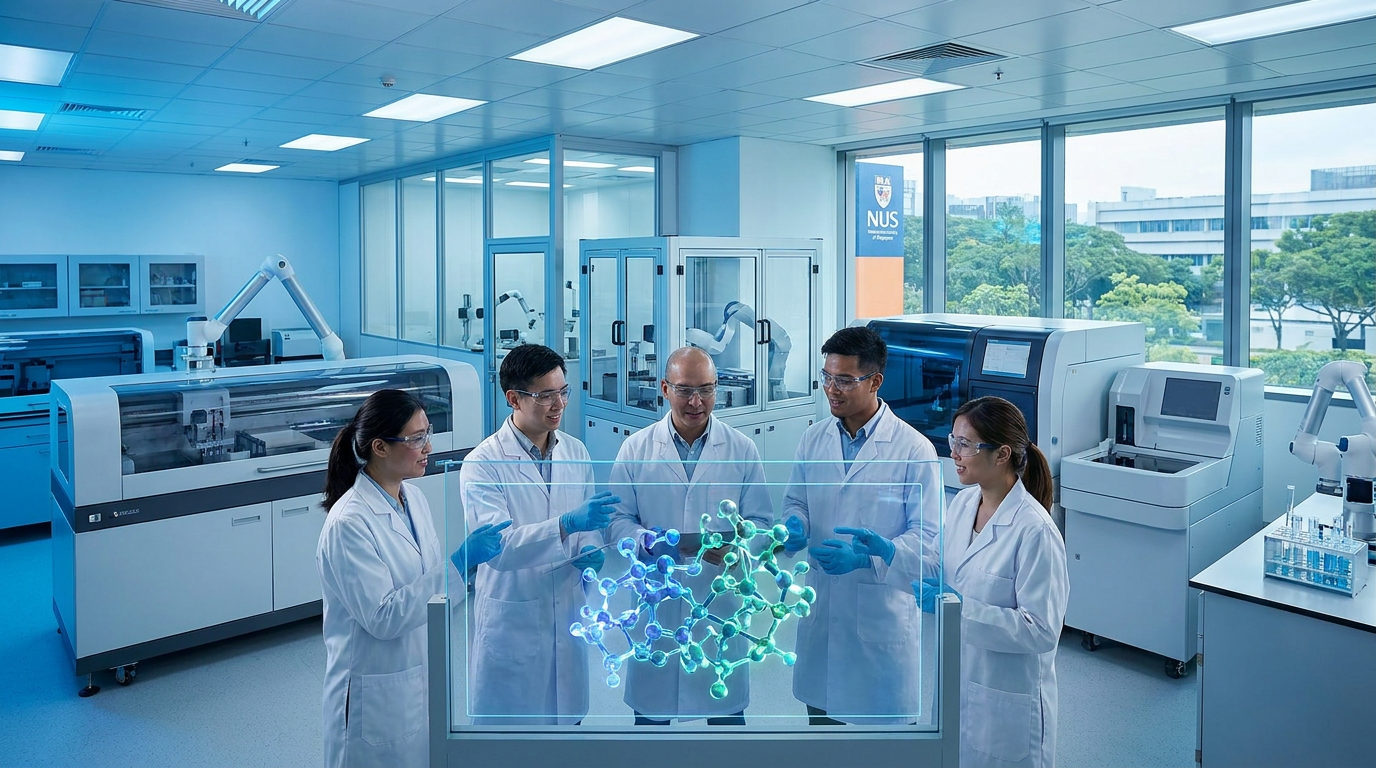
- Scientific Researchers
- Argue that AI's true value lies in acting as a 'bilingual' tool that accelerates physical discoveries in materials and medicine, moving beyond slow trial-and-error.
- Policy & Infrastructure Leaders
- Focus on building the sovereign computing power, standardized data, and governance frameworks required to support AI at a national and global scale.
- Philanthropic & Tech Investors
- Emphasize the need for targeted funding and open-source models to ensure AI breakthroughs address climate and health crises rather than just commercial software.
What's not represented
- · Environmental advocates concerned about the massive energy and water footprint of the data centers required to run these scientific AI models.
- · Scientists in developing nations who may lack the funding and computing infrastructure to participate in this new era of AI-driven research.
Why this matters
While public attention has fixated on generative AI chatbots and their risks, the real societal value of AI is moving into the physical world. By accelerating the discovery of new battery materials, climate-resilient crops, and targeted medical treatments, this shift promises to solve tangible global crises faster than traditional trial-and-error research.
Key points
- A coordinated wave of global funding in June 2026 is pivoting AI away from consumer chatbots and toward fundamental scientific research.
- Singapore launched a S$120 million initiative to use AI for discovering new clean-energy materials and building climate-resilient agricultural digital twins.
- The World Economic Forum and European Commission announced major initiatives to build the physical infrastructure and governance needed for AI at scale.
- Google.org and the NIH deployed tens of millions of dollars to accelerate AI-driven breakthroughs in health, genomics, and climate science.
- Researchers emphasize that AI's ability to simulate physical and chemical interactions will drastically reduce the years traditionally required for scientific trial-and-error.
The era of artificial intelligence as a mere conversational novelty is rapidly closing. Throughout June 2026, a coordinated wave of global funding, national initiatives, and academic partnerships has officially pivoted the technology toward humanity's hardest physical problems. From climate modeling to materials science and genomics, the focus has shifted from generating text to accelerating fundamental scientific discovery.[8]
This movement, broadly termed "AI for Science," represents a maturation of the technology. Rather than relying on large language models to write code or draft emails, researchers are deploying specialized neural networks that understand the laws of physics, chemistry, and biology. By analyzing massive datasets of molecular structures and environmental variables, these systems can predict the behavior of new materials and diseases before a single physical experiment is conducted.[6][8]
The scale of this transition became clear on June 16, when Singapore's National Research Foundation officially launched its S$120 million AI-for-Science (AI4S) initiative. The landmark program aims to nurture a new generation of "bilingual" scientists who are equally fluent in machine learning and physical sciences. Among the inaugural projects is the Materials Data Foundry, co-led by Nobel laureate Sir Konstantin Novoselov, which seeks to solve a critical bottleneck in clean energy development.[1]

Traditionally, discovering a new material for a battery or a solar panel requires years of slow, trial-and-error laboratory work. The Materials Data Foundry is building a closed-loop system where AI proposes complex new molecular structures, automated systems synthesize and test them, and the resulting data is fed back into the model to improve its next prediction. This approach is currently being applied to discover durable electrocatalysts and corrosion-resistant alloys in a fraction of the usual time.[1][8]
The applications extend far beyond materials. Another major Singaporean project pairs the National University of Singapore with agricultural experts to build "digital twins" of Southeast Asian farmland. By combining established principles of crop growth with real-time environmental data, these AI-powered virtual replicas will help farmers and policymakers simulate the impacts of climate change and optimize planting strategies to protect regional food security.[1]
The global business community is mirroring this academic shift. On June 10, the World Economic Forum announced its 2026 Technology Pioneers cohort, highlighting 100 early-stage companies from 23 countries. The Forum explicitly noted that this year's standout innovators are no longer building consumer AI wrappers; instead, they are constructing the heavy software and physical infrastructure required to deploy autonomous AI systems at scale, particularly in energy, biotechnology, and advanced manufacturing.[2]
The global business community is mirroring this academic shift.
Philanthropic and corporate giants are also deploying massive capital to steer AI toward physical sciences. In June, Google.org launched a $30 million global open call to fund academic institutions and nonprofits using AI to accelerate breakthroughs in health and climate science. Concurrently, Google DeepMind introduced its "AI for the Planet" accelerator in Singapore, designed to provide researchers with access to advanced tools to solve ecological and agricultural vulnerabilities.[7][8]

European policymakers are moving aggressively to ensure the continent remains competitive in this new scientific landscape. On June 15, the European Commission launched a call for top scientists to join the RAISE High-Level Academic Advisory Board. The board's explicit mandate is to consolidate European efforts and accelerate fundamental AI research across scientific disciplines, ensuring that the technology is safely and effectively integrated into medicine and climate science.[4]
To support these ambitious scientific goals, nations are realizing they need dedicated, localized computing power—often referred to as "sovereign AI." On June 8, AMD and Imperial College London announced a major collaboration to build sovereign AI infrastructure in the United Kingdom. This partnership will provide the accelerated computing platforms necessary to run data-intensive multiphysics simulations, earth system modeling, and biosecurity research without relying entirely on foreign commercial clouds.[3]
In the medical sector, the integration of AI is already yielding tangible infrastructure investments. The National Institutes of Health (NIH) recently awarded $12 million to the University of Hawaiʻi to establish the Pacific Center for Artificial Intelligence and Data Science in Medicine (PAC-AID). The center, officially funded in early June, will build a dedicated Medical AI Core to accelerate biomedical discoveries, focusing on genomics and cancer research tailored to the diverse populations of the Pacific region.[5]

Industry analysts note that this pivot is fundamentally changing the commercial AI landscape. The era of the "shiny demo" is giving way to workflow-specific systems that cut compute costs and fit seamlessly into real laboratory environments. The most valuable AI tools are now those that integrate directly with scientific instruments, providing researchers with reliable, auditable insights rather than generic chat responses.[6]
However, the "AI for Science" movement faces a significant hurdle: data quality. In fields like materials science and biology, historical data is often fragmented, incomplete, or locked in proprietary silos. Because an AI model trained on poor experimental data will inevitably produce unreliable answers, the current global push is as much about standardizing and sharing high-quality scientific data as it is about developing new algorithms.[1][8]
If these June 2026 initiatives succeed, they will mark the moment artificial intelligence evolved from a digital novelty into a foundational pillar of the scientific method. By drastically reducing the time required to move from hypothesis to discovery, AI is positioning itself not as a replacement for human scientists, but as the ultimate catalyst for solving the defining physical crises of the 21st century.[8]
How we got here
Early 2023
Generative AI captures global attention primarily through consumer-facing chatbots and image generators.
Late 2024
Google DeepMind's AlphaFold demonstrates the profound potential of AI in biology by predicting protein structures at scale.
June 4, 2026
The NIH awards $12 million to the University of Hawaiʻi to establish a dedicated AI and data science medical center.
June 8, 2026
AMD and Imperial College London partner to build sovereign AI infrastructure for advanced scientific modeling in the UK.
June 10, 2026
The World Economic Forum highlights a major industry shift toward AI infrastructure in its 2026 Technology Pioneers cohort.
June 16, 2026
Singapore officially launches its S$120 million AI-for-Science initiative to accelerate materials and agricultural research.
Viewpoints in depth
Scientific Researchers
Viewing AI as a catalyst for physical discovery rather than a digital novelty.
For the academic and laboratory community, the shift toward 'AI for Science' represents a fundamental upgrade to the scientific method itself. Researchers argue that the traditional trial-and-error approach to discovering new materials or medical treatments is too slow to address urgent global crises like climate change and emerging diseases. By utilizing AI models that understand the laws of physics and chemistry, scientists can simulate thousands of molecular interactions in minutes. This camp emphasizes the need for 'bilingual' scientists—experts who are equally adept at machine learning and their specific physical science domain—to ensure these powerful new tools are applied accurately and safely.
Policy & Infrastructure Leaders
Prioritizing sovereign computing power and standardized data governance.
Government officials and international organizations view the AI transition through the lens of infrastructure and national security. For this group, the priority is building 'sovereign AI'—domestic supercomputing clusters and data centers that allow nations to run complex climate and biosecurity models without relying on foreign commercial entities. Furthermore, policy leaders stress that AI is only as good as the data it consumes. They are actively pushing for global frameworks to standardize scientific data, break down proprietary silos, and ensure that the immense energy and water resources required to run these AI systems are managed sustainably.
What we don't know
- How quickly these AI-proposed materials and medical treatments can pass rigorous real-world physical testing and regulatory approval.
- Whether the global scientific community can successfully standardize and share the massive amounts of high-quality data required to train these specialized models.
- How the immense energy and water demands of the supercomputers required for 'AI for Science' will be balanced against global climate goals.
Key terms
- High-throughput experimentation
- An automated scientific method that allows researchers to conduct hundreds or thousands of tests simultaneously, generating massive amounts of data for AI models.
- Sovereign AI
- Artificial intelligence infrastructure, including hardware and foundational models, that is developed and controlled by a specific nation to protect its data and scientific independence.
- Digital twin
- A highly detailed virtual replica of a physical system—such as a farm or a human organ—used to run simulations and predict real-world outcomes.
- Electrocatalyst
- A material that speeds up chemical reactions driven by electricity, crucial for clean energy technologies like hydrogen fuel cells.
Frequently asked
What is the 'AI for Science' movement?
It is the application of artificial intelligence to accelerate fundamental research in fields like chemistry, biology, and physics. Instead of generating text or images, these specialized AI models predict physical interactions to help discover new materials, medicines, and climate solutions.
How does AI help discover new materials?
AI algorithms analyze vast databases of known chemical structures to predict new combinations that might yield better batteries or solar panels. This drastically reduces the time scientists spend on physical trial-and-error in the laboratory.
Why are governments building 'sovereign AI'?
Nations want to ensure they have their own domestic computing infrastructure and data centers to run advanced scientific models. This protects their scientific independence and data security, rather than relying entirely on foreign commercial tech giants.
Sources
Source coverage
8 outlets
3 viewpoints surfaced








[1]National University of Singapore (NUS)Scientific Researchers
AI for Science: NUS leads cutting-edge research with 4 major AI-based projects to fast-track science and technology
Read on National University of Singapore (NUS) →[2]World Economic ForumPolicy & Infrastructure Leaders
New Technology Pioneers Are Building the Infrastructure for the Next Era of AI
Read on World Economic Forum →[3]Imperial College LondonScientific Researchers
AMD and Imperial to collaborate on AI-enabled scientific discovery and sovereign AI
Read on Imperial College London →[4]European CommissionPolicy & Infrastructure Leaders
Launch of Call for Experts to join the RAISE High-Level Academic Advisory Board
Read on European Commission →[5]University of HawaiʻiScientific Researchers
$12M NIH grant to establish Pacific Center for Artificial Intelligence and Data Science in Medicine
Read on University of Hawaiʻi →[6]Mean.ceoPhilanthropic & Tech Investors
Latest AI breakthroughs news, June, 2026 shows that AI is no longer a novelty tool
Read on Mean.ceo →[7]Funds for NGOsPhilanthropic & Tech Investors
Google.org Impact Challenge: AI for Science to Accelerate Breakthrough Research
Read on Funds for NGOs →[8]Factlen Editorial TeamPhilanthropic & Tech Investors
Synthesis by Factlen editorial team
Read on Factlen Editorial Team →

More in ai
See all 10 stories →Local AI
The Rise of Local AI: How Everyday Laptops Are Running Powerful Models Offline
7 sources

AI Governance
India's Supreme Court Finalizes Framework Banning AI from Judicial Decision-Making
7 sources

AI Agents
How AI Agents Are Moving Beyond Chatbots to Automate Complex Workflows
7 sources

Agentic AI
How Large Action Models Are Turning AI Into Autonomous Digital Teammates
6 sources

Every angle. Every day.
Get ai stories with full source coverage and perspective breakdowns delivered to your inbox.