
Fed Chair Warsh Abandons Forward Guidance, Scrambling Market Rate Projections
In his first meeting as Federal Reserve Chairman, Kevin Warsh ended the central bank's era of predictable forward guidance, prompting markets to brace for higher interest rates as he prioritizes fighting inflation.
By Factlen Editorial Team
- Market Strategists
- Warn that removing guidance increases the risk of unnecessary volatility and market tantrums that could accidentally trigger a recession.
- Inflation Hawks
- Applaud the move, arguing that forward guidance bred market complacency and restricted the Fed's ability to fight inflation.
- Global Central Bankers
- Monitoring the Fed's divergence cautiously, as unexpected US rate hikes could force them to alter their own domestic policies.
What's not represented
- · Small business owners
- · First-time homebuyers
Why this matters
The Federal Reserve's abrupt shift in communication means consumers and businesses can no longer rely on telegraphed rate moves. This injects immediate volatility into mortgage rates, auto loans, and corporate borrowing costs just as the economy attempts to finalize a soft landing.
Key points
- Fed Chair Kevin Warsh held rates steady but abandoned the practice of forward guidance.
- Futures markets immediately reversed course, pricing in a rate hike instead of cuts for 2026.
- Warsh argues that predictable guidance traps the Fed and limits its ability to fight inflation.
- The shift introduces new volatility for corporate borrowing and consumer mortgage rates.
- Lower energy prices from the recent Iran deal provide some relief, but core inflation remains the Fed's target.
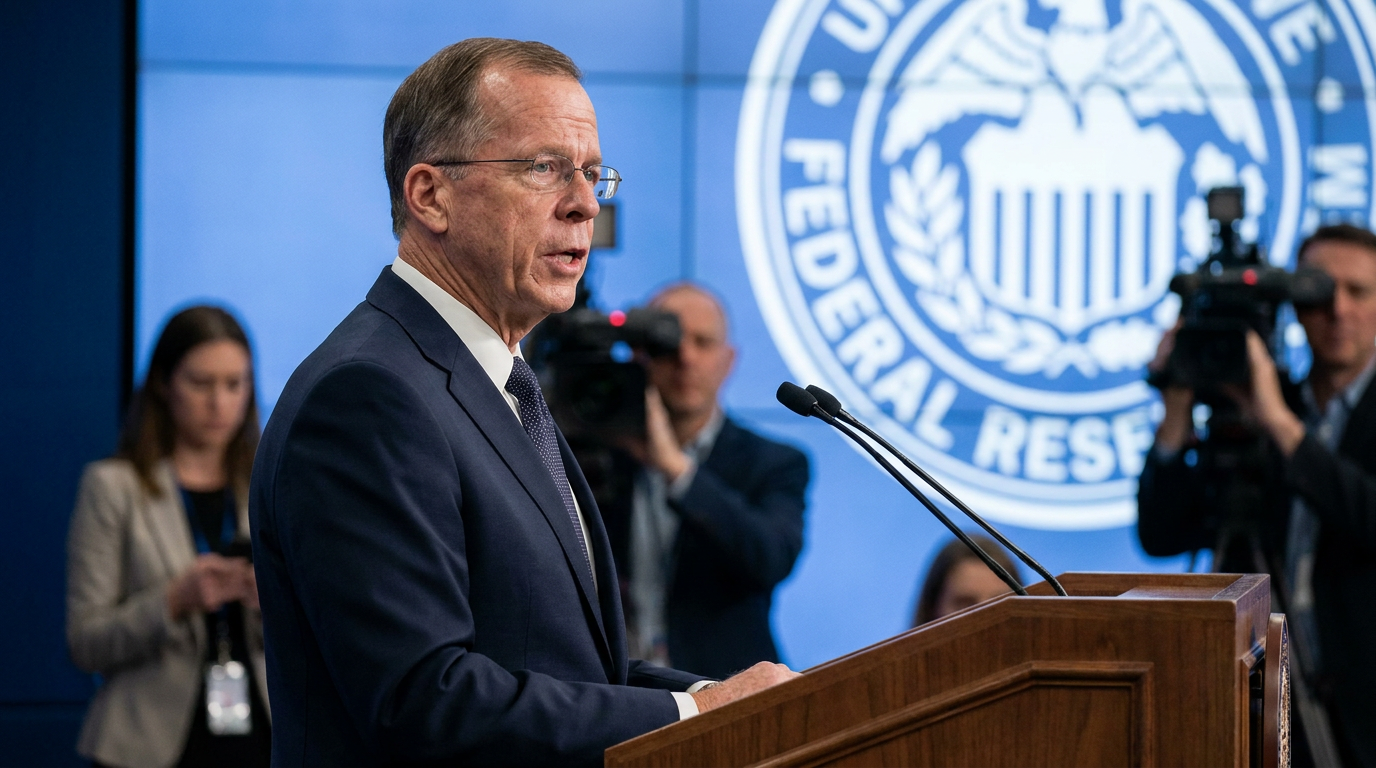
The era of the Federal Reserve holding Wall Street's hand has officially ended. In his inaugural policy meeting as Fed Chairman, Kevin Warsh held the benchmark federal funds rate steady but delivered a shock to the financial system by effectively abandoning "forward guidance"—the practice of telegraphing future interest rate moves months in advance.[1][4]
The immediate result was a scramble across trading desks and corporate treasury departments. Without the comforting roadmap of the Fed's traditional "dot plot" projections, the futures market violently repriced the trajectory of US borrowing costs, sending ripples through equity and bond markets alike.[2][5]
Prior to the June meeting, investors had broadly anticipated that the central bank might begin easing rates later this year. Following Warsh's hawkish pivot and refusal to offer assurances, futures markets reversed course and now see at least one interest rate increase before the end of 2026.[2]
To understand the magnitude of this shift, one must look at how the Fed has operated for the past fifteen years. Since the aftermath of the 2008 financial crisis, central bankers have relied heavily on forward guidance to soothe markets, manage economic expectations, and stimulate growth when interest rates were already at zero.[4]

By explicitly telling the public what it planned to do, the Fed aimed to prevent sudden shocks to mortgage rates and corporate bond yields. Warsh, however, views this predictability as a trap that forces the central bank to honor past promises even when underlying economic data rapidly changes.[1][4]
Warsh has made it clear he wants the Fed to send fewer signals, noting that pre-committing to a policy path limits the institution's agility in a volatile global economy. He has committed strictly to bringing inflation down to the Fed's 2% target, a stance that veteran analysts describe as unexpectedly aggressive for a new chairman's debut.[1][3]
Warsh has made it clear he wants the Fed to send fewer signals, noting that pre-committing to a policy path limits the institution's agility in a volatile global economy.
Ed Yardeni of Yardeni Research characterized the new chairman as a "hawk in dove's clothing." Yardeni pointed out that Warsh's refusal to offer dovish platitudes signals a willingness to tolerate economic pain and market drawdowns to crush sticky inflation once and for all.[3]

The timing of this policy shift coincides with a complex global macroeconomic picture. On one hand, the recent interim deal between the US and Iran has reopened the Strait of Hormuz, easing global energy anxieties and sending domestic gas prices tumbling below $4 a gallon.[7]
This easing of energy costs provides the Fed with some breathing room on headline inflation, which had been pressured by geopolitical supply shocks earlier in the year. However, Warsh's focus appears locked on core inflation—which strips out volatile food and energy prices—where progress has stubbornly stalled.[6][7]
The new communication strategy comes with significant risks. By stripping away forward guidance, the Fed is essentially demanding that markets interpret raw economic data on their own. This increases the likelihood of violent swings in asset prices every time a jobs report or inflation print is released.[1][5]

Corporate executives, who rely on stable interest rate projections to plan capital expenditures, factory expansions, and hiring, are now facing a deeply uncertain financing environment. The cost of borrowing could spike without warning if the Fed decides a single month's data warrants an immediate hike.[4][5]
Internationally, Warsh's move is creating ripples among other central banks. The Bank of England recently opted to hold its own rates steady, with Governor Andrew Bailey calling it a "sensible decision" amidst global uncertainty. But if the US Fed begins hiking rates unexpectedly, it could force the BOE and the European Central Bank to follow suit to protect their currencies from devaluation.[6][8]

Ultimately, Warsh is betting that a little market volatility is a fair price to pay for restoring the Fed's credibility as an inflation-fighting institution. By refusing to be boxed in by forward guidance, he is reclaiming the element of surprise and forcing markets to respect the central bank's independence.[1][3]
How we got here
Post-2008
The Federal Reserve heavily adopts forward guidance to soothe markets after the financial crisis.
2020–2021
The Fed uses guidance to assure markets that rates will remain near zero to support the pandemic recovery.
Early 2026
Kevin Warsh assumes the role of Federal Reserve Chairman, inheriting sticky core inflation.
June 2026
In his first meeting, Warsh abandons forward guidance, scrambling market expectations.
Viewpoints in depth
Inflation Hawks' View
Supporters of the move argue that forward guidance bred complacency and fueled asset bubbles.
Economists in this camp believe that the Federal Reserve's decade-long habit of holding Wall Street's hand created a moral hazard. By promising to keep rates low or telegraphing hikes months in advance, the Fed allowed markets to take on excessive risk without fear of sudden tightening. Hawks argue that Warsh's refusal to offer a roadmap restores the central bank's primary mandate: fighting inflation, regardless of how equity markets react to the uncertainty.
Market Strategists' View
Financial professionals warn that removing guidance increases the risk of unnecessary volatility.
Market participants argue that forward guidance was a vital tool for corporate planning and economic stability. Without a clear signal from the Fed, strategists warn that every minor data point—from a slight uptick in wage growth to a single hot inflation print—could trigger massive sell-offs or violent repricing in bond markets. They fear that this self-inflicted volatility could accidentally tighten financial conditions too rapidly, triggering a recession that forward guidance might have prevented.
Corporate Treasurers' View
Business leaders are concerned about the sudden inability to forecast long-term capital costs.
For executives managing corporate balance sheets, the end of the 'dot plot' era means financing large-scale projects just became significantly riskier. Without knowing whether borrowing costs will be 3.5% or 4.5% in six months, companies may choose to delay factory expansions, pause hiring, or hoard cash. This camp argues that the Fed's quest for policy agility is transferring the burden of economic uncertainty directly onto the shoulders of the real economy.
What we don't know
- Whether the Fed will actually hike rates in 2026, or if Warsh is simply using the threat of a hike to tighten financial conditions.
- How severely the lack of forward guidance will impact corporate capital expenditure planning over the next two quarters.
- If other major central banks will abandon their own forward guidance in response to the Fed's shift.
Key terms
- Forward Guidance
- The practice of a central bank publicly telegraphing its future interest rate moves to manage market expectations.
- Dot Plot
- A chart published by the Federal Reserve showing where each of its policymakers expects interest rates to be in the future.
- Hawkish
- A policy stance that prioritizes keeping inflation low, typically by raising interest rates, even at the risk of slowing economic growth.
- Core Inflation
- A measure of inflation that excludes volatile items like food and energy to reveal underlying long-term price trends.
- Federal Funds Rate
- The target interest rate set by the Fed at which commercial banks borrow and lend their excess reserves to each other overnight.
Frequently asked
What is forward guidance?
Forward guidance is a tool used by central banks to communicate their future intentions regarding monetary policy, helping to stabilize markets by making interest rate changes predictable.
Why did the Fed stop predicting rates?
Chairman Kevin Warsh believes that pre-committing to a policy path limits the Fed's flexibility to react to sudden changes in economic data and inflation.
Will mortgage rates go up?
Because futures markets are now pricing in a potential rate hike rather than a cut, borrowing costs tied to the Fed funds rate, including mortgages, are likely to face upward pressure.
Does the Iran deal help inflation?
Yes, the reopening of the Strait of Hormuz has lowered oil and gas prices, which helps reduce headline inflation, but the Fed remains concerned about sticky 'core' inflation.
Sources
Source coverage
8 outlets
3 viewpoints surfaced






[1]NYTMarket Strategists
Warsh Wants the Fed to Send Fewer Signals. That Comes With Risks.
Read on NYT →Warsh’s Hawkish Turn Has Scrambled the Math on Rates
Read on NYT →[3]BloombergGlobal Central Bankers
Warsh Is a Hawk in Dove's Clothing, Yardeni Says
Read on Bloomberg →[4]WSJInflation Hawks
Fed Chair Warsh Ends Era of Forward Guidance
Read on WSJ →[5]Financial TimesMarket Strategists
Markets reprice US rate path after Warsh debut
Read on Financial Times →[6]ReutersInflation Hawks
Federal Reserve holds rates steady, signals tougher inflation fight
Read on Reuters →[7]CNBC
Gas prices fall below $4 per gallon as oil supply fears ease after Iran deal
Read on CNBC →BOE's Bailey Says Holding Rates Is a 'Sensible Decision'
Read on Bloomberg →
Every angle. Every day.
Get business stories with full source coverage and perspective breakdowns delivered to your inbox.