
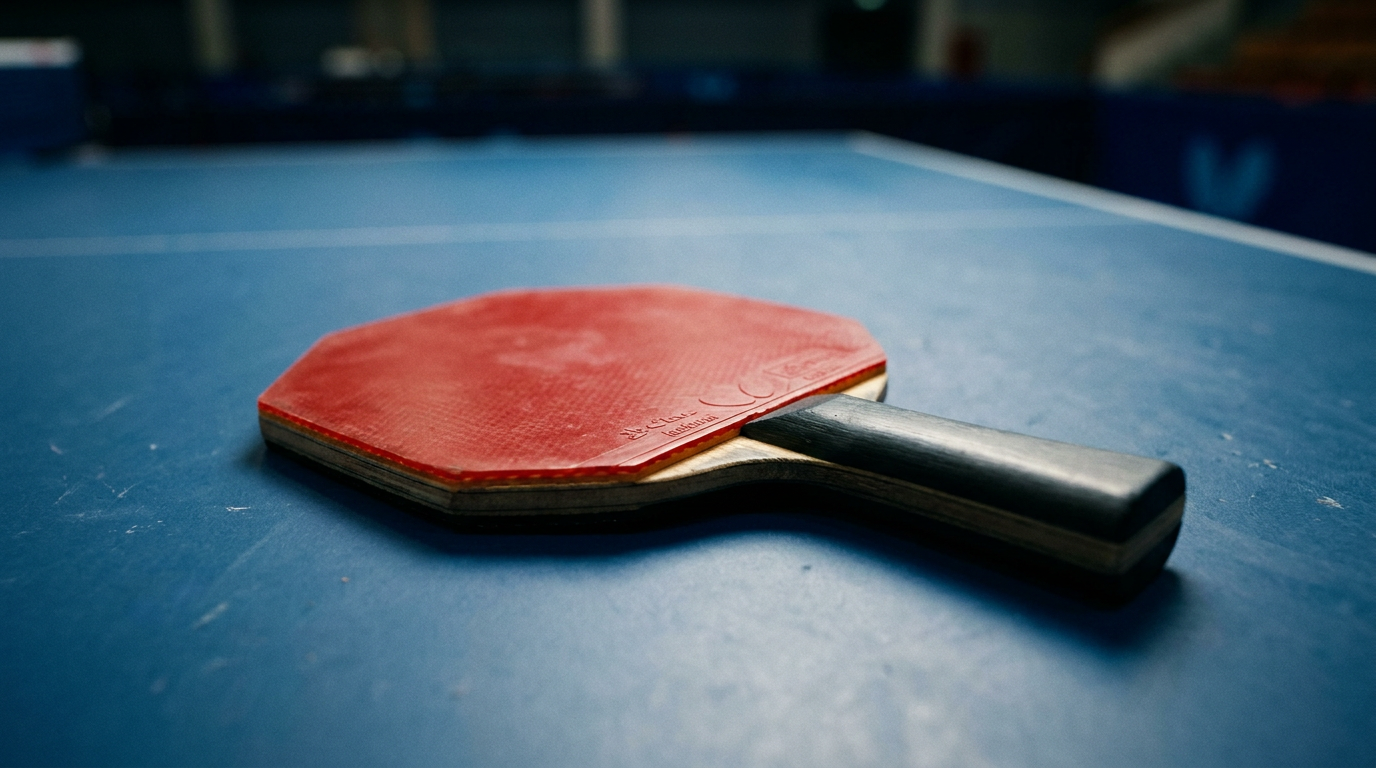
Beyond the Oval: The Physics Behind Table Tennis's Hexagonal Racket Revolution
A radical geometric redesign of the traditional table tennis blade is expanding the optimal hitting zone by 11%, challenging a century of sporting convention.
By Factlen Editorial Team
Sports Biomechanists 40%Equipment Innovators 35%Traditionalist Players 25%
- Sports Biomechanists
- Focus on the measurable expansion of the sweet spot, vibrational feedback, and the physics of mass distribution.
- Equipment Innovators
- View the geometric shift as a necessary evolution to match the highly aggressive, topspin-heavy modern game.
- Traditionalist Players
- Prioritize decades of muscle memory, rapid transition speeds, and the familiar swing weight of the classic oval.
What's not represented
- · Recreational players who lack the technique to utilize the expanded upper sweet spot
- · Rubber manufacturers adapting to pre-cut angular shapes
Why this matters
For decades, table tennis equipment design was stagnant. This geometric breakthrough proves that even the most established sports can be optimized through modern physics, offering players of all levels a measurable mechanical advantage.

More in sports
See all 293 stories →Flag Football
How Flag Football is Being Engineered for the 2028 LA Olympics
7 sources

Cycling Science
The Science of Speed: How Aerodynamics and Nutrition Revolutionized Modern Cycling
7 sources

Fighter Pay
How UFC Fighter Pay Works: The Economics Behind Freedom 250's Record $425,000 Bonuses
7 sources

Pro Volleyball Boom
The $100M Turf War Building America's First Sustainable Pro Volleyball Ecosystem
6 sources
Stay informed
Every angle. Every day.
Get sports stories with full source coverage and perspective breakdowns delivered to your inbox.