
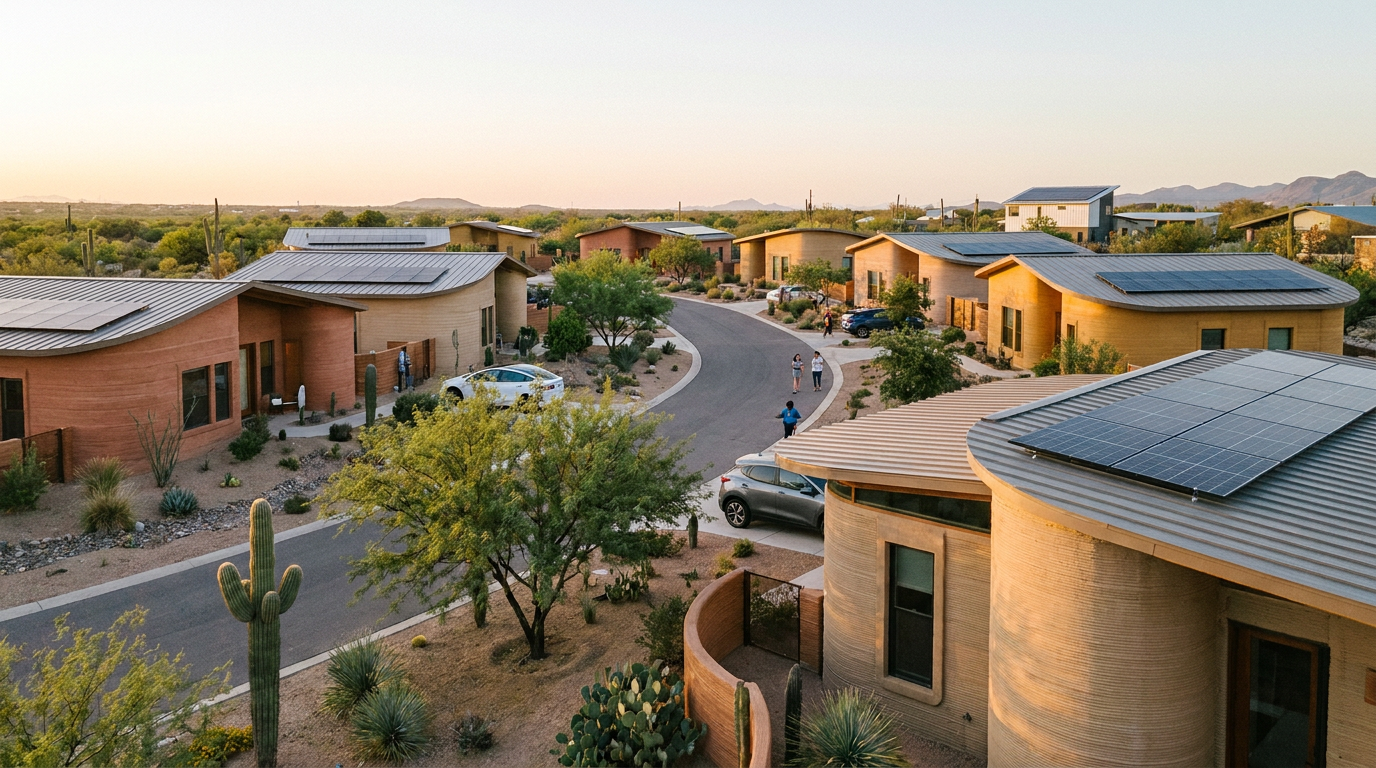
The Global Rise of 3D-Printed Eco-Villages: How Automation is Tackling the Housing Crisis
With the completion of the world's largest 3D-printed neighborhood in Texas, robotic construction is transitioning from a sci-fi concept to a scalable solution for sustainable, resilient housing.
By Factlen Editorial Team
Construction Technologists 40%Sustainable Urban Planners 35%Space Exploration Agencies 25%
- Construction Technologists
- Advocates who view automation as the primary solution to the global housing crisis.
- Sustainable Urban Planners
- Environmental and architectural experts focused on the climate impact of the built environment.
- Space Exploration Agencies
- Organizations like NASA that view Earth-bound 3D printing as a stepping stone to off-world colonization.
What's not represented
- · Traditional construction trade unions concerned about the displacement of framing and masonry jobs.
- · Affordable housing advocates waiting to see if cost savings are passed down to low-income buyers.
Why this matters
Traditional construction is too slow and resource-intensive to solve the global housing shortage. The successful scaling of 3D-printed neighborhoods proves that automation can drastically reduce building time, minimize waste, and create climate-resilient homes for a fraction of the traditional labor cost.
More in real estate
See all 38 stories →Homebuying
The 2026 Guide to Homebuying: New Construction vs. Existing Homes
8 sources
Zoning Reform
The Evidence Pack: How Upzoning and 'Missing Middle' Reforms Are Stabilizing Rents
8 sources
iBuyer Market
Selling to an iBuyer vs. a Traditional Agent: Which Strategy Fits You Best?
8 sources

Fractional Ownership
How Fractional Real Estate is Dismantling the Housing Market's Capital Walls
8 sources
Stay informed
Every angle. Every day.
Get real estate stories with full source coverage and perspective breakdowns delivered to your inbox.