
US and Iran Open High-Stakes Switzerland Talks Amid Lebanon Strikes and Domestic Backlash
US envoys and Iranian officials have arrived in Switzerland to negotiate a permanent peace treaty, but ongoing Israeli strikes in Lebanon and fierce political opposition in Washington threaten to derail the fragile 14-point agreement.
By Factlen Editorial Team
- Trump Administration Loyalists
- Argue that the US military campaign successfully crippled Iran, forcing Tehran into a surrender agreement dictated by Washington.
- US Foreign Policy Hawks
- View the preliminary deal as a dangerous capitulation, criticizing the $300 billion fund and the lifting of the naval blockade.
- Iranian Leadership
- Insist that the US must enforce the ceasefire in Lebanon by restraining Israel, viewing it as a prerequisite for any broader diplomatic breakthrough.
- Regional Mediators
- Focus on stabilizing the Middle East, reopening the Strait of Hormuz, and preventing a collapse of the fragile 60-day negotiation window.
What's not represented
- · Lebanese civilians affected by the ongoing Israeli strikes
- · European allies excluded from the bilateral US-Iran negotiations
Why this matters
The 14-point memorandum of understanding could end a devastating 113-day regional war and reopen the Strait of Hormuz, stabilizing global energy markets. However, if the $300 billion deal collapses over ongoing strikes in Lebanon or domestic US political backlash, the Middle East risks plunging back into a full-scale, multi-front conflict.
Key points
- US envoys Jared Kushner and Steve Witkoff have arrived in Switzerland for technical talks with Iranian officials.
- The talks follow a 14-point memorandum of understanding designed to end a 113-day regional war.
- The preliminary deal includes ending the US naval blockade and establishing a $300 billion reconstruction fund for Iran.
- Ongoing Israeli military strikes against Hezbollah in Lebanon threaten to derail the fragile ceasefire.
- Hardline US conservatives are fiercely criticizing the agreement, labeling the financial concessions a surrender to Tehran.
- The Trump administration defends the deal, arguing the US military campaign successfully crippled Iran's armed forces.
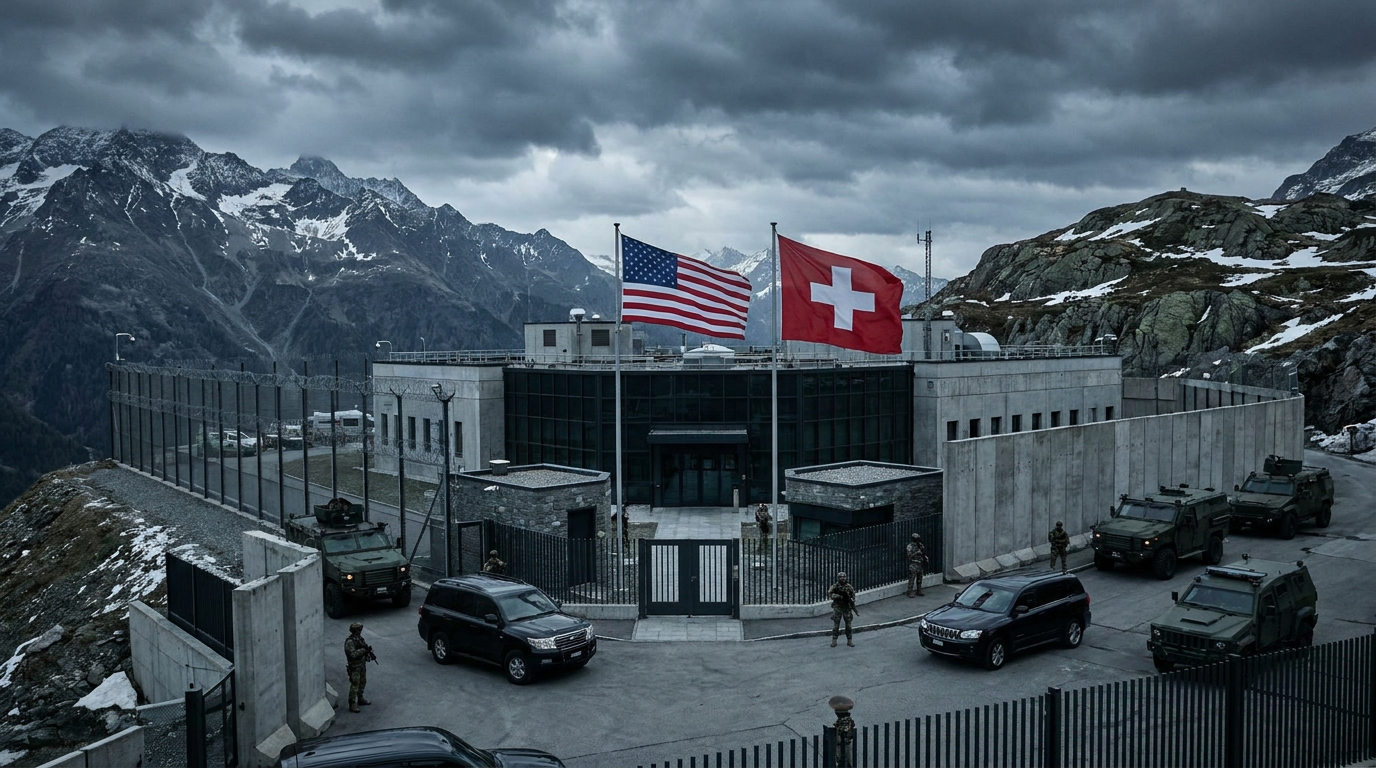
After 113 days of devastating regional conflict, the United States and Iran are attempting to pivot from warfare to a historic diplomatic settlement. On Saturday, senior envoys from both nations converged on Switzerland to begin technical negotiations aimed at cementing a fragile peace. The high-stakes summit represents the first major diplomatic test of a preliminary 14-point memorandum of understanding (MOU) signed earlier in the week. However, the path to a permanent treaty is already being threatened by ongoing military strikes in Lebanon and a fierce political backlash in Washington, where critics are blasting the administration's concessions.[1][4]
The US delegation in Switzerland is being led by presidential envoys Jared Kushner and Steve Witkoff, who stepped in after Vice President JD Vance abruptly canceled his scheduled appearance. They are expected to meet with Iranian Foreign Minister Abbas Araghchi, who traveled to the alpine nation despite earlier threats from Tehran to suspend negotiations. The presence of top-tier envoys from both sides signals a mutual desire to keep the diplomatic process alive, even as the broader Middle East remains highly volatile and unpredictable.[4][6][8]
The foundation of these talks is the 14-point MOU, a sweeping interim agreement designed to halt a war that erupted in late February following US-Israeli strikes that killed Iran's supreme leader. The text of the agreement establishes a strict 60-day window for the two adversaries to negotiate a comprehensive treaty covering Iran's nuclear program and regional security architecture. In exchange for Tehran's compliance and a halt to proxy attacks, the United States has agreed to immediately end its naval blockade of the Strait of Hormuz, a critical chokepoint for global oil supplies.[3][4]

The most explosive element of the preliminary deal is a financial provision that has sent shockwaves through the US political establishment. According to the leaked text of the MOU, the United States and its allies will facilitate Iran's access to a staggering $300 billion in international financing. This massive capital injection is explicitly earmarked for the "rehabilitation and economic development" of the Islamic Republic, which has suffered extensive infrastructure damage during the nearly four-month military campaign. For critics, this clause represents an unacceptable reward for a hostile state.[2][3]
Before the delegations can even address the complexities of nuclear enrichment or sanctions relief, they must navigate a rapidly deteriorating situation in the Levant. The MOU explicitly requires the termination of military operations across all fronts, including the highly contested border in Lebanon. However, Israel—which is notably not a party to the US-Iran agreement—has continued to launch deadly airstrikes against Hezbollah targets in southern Lebanon, arguing that it must secure its northern border and dismantle terrorist infrastructure regardless of Washington's diplomatic timeline.[1][4]
Before the delegations can even address the complexities of nuclear enrichment or sanctions relief, they must navigate a rapidly deteriorating situation in the Levant.
The continued Israeli bombardment of Lebanon has become a massive stumbling block for the Swiss talks, threatening to derail the entire diplomatic framework before it even begins. The escalating violence is what prompted Vice President Vance to abruptly pull out of the summit on Thursday, with the White House citing logistical and security concerns. For Tehran, the Lebanese front is not a peripheral issue; Iranian officials have repeatedly stated that Washington bears direct responsibility for reigning in its primary Middle Eastern ally and enforcing the ceasefire globally.[1][6]

Iranian Foreign Minister Araghchi has reportedly informed regional mediators that the implementation of a genuine ceasefire in Lebanon is a strict "make or break" condition for the broader US-Iran negotiations. Tehran views the ongoing Israeli strikes as a direct violation of the MOU's first article, which mandates a comprehensive halt to hostilities across the entire region. If the United States cannot compel Israel to pause its military campaign, Iranian hardliners are highly likely to pressure Araghchi to walk away from the negotiating table entirely, collapsing the fragile peace.[1][5]
Back in the United States, the publication of the MOU's terms has ignited a political firestorm, fracturing the Republican party and drawing intense scrutiny from foreign policy hawks. Hardline conservatives have blasted the agreement as a dangerous capitulation, arguing that lifting the naval blockade and unlocking $300 billion for Tehran amounts to a total surrender rather than a strategic victory. Critics like Senator Ted Cruz have publicly warned that the funds will flow directly to the Iranian regime long before the United States secures any verifiable concessions on the nuclear front.[2][3]
Despite the fierce domestic backlash, Trump administration loyalists have mounted a vigorous defense of the diplomatic pivot, insisting that the United States is negotiating from a position of absolute dominance. Lawmakers like Senator Tommy Tuberville argue that the US military campaign was a resounding success that effectively "crippled" Iran's military infrastructure and command network. In this framing, the Islamic Republic has been forced to the negotiating table in "surrender mode," and the financial provisions are simply the necessary cost of rebuilding a nation that has already been decisively defeated on the battlefield.[2]
President Donald Trump has aggressively promoted this narrative, characterizing the memorandum of understanding as a masterful victory for American military might and diplomatic leverage. In a series of social media posts, the president claimed that Iran's armed forces have been decimated and that the regime's leadership has effectively waved the white flag in defeat. The administration insists that the 60-day negotiation window will allow the United States to dictate the final, permanent terms of Iran's nuclear disarmament from a position of absolute, unassailable strength.[2][3]

Regional analysts and Middle East experts, however, offer a starkly different assessment of the preliminary deal, suggesting that the reality on the ground is far more nuanced. While Iran undoubtedly suffered heavy military and infrastructural losses during the 113-day war, experts note that the MOU grants Tehran massive upfront economic relief while deferring the most difficult and contentious issues. By securing an end to the naval blockade and a clear pathway to reconstruction funds before fully dismantling its nuclear infrastructure, Iran has achieved a significant tactical victory that preserves its core strategic assets.[3][7]
The burden now falls on mediators from Switzerland and Qatar to bridge the massive gap between Washington's victory narrative and Tehran's demands for immediate regional stability. The technical talks in Switzerland are meant to translate the broad, ambitious strokes of the 14-point MOU into a binding, enforceable framework. If Kushner, Witkoff, and Araghchi can navigate the Lebanon crisis and the domestic political minefields, they may succeed in closing the chapter on one of the most dangerous conflicts in modern Middle Eastern history. If they fail, the 60-day window could easily collapse back into open war.[4][5]
How we got here
Feb 28, 2026
US-Israeli strikes kill Iran's supreme leader, triggering a 113-day regional war.
Mid-June 2026
The United States and Iran sign a 14-point memorandum of understanding to halt hostilities.
June 18, 2026
Vice President JD Vance cancels his trip to the Swiss negotiations amid escalating strikes in Lebanon.
June 20, 2026
US envoys Jared Kushner and Steve Witkoff arrive in Switzerland to begin technical talks with Iranian officials.
Viewpoints in depth
Trump Administration Loyalists
Argue that the US won the war, crippled Iran's military, and the deal is a dictated surrender.
Supporters of the administration, including prominent lawmakers like Senator Tommy Tuberville, view the 14-point MOU as a resounding victory for American military might. They argue that the 113-day campaign effectively decimated Iran's command structure and infrastructure, leaving the Islamic Republic with no choice but to accept Washington's terms. In this view, the $300 billion reconstruction fund is not a concession, but rather the necessary cost of rebuilding a defeated nation that has been forced into "surrender mode."
US Foreign Policy Hawks
Argue the deal is a capitulation, giving Iran $300 billion and lifting the blockade without upfront nuclear concessions.
Hardline conservatives and foreign policy analysts are fiercely critical of the preliminary agreement, viewing it as a massive tactical error. Critics like Senator Ted Cruz point out that the MOU grants Tehran immediate, tangible benefits—such as the end of the naval blockade and access to a staggering $300 billion—while deferring the most critical issue of nuclear disarmament to a 60-day negotiation window. They warn that this structure allows Iran to rebuild its economy and military without ever providing verifiable, long-term concessions.
Iranian Leadership
Argue the US must control Israel and enforce the Lebanon ceasefire, viewing the $300 billion and blockade lift as their rightful terms for peace.
For Tehran, the diplomatic process hinges entirely on the United States' ability to enforce a comprehensive regional ceasefire. Iranian officials, including Foreign Minister Abbas Araghchi, have made it clear that ongoing Israeli strikes against Hezbollah in Lebanon are a direct violation of the MOU's core terms. Iran views the lifting of the blockade and the reconstruction financing as non-negotiable prerequisites for peace, warning that if Washington cannot reign in its allies, the entire diplomatic framework will collapse.
What we don't know
- Whether the United States can successfully pressure Israel to halt its military strikes in southern Lebanon.
- How the $300 billion reconstruction fund will be administered and monitored to prevent misuse by the Iranian regime.
- Whether Iran will agree to verifiable, long-term concessions regarding its nuclear program during the 60-day window.
Key terms
- Memorandum of Understanding (MOU)
- A preliminary diplomatic agreement outlining the broad terms of a ceasefire and future negotiations before a final treaty is signed.
- Strait of Hormuz
- A critical maritime chokepoint for global oil supplies, which the United States blockaded during the 113-day conflict.
- Reconstruction Fund
- A proposed $300 billion financial mechanism designed to rebuild Iranian infrastructure damaged during the war.
- 60-Day Window
- The strict timeline established by the MOU for the US and Iran to negotiate a comprehensive treaty covering nuclear enrichment and regional security.
Frequently asked
What is in the US-Iran memorandum of understanding?
The 14-point preliminary deal ends the US naval blockade of the Strait of Hormuz, establishes a 60-day negotiation window for nuclear talks, and outlines a $300 billion reconstruction fund for Iran.
Why did JD Vance cancel his trip to Switzerland?
The Vice President pulled out of the initial talks due to escalating Israeli military strikes against Hezbollah in Lebanon, which threatened the broader ceasefire.
Why are US conservatives criticizing the deal?
Many foreign policy hawks and Republican lawmakers argue that providing Iran access to $300 billion and lifting the blockade amounts to a surrender, rather than a victory.
How does the conflict in Lebanon affect the US-Iran deal?
Iran views the ongoing Israeli strikes in Lebanon as a direct violation of the ceasefire agreement, warning that it is a "make or break" issue for the negotiations.
Sources
Source coverage
8 outlets
4 viewpoints surfaced






[1]Al JazeeraIranian Leadership
Iran war day 113: Tehran presses US over Lebanon ceasefire
Read on Al Jazeera →[2]Fox NewsTrump Administration Loyalists
WATCH: Tuberville backs Trump’s Iran deal as Democrat blasts ‘surrender’
Read on Fox News →[3]The New RepublicUS Foreign Policy Hawks
MAGA Erupts in Fury as Full Text of Trump's Iran Deal Is Revealed
Read on The New Republic →[4]The Straits TimesRegional Mediators
Trump envoy, Iranian minister head to Switzerland for talks
Read on The Straits Times →[5]Anadolu AgencyRegional Mediators
Trump envoys travel to Switzerland as possible US-Iran talks loom: Report
Read on Anadolu Agency →[6]Al ArabiyaRegional Mediators
US envoy Steve Witkoff was headed to Switzerland for talks
Read on Al Arabiya →[7]Iran InternationalIranian Leadership
Trump says Iran is 'finished', experts say Tehran won big
Read on Iran International →[8]The Jerusalem PostRegional Mediators
Witkoff, Araghchi traveling to Switzerland to begin US-Iran nuclear talks - report
Read on The Jerusalem Post →
Every angle. Every day.
Get news politics stories with full source coverage and perspective breakdowns delivered to your inbox.