
Savvy Games Group Acquires Mobile Legends Developer Moonton for $6 Billion
Saudi Arabia's Savvy Games Group is finalizing a $6 billion acquisition of Moonton Technology from ByteDance, securing one of the world's most popular mobile esports titles.
By Factlen Editorial Team·AI-assisted synthesis·Editorial process·Corrections
- Strategic Acquirers
- Focuses on long-term ecosystem building and regional economic diversification through gaming.
- Tech Conglomerates
- Prioritizes capital reallocation, exiting non-core gaming divisions to fund generative AI and e-commerce platforms.
- Market Analysts
- Emphasizes the valuation premium for live-service mobile games, recurring revenue, and the critical importance of talent retention.
What's not represented
- · Mobile Legends Player Base
- · Independent Game Developers
Why this matters
This $6 billion deal represents a massive shift in the gaming industry's balance of power, moving control of a 110-million-player ecosystem from a Chinese tech giant pivoting to AI, over to Saudi Arabia's sovereign wealth fund.
Key points
- Savvy Games Group is finalizing a $6 billion acquisition of Moonton Technology from ByteDance.
- Moonton's flagship title, Mobile Legends: Bang Bang, boasts 110 million monthly active users.
- ByteDance earns a $2 billion return on its 2021 investment as it pivots focus toward generative AI.
- Moonton's CEO and management team will remain in place to ensure operational continuity.
The landscape of global video game publishing and esports is undergoing a massive tectonic shift, driven by the deployment of sovereign wealth and the enduring, highly lucrative power of mobile gaming audiences. Saudi Arabia's Savvy Games Group, a dedicated gaming and esports subsidiary of the nation's Public Investment Fund (PIF), is reportedly finalizing a monumental $6 billion acquisition of Shanghai-based Moonton Technology. The deal, which has been quietly negotiated over several months, represents a massive transfer of digital real estate and intellectual property. By securing this agreement, Savvy Games Group is aggressively cementing its position as a dominant force in the interactive entertainment sector, moving beyond minority stakes and into full ownership of tier-one global development studios.[1][5]
Moonton Technology is best known as the primary developer and publisher behind Mobile Legends: Bang Bang (MLBB), a multiplayer online battle arena (MOBA) that has quietly become one of the most dominant and culturally significant forces in global esports. By purchasing the studio outright from TikTok parent company ByteDance, Savvy Games is securing a true crown jewel in the mobile gaming ecosystem. Unlike many Western studios that focus heavily on high-fidelity console and PC experiences, Moonton recognized early on that the future of competitive gaming in emerging markets would be entirely mobile-first. This strategic foresight allowed them to build an incredibly loyal player base that treats the game not just as a pastime, but as a primary social network and competitive outlet.[2][4]
The transaction, which ranks comfortably among the largest video game acquisitions in industry history, highlights a fascinating divergence in modern corporate strategy. While traditional technology conglomerates and social media giants are currently retreating from the gaming sector to fund new frontiers, state-backed entities are aggressively stepping in to consolidate the industry's most lucrative live-service properties. This $6 billion changing of the guard illustrates how the immense capital requirements of modern tech—specifically the race to develop artificial intelligence—are forcing companies to liquidate highly profitable, but non-core, entertainment assets. For the buyers, however, these assets represent a turnkey solution to building a global media footprint without the steep risks associated with ground-up game development.[3][6]
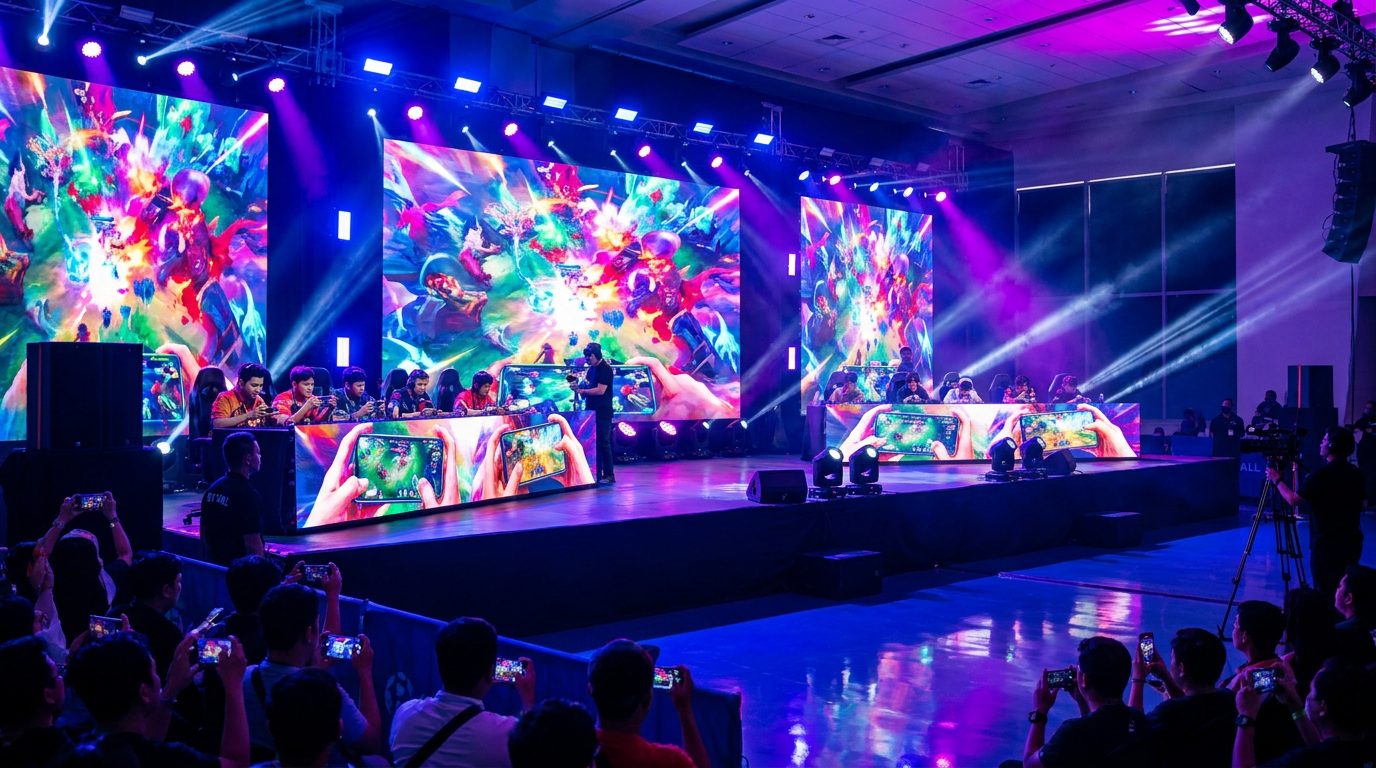
To truly understand the sheer scale of the $6 billion valuation placed on Moonton, one must look closely at the studio's staggering global reach and player retention metrics. Mobile Legends: Bang Bang has surpassed an astonishing 1.5 billion lifetime installs across iOS and Android platforms, a milestone that very few applications of any kind ever achieve. Furthermore, the game maintains a highly engaged, continuously active base of over 110 million monthly active users. These are not passive players; they are deeply invested participants who log in daily to complete challenges, coordinate with teammates, and participate in a constantly evolving digital economy. This level of sustained engagement is the holy grail for any digital publisher.[2][5]

Unlike traditional blockbuster console or PC titles that rely heavily on massive, wealthy Western markets for their revenue, Moonton built its empire by specifically targeting mobile-first regions where traditional gaming infrastructure is sparse. The game has become a genuine cultural phenomenon across Southeast Asia, Latin America, and parts of the Middle East, regions where smartphone penetration far outpaces the ownership of dedicated gaming hardware. In countries like Indonesia and the Philippines, Mobile Legends is practically a national sport, deeply woven into the fabric of youth culture. This geographic concentration provides a massive, rapidly growing consumer base that is largely insulated from the shifting trends of the North American and European console markets.[2][8]
For the seller, ByteDance, the $6 billion divestiture marks the final chapter of a grand, but ultimately unfulfilled, multi-year gaming experiment. The Chinese technology giant originally acquired Moonton in 2021 for approximately $4 billion through its Nuverse gaming arm. At the time, the acquisition was widely viewed as a bold, aggressive maneuver designed to build a direct, in-house rival to Tencent's sprawling, dominant gaming empire. ByteDance believed that by combining its unparalleled algorithmic distribution capabilities on TikTok with Moonton's proven development talent, it could quickly capture a massive share of the global interactive entertainment market and diversify its revenue streams away from pure advertising.[2][3]
However, that ambitious strategy failed to gain the necessary traction against deeply entrenched competitors, and the synergies between short-form video and hardcore game development proved harder to realize than anticipated. Following a comprehensive, company-wide internal strategic review in late 2023, ByteDance leadership made the difficult decision to begin systematically dismantling the Nuverse division. The company initiated widespread layoffs across its gaming teams, canceled several unannounced projects, and began divesting smaller titles to stem the mounting operational costs associated with maintaining a global game publishing apparatus. The gaming sector simply required too much specialized attention and capital for a company fighting battles on other fronts.[2][3]
The Moonton divestiture officially closes that loop for ByteDance, but it does so with a surprising and highly lucrative financial victory. Despite the broader strategic retreat from the video game industry, ByteDance walks away from the Moonton experiment with a roughly $2 billion return on its original 2021 investment. In the volatile world of tech acquisitions, where failed pivots often result in massive write-downs and fire sales, securing a 50 percent premium on a multi-billion dollar asset is a remarkable outcome. It allows the company to exit the sector gracefully while injecting a massive amount of liquid capital directly into its balance sheet.[2][3]
Leadership at ByteDance has made a deliberate, forward-looking calculation: the immense capital and top-tier engineering talent previously tied up in game development are far better deployed elsewhere in the current macroeconomic climate. The company is now intensely focused on winning the arms race in generative artificial intelligence, funding proprietary semiconductor development, and fortifying its core TikTok and e-commerce platforms against mounting regulatory and competitive pressures. By shedding Moonton, ByteDance is streamlining its corporate focus, ensuring that every dollar and every developer is aligned with the company's most critical, existential priorities in the AI era.[2][3]
On the other side of the negotiating table, Savvy Games Group is executing a radically different, highly aggressive playbook. Backed by the immense financial resources of the Saudi Public Investment Fund, Savvy operates with an extraordinary mandate to deploy nearly $38 billion into the global gaming and esports sector. This massive capital allocation is a central pillar of Saudi Arabia's Vision 2030 economic diversification strategy, which seeks to transition the nation's economy away from its historical reliance on fossil fuels and toward technology, entertainment, and global tourism. Buying Moonton is a critical step in transforming the Kingdom into a vertically integrated hub for digital media.[3][4]

On the other side of the negotiating table, Savvy Games Group is executing a radically different, highly aggressive playbook.
In a formal statement addressing the acquisition, Savvy Games Group CEO Brian Ward noted that the deal directly supports the company's overarching mission to drive long-term growth, foster innovation, and significantly enhance its reach across global esports ecosystems. Ward emphasized that integrating Moonton into the Savvy portfolio will deepen their talent pool and expand their global footprint in ways that organic growth simply could not achieve. By acquiring Moonton, Savvy isn't just buying a single popular video game; it is acquiring a self-sustaining, highly profitable competitive ecosystem with a fiercely loyal international community already built in.[5]
A major component of that ecosystem is the M-Series, Moonton's official world championship tournament circuit for Mobile Legends. The M-Series generates substantial, diversified revenue streams through international broadcasting rights, lucrative brand sponsorships, and localized tournament franchising across multiple continents. This competitive infrastructure perfectly complements Savvy's existing, massive investments in the esports space, which prominently includes the ESL Faceit Group—the largest independent esports organizer in the world. The synergy between owning the underlying game intellectual property and owning the premier tournament operation infrastructure creates a powerful, vertically integrated monopoly over the mobile esports value chain.[4][8]
Financial analysts and industry observers point out that the staggering $6 billion price tag accurately reflects the unique, highly sought-after premium placed on successful live-service games in today's market. In a notoriously hit-driven entertainment industry, attempting to build a breakout multiplayer title from scratch is an incredibly risky, expensive, and often fruitless endeavor. Countless well-funded studios have spent hundreds of millions of dollars only to see their new games fail to find an audience. Therefore, when a game like Mobile Legends proves it can hold the attention of 110 million players month after month, its valuation skyrockets accordingly.[6]
Buying an established, culturally entrenched franchise like Mobile Legends provides the acquirer with immediate, highly predictable recurring cash flows. This revenue is primarily generated through sophisticated in-game monetization mechanics, such as the sale of cosmetic character skins, seasonal battle passes, and limited-time digital events. Because the audience is already sticky and deeply invested in their digital identities within the game, the revenue engine is proven and resilient to broader macroeconomic downturns. For a sovereign wealth fund looking for reliable, long-term returns to replace oil revenues, this kind of digital cash machine is an incredibly attractive asset class.[4][6]

However, industry experts are quick to note that the core risk in any massive live-service acquisition is the retention of key creative and technical talent. The $6 billion value of Moonton does not lie in its physical offices or even its current code base; it relies entirely on the specialized developers, artists, and community managers who continuously ship delicate balance updates, design compelling new heroes, and create engaging content. If the team that understands the game's unique secret sauce were to leave following the buyout, the player base—and the associated cash flows—could evaporate with alarming speed.[6]
To proactively mitigate this existential risk, the acquisition agreement includes specific, robust structural protections designed to maintain the status quo. According to internal communications, Moonton CEO Zhang Yunfan and his core management team will remain firmly in place following the transition, and the studio will retain a high degree of operational autonomy. Rather than being absorbed and micromanaged by a distant corporate parent, Moonton will continue to operate much as it always has, ensuring that the day-to-day development pipeline and community relations strategies remain uninterrupted and authentic to the player base.[4][5]
Furthermore, an internal memo circulated to staff confirmed that existing Moonton employees will be offered a range of lucrative, long-term incentive programs designed specifically to prevent a post-acquisition talent exodus. By aligning the financial interests of the developers with the continued success of the game under Savvy's ownership, the acquirers are actively protecting their $6 billion investment. Keeping the creative engine happy, motivated, and intact is widely considered just as important as acquiring the intellectual property itself, and Savvy appears willing to spend whatever it takes to ensure continuity.[2][5]
The Moonton deal also significantly extends Savvy Games Group's rapidly growing mobile publishing portfolio, joining the ranks of US-based mobile giant Scopely, which Savvy acquired for an impressive $4.9 billion in the summer of 2023. Scopely itself subsequently acquired Niantic's games division, bringing massive augmented reality titles into the fold. Together, these carefully targeted, multi-billion dollar assets give Saudi Arabia an unprecedented, dominant footprint in the global mobile gaming market, transforming the nation from an outside investor into one of the most powerful publishers on the planet in just a few short years.[4][8]

As the transaction moves through the final stages of customary regulatory approval and heads toward a formal closing in the coming months, it underscores a much broader, undeniable reality within the entertainment sector. The center of gravity in the global video game industry is fundamentally shifting away from traditional tech hubs. The era of Western console manufacturers and legacy publishers dictating the terms of the industry is being aggressively challenged by new players with deeper pockets and longer time horizons, fundamentally rewriting the rules of how gaming empires are built and sustained.[2][3]
With traditional publishers currently facing spiraling development costs, widespread layoffs, and tech giants pivoting their war chests toward artificial intelligence, sovereign wealth funds have emerged as the ultimate kingmakers in digital entertainment. Entities like Savvy Games Group are uniquely positioned to pay premium valuations to secure the digital platforms of the future, unburdened by the short-term pressures of quarterly earnings reports. As the ink dries on the $6 billion Moonton acquisition, it is clear that the future of global esports and mobile gaming will be increasingly shaped by the strategic ambitions of the Middle East.[6][8]
How we got here
2014
Moonton Technology is founded in Shanghai, focusing on mobile game development for emerging markets.
2016
Mobile Legends: Bang Bang launches, quickly dominating the mobile esports landscape in Southeast Asia.
2021
ByteDance acquires Moonton for $4 billion to build a direct rival to Tencent's gaming empire.
Late 2023
Following a strategic review, ByteDance begins dismantling its Nuverse gaming division to focus on AI.
March 2026
Savvy Games Group and ByteDance confirm the $6 billion acquisition agreement for Moonton.
Viewpoints in depth
The Sovereign Wealth Strategy
Savvy Games Group views the acquisition as a cornerstone of long-term economic diversification.
For the Saudi Public Investment Fund, acquiring Moonton is not about short-term quarterly profits; it is about building a vertically integrated, post-oil digital economy. By controlling both the underlying game IP (Mobile Legends) and the tournament infrastructure (ESL Faceit), Savvy aims to make Saudi Arabia the undisputed global hub for competitive gaming. They argue that mobile esports offers the most reliable, globally distributed audience in the entertainment sector.
The Tech Conglomerate Pivot
ByteDance views the sale as a necessary reallocation of resources toward existential tech frontiers.
From ByteDance's perspective, the gaming industry has become a capital-intensive distraction from the core battles of the next decade. The company argues that maintaining a massive game development workforce is inefficient when those resources could be deployed to win the generative AI arms race or fortify TikTok's e-commerce capabilities. Selling Moonton at a $2 billion profit allows them to exit a non-core market gracefully while strengthening their balance sheet.
The Live-Service Valuation
Market analysts emphasize the premium placed on sticky audiences and the risks of talent churn.
Financial analysts note that the $6 billion valuation is entirely dependent on Moonton's ability to retain its 110 million monthly active users. They argue that in a hit-driven industry, buying an established, profitable live-service game is safer than funding new development. However, they caution that the true test of the acquisition will be talent retention; if the core developers leave post-buyout, the value of the intellectual property could plummet rapidly.
What we don't know
- Whether the acquisition will face any unexpected regulatory hurdles in international markets.
- How Savvy Games plans to integrate Moonton's esports ecosystem with its ESL Faceit Group operations.
- If ByteDance intends to retain any minority stakes in smaller gaming ventures moving forward.
Key terms
- MOBA
- Multiplayer Online Battle Arena, a highly competitive genre where two teams fight to destroy the opposing team's main structure.
- Live-Service Game
- A video game designed to keep players engaged for years through continuous updates, new content, and recurring in-game purchases.
- Vision 2030
- Saudi Arabia's strategic framework to reduce its dependence on oil and diversify its economy, including massive investments in global entertainment.
- M-Series
- The official world championship tournament circuit for Mobile Legends, driving significant global esports viewership and sponsorship revenue.
Frequently asked
Why is ByteDance selling Moonton?
ByteDance is exiting the gaming sector to reallocate its capital and engineering talent toward generative AI, semiconductor development, and its core TikTok platform.
Will Mobile Legends change for current players?
Moonton will retain operational autonomy and its current leadership team, meaning day-to-day gameplay and updates are unlikely to face immediate disruption.
How does this fit into Saudi Arabia's gaming strategy?
The acquisition is part of Savvy Games Group's mandate to deploy nearly $38 billion to build a vertically integrated global gaming and esports powerhouse.
Sources
Source coverage
8 outlets
3 viewpoints surfaced








[1]GamesIndustry.bizMarket Analysts
Savvy Games acquires Mobile Legends developer Moonton for $6 billion
Read on GamesIndustry.biz →[2]MobidictumTech Conglomerates
ByteDance exits gaming as Savvy Games Group secures one of the largest acquisitions in video game history
Read on Mobidictum →[3]DelMorgan & Co.Tech Conglomerates
ByteDance Ltd. has entered into a definitive agreement to sell its gaming subsidiary, Moonton Technology
Read on DelMorgan & Co. →[4]InvestGameMarket Analysts
Savvy Games Group has agreed to acquire Moonton Technology for $6B
Read on InvestGame →[5]Game DeveloperStrategic Acquirers
Savvy Games Group to acquire Moonton Games for $6 billion
Read on Game Developer →[6]FinimizeMarket Analysts
Saudi PIF's Savvy Games Nears $6 Billion Moonton Deal
Read on Finimize →[7]Sharikat MubasherStrategic Acquirers
Savvy Group in talks to buy Moonton for more than $6bn
Read on Sharikat Mubasher →[8]GamesMarktMarket Analysts
Savvy Games Group Reportedly Wants to Buy Moonton from ByteDance
Read on GamesMarkt →
Every angle. Every day.
Get gaming esports stories with full source coverage and perspective breakdowns delivered to your inbox.